

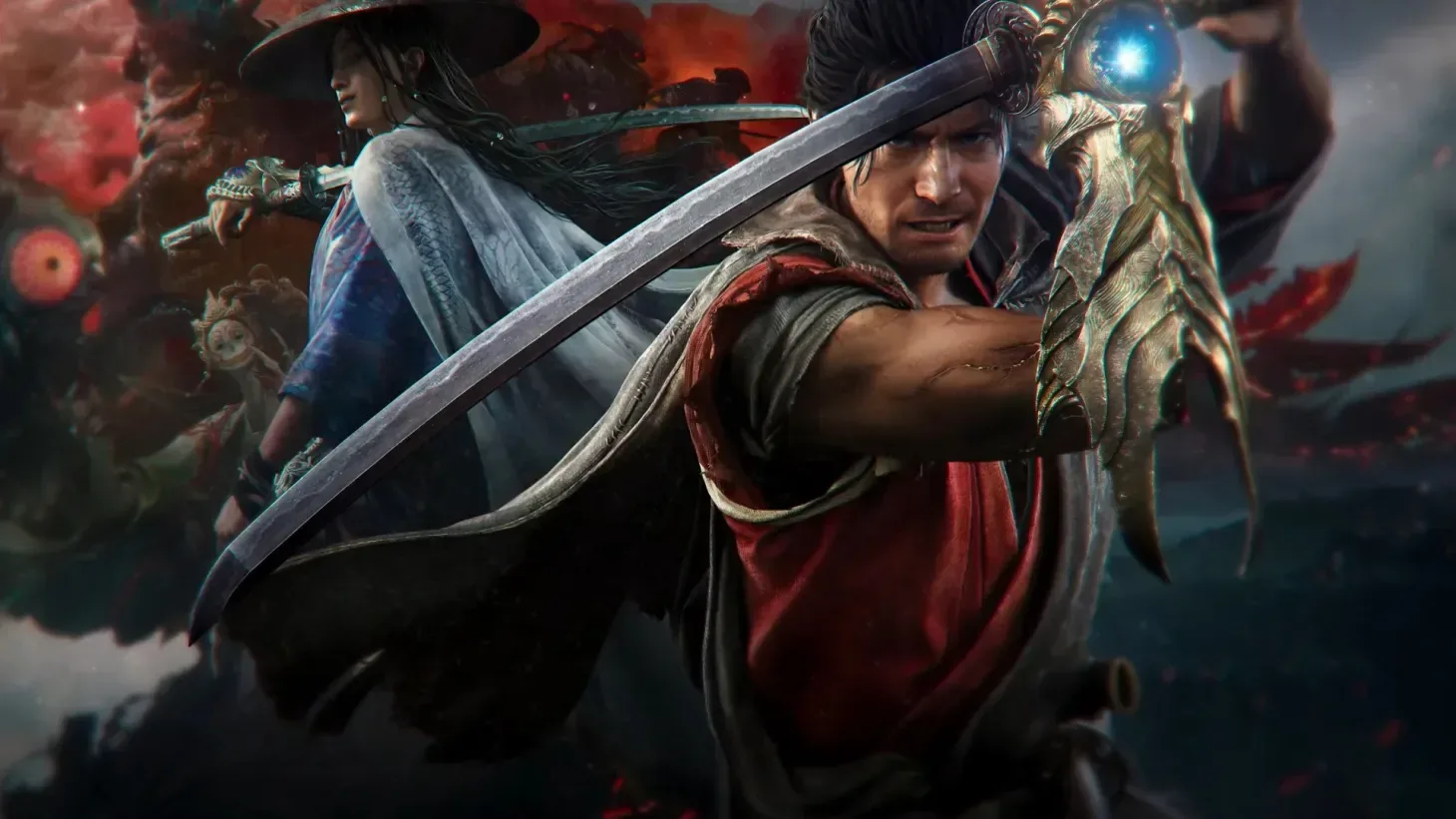
Onimusha: Way of the Sword brings the series back with an action game that expects commitment. Its fictional younger take on Miyamoto Musashi is not a hero who can casually carve through demonic opposition with a few flashy swings. He must learn, react, defend, and adapt. Players are asked to do the same. On PC, this is a demanding return built around intricate swordplay, escalating lessons, and bosses that turn those lessons into intense tests of execution.
That focus makes the game one of the most satisfying entries in the franchise. It is also an experience that occasionally feels tethered to older habits, especially when its latter half leans too hard on compulsory combat arenas and repeated encounters. Still, when Musashi's blade work, a well-timed deflection, and a hard-earned victory all click together, Way of the Sword delivers the kind of action-game exhilaration that makes its frustrations easier to forgive. As of its August 31, 2026 review date, this is an impressive and often thrilling foundation for the series' return.
A swordfighter's education
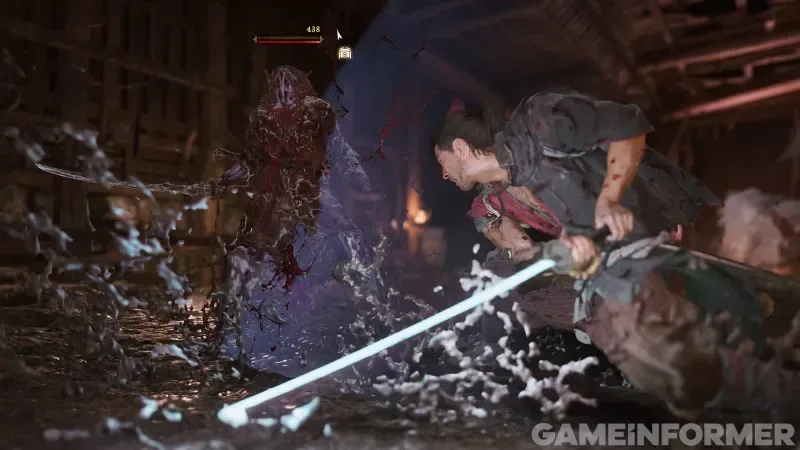
The central strength of Way of the Sword is its combat. This is not a button-mashing action game, nor is it one that permits easy shortcuts through its hardest fights. Musashi has a substantial and growing set of tools, including parries, dodges, deflections, and other techniques that need to be understood rather than merely unlocked. Each system feeds into the next, creating fights where awareness and timing matter as much as aggression.
Its tutorials continue well beyond the opening minutes. That extended instruction can make the early stretch feel restrained, as though the game is reluctant to remove its training wheels. Yet the method has a purpose. The most dramatic boss encounters function like examinations, checking whether players have been applying the full range of Musashi's abilities. Using only a favorite move or relying on raw offense will not be enough. The game asks for a complete understanding of its combat language.
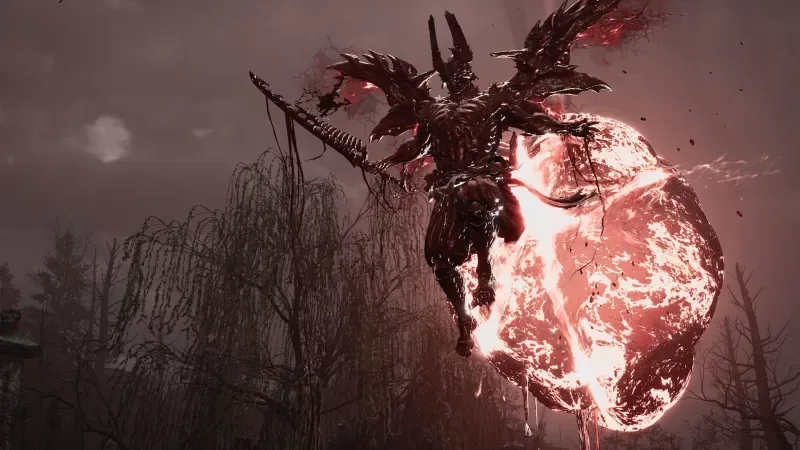
This makes victories particularly potent. The toughest fights can demand near-perfect execution, and failures are frequent enough for the familiar "You have fallen" screen to become an expected part of the learning process. But the reward for persistence is enormous. Clearing a difficult battle after finally recognizing an enemy pattern or landing the right defensive response produces a genuine rush. The game's white-knuckle climaxes are not simply difficult for their own sake; they are designed to make improvement tangible.
Musashi versus the Genma
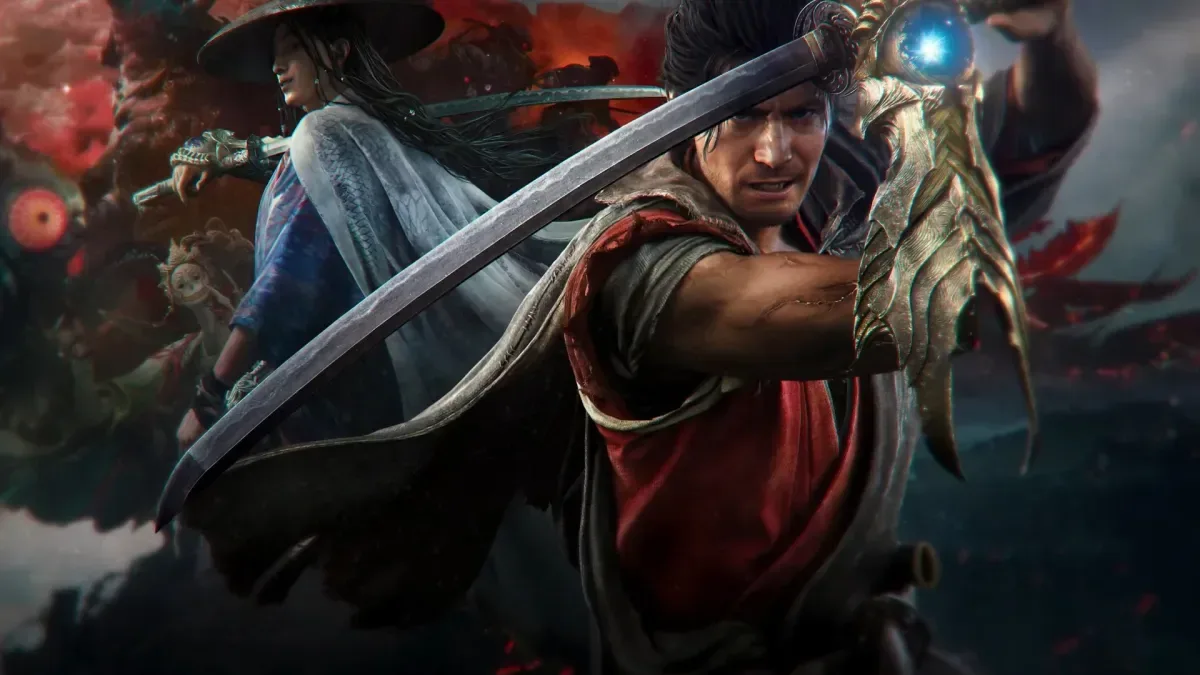
The setup places Musashi in early Edo-period Kyoto, where demonic Genma malice has consumed the city. During the opening events, he acquires an Oni Gauntlet that grants extraordinary power. Rather than embracing it as a convenient mark of destiny, Musashi resents the gauntlet and what it represents. To him, its strength feels unnatural, an artificial intrusion into his pursuit of becoming the best swordsman he can be.
The premise draws on the real Musashi's legend as an undefeated duelist while telling its own supernatural story. This younger fictional version travels through Kyoto in search of fights and answers while confronting a growing threat to the boundary between the living world and the Hell that imprisons the Genma. Musashi's mentor, Ono no Takamura, is an Oni who has devoted himself to protecting that barrier, and his reasons for doing so help establish the game's surprisingly playful perspective. When asked why he accepted this life of endless conflict, Takamura's answer is simple: it is fun.
That sentiment fits the game. Beneath the demon-slaying stakes and difficult clashes, Way of the Sword understands the appeal of learning a combat system until it becomes expressive. Musashi's journey is grueling, but the best encounters make every new piece of knowledge feel valuable.
Postcard Kyoto and combative exploration
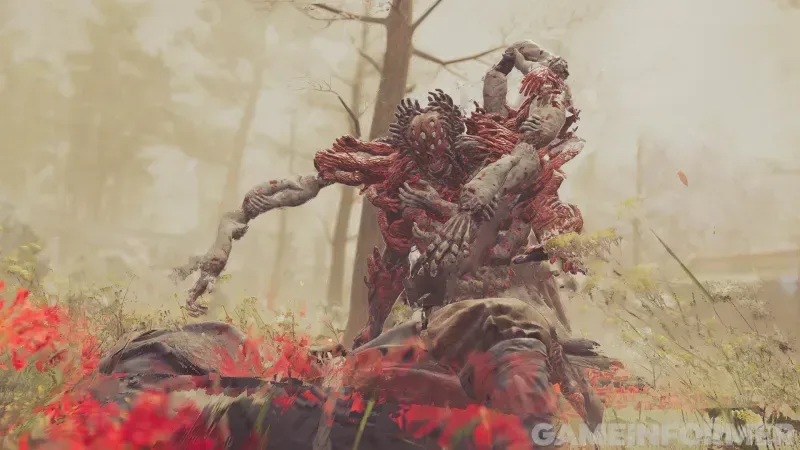
The game gives that action a strong visual stage. Eastern Kyoto and its surrounding locations offer attractive places to explore and fight, including the Arashiyama bamboo forest, castles, Kiyomizu-dera, and an underground laboratory overseen by Dokyo. These environments are more than interchangeable backdrops. Earlier areas often work as playgrounds for combat exploration, encouraging players to encounter fresh Genma, observe their behavior, and discover the most effective response to their attacks.
There is an appealing confidence in these stages. They are designed to invite curiosity, whether that means pushing into a new area, facing an unfamiliar enemy, or returning later with a more capable Musashi. Simple side quests and folktale-inspired "curious cases" provide additional reasons to revisit completed stages, while an otherworldly arena offers a useful place to train and rematch bosses. Those systems help support the game's core message: mastery comes from study and repetition.
Not all repetition is equally welcome, however. The game repeatedly asks Musashi to seal rifts and destroy malice flowers to remove fog. Rifts are closed combat arenas that cannot be exited until every enemy is defeated, effectively serving as another combat quiz before a more significant challenge. In moderation, they reinforce the game's mechanical priorities. In the latter half, they become too common.
When repetition blunts the blade
The rift encounters are Way of the Sword's clearest weakness. Their frequency makes them feel less like natural parts of Kyoto's demonic crisis and more like barriers placed between the player and the next story beat. The issue is compounded by repeated bosses and familiar enemy configurations. Because the combat itself is so strong, these sequences are rarely dull in the moment, but their cumulative effect is exhausting.
There is little dramatic justification for so many of these forced detours beyond the broad fact that demons are causing trouble. That makes sections of the campaign feel padded, particularly because the named antagonists and their ambitions suggest a sharper, more streamlined adventure waiting beneath the extra fights. The game has enough side content, training opportunities, and natural combat challenges without needing to rely so heavily on sealed arenas.
This is where some of the series' early-2000s DNA is most visible. The structure occasionally falls back on designs that can feel dated beside the sophistication of the combat. The result is a game pulled in two directions: one side is a confident modern action challenge built around detailed mechanics, while the other retains habits that interrupt momentum and overextend certain stretches.
A cast that elevates a familiar story
The main plot follows an intentionally straightforward route. Demons are a threat, Musashi is positioned to stop them, and the campaign moves through a largely familiar sequence of escalating supernatural conflicts. It does not radically reshape the series formula. What lifts the narrative is its cast.
Dokyo, an evil scientist with a taunting presence, is a standout villain whose scenes carry a welcome sense of theatrical menace. Izumo no Okuni, Musashi's companion and a kabuki creator, brings childlike steadfastness and warmth to a story led by a more stoic protagonist. Then there is Sasaki Ganryu, a flamboyant rival samurai who also wields an Oni Gauntlet. His appearances are exciting not only because of his personality, but because they signal another punishing showdown.
These larger-than-life personalities keep the story lively. They also distinguish the game from samurai stories that fixate exclusively on honor, revenge, and solemn tragedy. Way of the Sword certainly has dark material, but it leaves room for spectacle, oddity, and the simple pleasure of watching memorable characters collide.
Who should answer the challenge?
This is an easy recommendation for players who want action games that demand patience and mechanical engagement. Anyone who enjoys studying enemy attacks, refining defensive timing, and repeatedly challenging a boss until a strategy finally works will find a great deal to appreciate. The otherworldly practice arena and boss rematches are especially welcome for players who want to improve rather than merely progress.
Those seeking a breezy power fantasy or a fast, uncomplicated campaign should be prepared for resistance. The opening teaches its systems gradually, the hardest encounters offer no simple path around mastery, and the later rifts can make the adventure feel longer than necessary. But for players willing to accept those demands, the combat has the depth and payoff to carry the experience.
Final takeaway
Onimusha: Way of the Sword is the franchise at its most challenging and mechanically complex, and it is arguably its most satisfying as a result. Its sword combat is precise, intense, and consistently rewarding; its bosses turn learning into euphoria; and its Kyoto setting and colorful supporting cast give the journey personality. The frequent rift arenas, reused confrontations, and familiar narrative framework keep it from being as elegant as its best fights, but they cannot stop the force of its core action.
For PC players ready to meet Musashi on his own exacting terms, this is a strong return: one with a few aging elements, but an outstanding blade at its center.
Community
Discussion
Start the conversation.
No comments have been posted yet.