

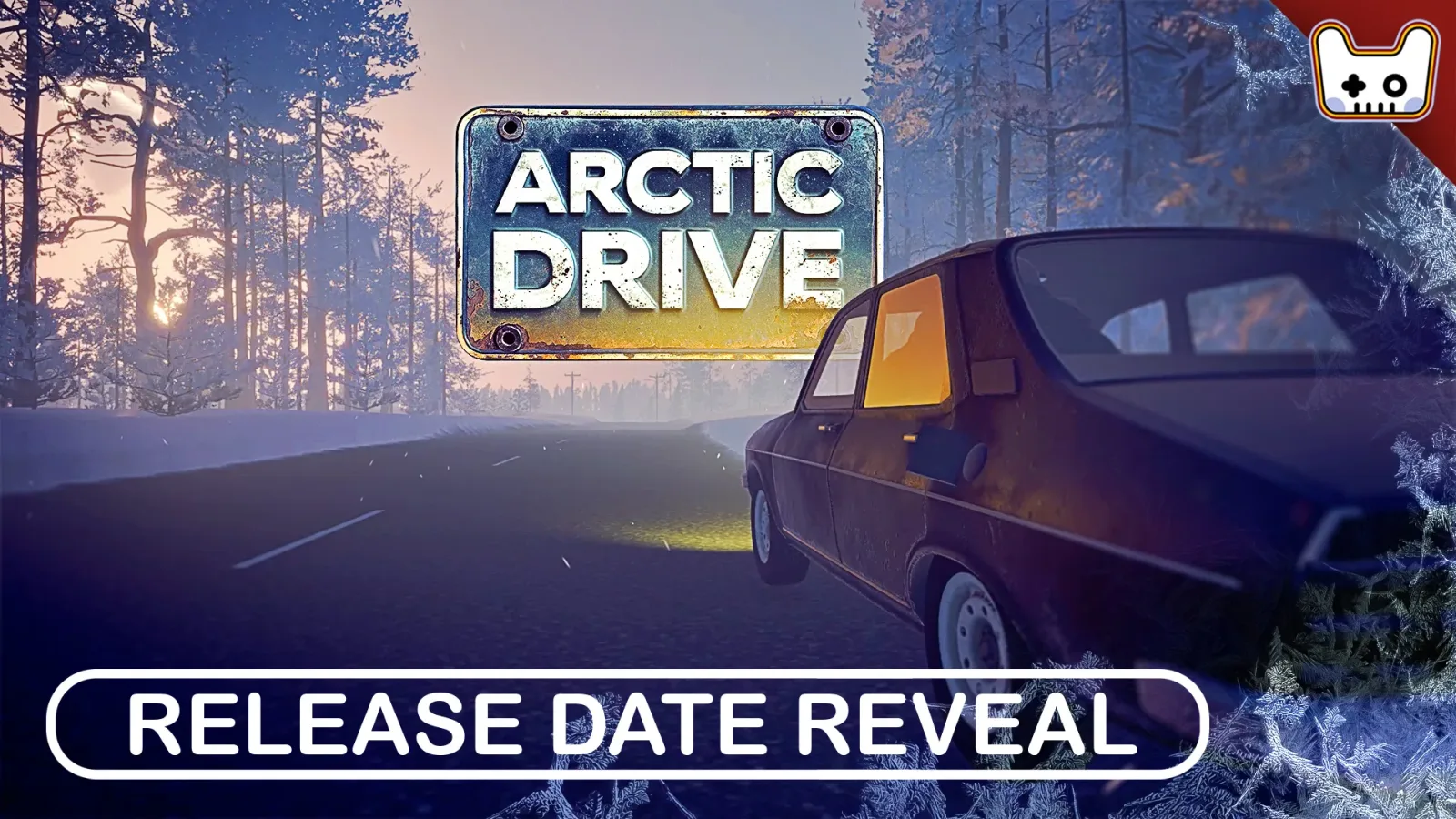
Arctic Drive, the vehicle-focused co-op survival game from PlayTogether Studio and Pebbles Games, will enter Early Access on Steam and Xbox on November 25, 2026. Published by Bonus Stage Publishing, the game sends groups of up to four players into a procedurally generated Arctic wilderness where a reliable vehicle is not simply convenient transportation--it is the foundation of survival.
The announcement follows two playtests that gave prospective players an early opportunity to experience the game's cold-weather expeditions. Across those tests, the development teams say nearly 50,000 players travelled almost 5 million kilometres in-game. That is a sizeable amount of virtual ground covered for a game built around long-distance travel through dangerous conditions, and it points to an audience already interested in its blend of driving, scavenging and survival management.
Arctic Drive's Early Access version will arrive with its core pitch intact: explore a hostile frozen landscape, gather the resources needed to continue, repair what breaks, and keep moving in search of safety. The Arctic is presented as an active obstacle rather than a scenic backdrop. Blizzards, whiteouts, changing daylight and the constant pressure of cold are all intended to shape how players plan each journey.
A survival game where the car is the lifeline
Many survival games ask players to establish shelter in one location, gradually building a permanent base and expanding outward. Arctic Drive takes a more mobile approach. Its central vehicle is the group's most important tool for crossing the wilderness, carrying supplies and maintaining the momentum required to reach safer ground.
For useful background on this topic, read Farming Camp Launches on PC and Consoles With Two-Week Discount.
That makes vehicle condition a major concern. Arctic Drive features simulated damage for its vehicles, including deformable chassis and individual parts. A difficult route or a poorly handled encounter with the environment can therefore have consequences beyond a cosmetic dent. Players will need to keep their rig functional, identify what requires attention and use the supplies they find to make repairs before an existing problem turns into a stranded expedition.
The emphasis on a physical vehicle also gives the game a practical survival rhythm. Supplies are not just abstract inventory values. Objects can be lifted, carried and loaded into a vehicle, meaning players will have to consider what is worth bringing along, how much room remains, and what might be essential when the weather turns. In a game about pushing deeper into a freezing wilderness, the question is not only whether a resource has been found, but whether it can safely be hauled forward.
Trailers and RVs expand that idea further. These can be converted into mobile bases, allowing players to take more of their survival infrastructure with them rather than leaving everything behind. The feature fits the game's expedition-oriented structure: instead of treating travel as the time between meaningful activities, Arctic Drive makes the road itself the core of the experience.
For another perspective on this story, read Arctic Drive Heads to Steam and Xbox Early Access on November 25.
Procedural terrain and severe weather set the pace
Every trip in Arctic Drive takes place across procedurally generated Arctic environments. That structure should give expeditions a degree of unpredictability, with routes and conditions that cannot simply be memorised in advance. Players will need to locate supplies and determine how to continue through whatever winter landscape the game creates for their run.
The environment is also supported by a full day-night cycle and weather systems that include blizzards and whiteouts. These conditions are especially important in a driving survival game because visibility, timing and navigation are closely connected. A journey that appears manageable under clear skies may become far more threatening if a whiteout obscures the way or a storm arrives before a group has finished gathering what it needs.
Alongside the external hazards, players must look after the basic needs of their characters. Hunger, thirst and body temperature are all part of the survival model. This means successful travel requires attention to both the vehicle and the people using it. A repaired car alone will not solve every problem if players have failed to bring enough supplies or cannot keep themselves warm through worsening conditions.
The result is a game structure that appears to reward preparation without eliminating danger. Before heading onwards, a group may have to decide whether its current resources are sufficient, whether a damaged component can survive another stretch of rough travel, or whether it is better to search for additional supplies despite incoming weather. Those choices are central to the tension of an Arctic setting, where the margin for error can be narrow.
Co-op expeditions for one to four players
Arctic Drive supports online co-op for one to four players. The option to play alone ensures that the survival journey can be tackled as a personal challenge, while the multiplayer format creates room for shared responsibilities during longer trips.
A co-op group can naturally divide attention between driving, scavenging, loading cargo, monitoring supplies and repairing the vehicle. Just as importantly, a team will need to communicate when conditions get worse. A storm, mechanical failure or shortage of vital resources can create situations where every player has a useful role, particularly when the group is trying to protect a mobile base and its contents.
Physical objects and vehicle loading should give multiplayer sessions an especially hands-on feel. Rather than merely selecting items from menus, players can gather equipment and place it into their transport. That approach has the potential to make even routine preparation feel collaborative: one player can search a location, another can organise cargo, and someone else can make sure the vehicle is ready to leave before the weather closes in.
The development teams have also confirmed two ways to approach the game's wilderness. Players can take on optional scenarios or use an open sandbox mode. Scenarios may offer more directed survival situations, while the sandbox option provides space for players to set their own objectives and create longer-running expeditions. The distinction is useful for a game with several interconnected systems, as it gives players a choice between structured challenges and freer exploration.
What Early Access means for Arctic Drive
The November release is specifically an Early Access launch, rather than a confirmation of the game's finished 1.0 version. Early Access gives PlayTogether Studio and Pebbles Games a chance to put Arctic Drive's foundational systems in front of a wider audience while development continues. Its vehicle damage, survival needs, physical cargo handling, changing weather and online co-op are closely linked systems, so player feedback will be particularly relevant to how they feel together during real expeditions.
The two prior playtests have already supplied the developers with a large pool of player activity to examine. Nearly 50,000 participants travelling almost 5 million kilometres suggests that the game has been tested across a broad range of journeys and player decisions. It does not reveal the full scope of content planned for Early Access, but it does show that the developers have been gathering practical feedback before opening the game to Steam and Xbox players.
Players should still keep the Early Access label in mind. The announced information confirms the game's core concept and feature set, but does not establish a final release date, price, or a detailed roadmap for future additions. What is known is that the November build will focus on the experience already outlined: travelling through a procedural winter wilderness, sustaining a vehicle and its occupants, and finding a way onward when the Arctic refuses to make that easy.
A colder kind of road trip
Arctic Drive stands out by treating transport as an essential part of the survival fantasy. The car is not a fast-travel shortcut or a disposable utility; it is a vulnerable moving refuge that must be maintained, stocked and protected. Trailers and RVs extend that idea into mobile homes, while fully physical items make every load of supplies part of the journey.
For players who enjoy survival games that turn logistics into meaningful decisions, the combination of harsh weather, mechanical damage and cooperative travel could make Arctic Drive one to watch. Its Arctic setting promises a world where poor visibility, falling temperatures and a badly timed breakdown can change the entire plan.
Arctic Drive enters Steam and Xbox Early Access on November 25, 2026.


Community
Discussion
Start the conversation.
No comments have been posted yet.