

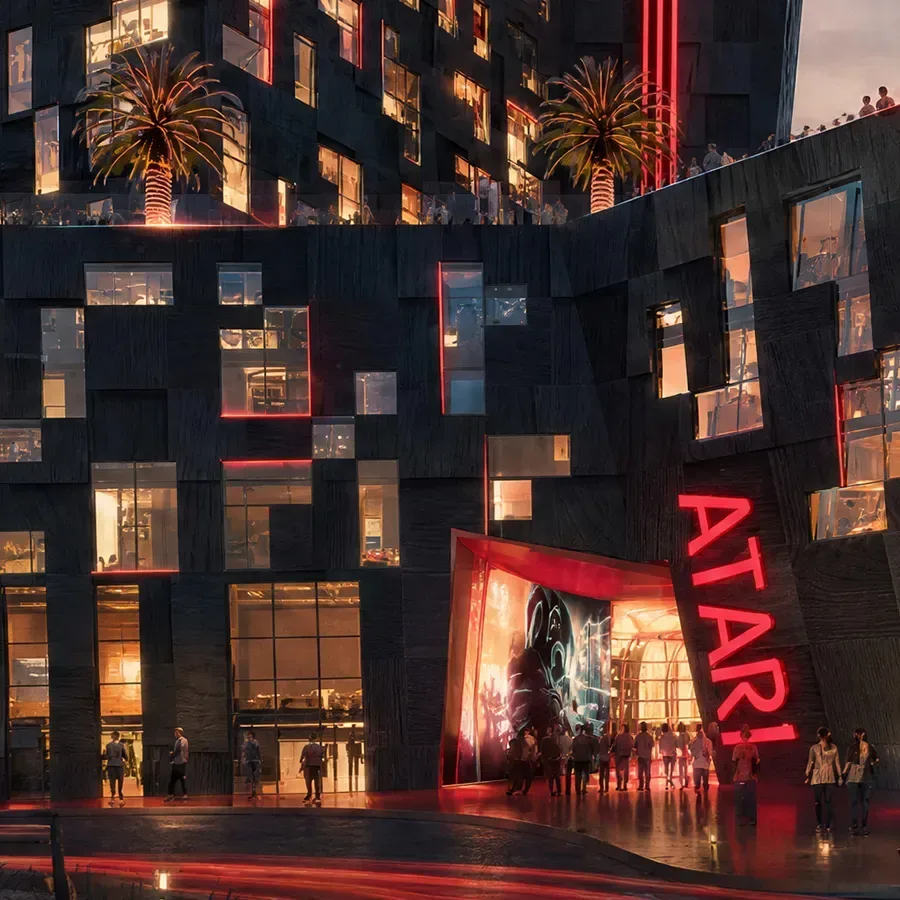
Atari's long-planned move into themed hospitality has reached a tangible new milestone. The first Atari Hotel has officially broken ground in Phoenix, Arizona, beginning a construction process for a gaming-centric destination that is expected to include high-tech rooms, creator facilities, immersive entertainment, and an esports venue with capacity for more than 2,000 people.
The Phoenix project was first revealed in January 2020, making this week's start of work an important step for an idea that has spent years in the concept stage. Construction is currently projected to conclude sometime between late 2028 and early 2029. If that schedule holds, the venue could become a significant dedicated space for competitive gaming, live music, streaming, and game-adjacent events in the United States.
The property is planned for Phoenix's Roosevelt Row area, a downtown arts district known for galleries, restaurants, murals, and regular community events. Its arrival would put an overtly gaming-branded hotel in a neighborhood already built around culture, nightlife, and entertainment rather than separating it into a conventional resort setting.
A Hotel Designed Around Gaming and Events
Atari Hotels is positioning the Phoenix location as more than a place to stay. The development is planned to combine hospitality with spaces designed for spectators, competitors, creators, tourists, and local visitors. The announced features include technologically enhanced guest rooms, creator studios, shopping, restaurants, layered immersive bar areas, a sportsbook, and interactive experiences throughout the site.
For useful background on this topic, read Phantom Blade Zero day-one patch Targets Ray Tracing, Bugs and Nvidia Driver Stability.
At the center of the proposal is an esports and concert venue built to hold over 2,000 attendees. That capacity would give the hotel room to host tournaments beyond the scale of a typical local competition, while still being substantially more intimate than the major sports arenas that occasionally stage the industry's largest events.
Exactly which games, tournament organizers, streamers, performers, or production partners will use the venue has not been announced. Likewise, the project has not outlined specific hardware partners, broadcast infrastructure, competitive leagues, or a schedule of opening events. Those details will likely be key in determining whether the building becomes a frequent esports destination or primarily a themed event venue with gaming as one part of its programming.
Still, the combination of an arena and creator studios reflects how gaming entertainment has evolved. Modern game culture is not limited to software releases and retail hardware. It also includes livestreaming, video production, community meetups, competitive play, concerts, cosplay, food, nightlife, and creator-led programming. The Phoenix hotel is being designed to bring several of those activities together under one branded roof.
Phase One Begins With Demolition and Foundations
The project is entering what has been described as Phase One. Initial work will involve demolishing the existing building on the property and preparing the site for the new hotel's foundation. A second phase is expected to follow shortly after that work is completed.
Breaking ground does not eliminate the practical challenges that can affect a multi-year construction project. The stated completion range leaves substantial time for further design refinements, construction changes, and additional announcements. At present, the late 2028 to early 2029 target remains the public timetable rather than a firm opening date.
Intersection Development is involved in the Phoenix build. Partner Jordan Taylor described the groundbreaking as the moment the team is effectively pressing start on the property, emphasizing the opportunity to develop an interactive hometown venue in collaboration with Atari and celebrate the milestone with the Phoenix community.
Atari Chairman and CEO Wade Rosen said the beginning of construction supports a vision of gaming as a lasting part of pop culture. He framed the hotel as a new entertainment experience intended to appeal to dedicated fans, visitors traveling to Phoenix, and people who live in the city.
A New Look for an Old Concept
Early Atari Hotel imagery was notably more extreme in its science-fiction presentation. Concept art released in 2020 imagined a structure shaped around Atari's recognizable logo, surrounded by intense neon lighting and futuristic robot statues. The overall impression was strongly cyberpunk, resembling a towering entertainment complex from a futuristic video game city.
More recent visuals take the idea in a different direction. The revised concept art appears less tied to that highly stylized neon future and more aligned with a contemporary urban hospitality development. That shift may make the building better suited to its real-world neighborhood while still leaving room for digital displays, interactive interiors, and recognizable Atari branding.
The design is being handled by räkkhaus, an architecture studio that presents its work as a meeting point between emotion, form, and radical ideas. For a project whose central challenge is translating a classic game company's identity into a physical destination, the architecture will matter as much as the logo placed on the exterior.
Atari has a history that gives the hotel an unusually broad potential audience. The company's name is associated with arcade culture and early home consoles, but it also remains active in modern games and licensing. That means an Atari-branded space can potentially speak to older visitors with memories of arcades and the 2600 while also courting younger audiences who know gaming through esports, streaming, social media, and contemporary PC and console releases.
Esports, Streaming, and Hospitality Continue to Overlap
The proposed creator studios could be one of the project's most consequential components, even if they are less visually prominent than a 2,000-plus-seat event hall. Professional creators increasingly need production-ready spaces for streaming, interviews, podcasts, video editing, sponsorship work, and collaborations. A hotel that can host those activities alongside lodging and public events could attract groups attending conventions, tournaments, brand activations, or content-production sessions.
That model also provides flexibility. An esports competition may fill the large venue on one weekend, while a concert, comedy performance, fan convention, launch event, or community gathering could use it at another time. The broader mix of retail, dining, immersive activities, and nightlife spaces is positioned to keep visitors on-site whether or not a major tournament is in progress.
The announced sportsbook is another indication that the developers see competitive gaming as part of a wider sports-and-entertainment ecosystem. Details regarding operations, licensing, permitted wagering options, and opening plans have not been provided. Its eventual role will depend on Arizona regulations as well as the final business arrangements for the property.
For Phoenix, the project could add an unusual kind of tourism draw: a venue built specifically around the language and rituals of gaming culture. Traditional themed hotels often lean on film, music, luxury, or regional history. Atari Hotel instead aims to make controllers, competition, creator culture, and interactive technology central to the guest experience.
What Still Needs to Be Announced
Despite the start of construction, many of the most practical questions remain unanswered. No room count has been disclosed, and there is no announced pricing structure for stays, events, studio use, or venue tickets. The plans have not identified esports franchises or organizers that will make the building a regular stop, nor have they confirmed any particular game publishers, arcade installations, or permanent exhibitions.
There has also been no detailed explanation of what the hotel's "immersive experiences" will involve. The phrase could cover anything from game-themed installations and interactive displays to virtual reality attractions, projection-based environments, live performances, or branded social spaces. Those choices will shape whether the finished hotel feels like a full-scale interactive attraction, a contemporary hotel with gaming flourishes, or something between the two.
Among the project's partners and celebrity investors are FaZe Adapt and professional wrestler and mixed martial artist Henry Cejudo. Their involvement underscores the attempt to connect multiple corners of modern entertainment culture, from esports and online creators to combat sports and broader celebrity audiences.
For now, the clearest fact is that the Atari Hotel is no longer only a set of concepts and promotional images. Site work in Phoenix has begun, with the initial phase focused on clearing the existing structure and establishing the foundation for the replacement. Over the next two years, the project will need to turn its ambitious list of features into concrete details.
If it arrives within its current target window, Atari Hotel Phoenix will test whether one of gaming's most historic brands can successfully anchor a major real-world entertainment destination. The promise is expansive: accommodations, competition, concerts, creator production, food, shopping, nightlife, and immersive technology in one place. The construction underway in Roosevelt Row is the first real measure of whether that promise can become a destination built for the current era of game culture.
Community
Discussion
Start the conversation.
No comments have been posted yet.