

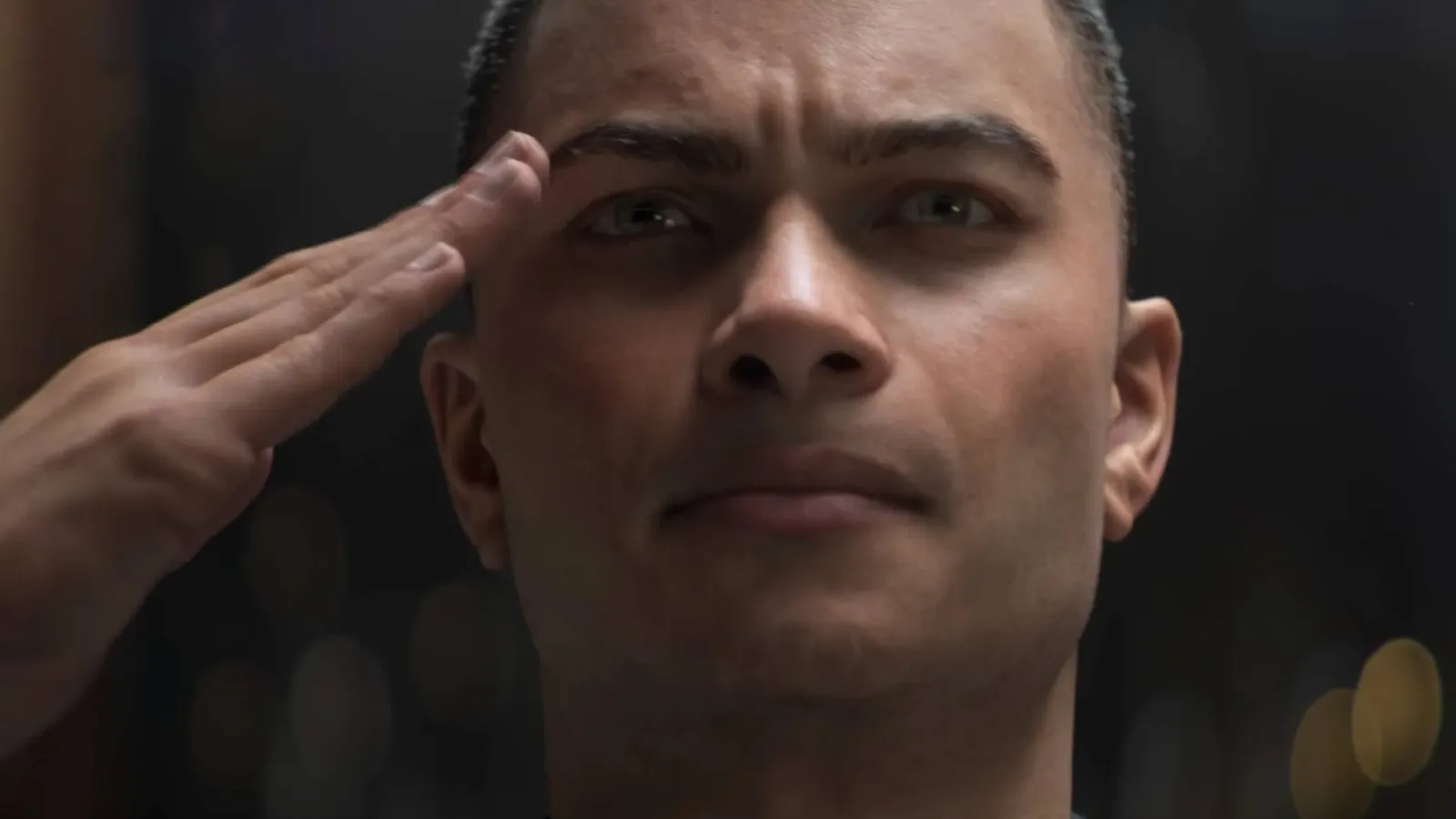
Blizzard's newly revealed StarCraft shooter is being designed around a complete, self-contained narrative rather than an ongoing seasonal model, creative director and general manager Dan Hay has said. The project, announced during BlizzCon 2026, marks a major shift for one of Blizzard's best-known universes: instead of another real-time strategy entry, the next game is planned as a first-person shooter set in the conflict-ridden StarCraft setting.
Hay has described the current concept as a narrative-driven open-world shooter in which players create and name their own character, then experience that character's journey from its opening moments through to a conclusion. While Blizzard has not announced a release date, platforms, or full gameplay details, the framing is significant. It suggests the studio is pursuing a substantial standalone adventure instead of building the game chiefly around recurrent seasons, continuously rotating content, or an indefinitely extended story.
A "box product" with a full narrative arc
In discussing the game's planned structure, Hay used the term "box product" to convey the kind of experience Blizzard is aiming to make. The intended format is a game players purchase, play through, and finish, with a story that has a beginning, middle, and end.
That does not necessarily rule out every form of extra content after launch. Hay stressed that development is still underway and that plans can change over the months and years ahead. But he was clear that the game currently being built is not a seasonal game. The main story is designed to have a definitive ending, even as players are given room to travel and explore within the wider world.
For useful background on this topic, read Apple's Rumored iPhone Controllers Could Signal a Bigger Gaming Hardware Push.
For a modern blockbuster shooter, that is a notable statement of intent. Seasonal structures have become commonplace across multiplayer-focused action games, with regular battle passes, limited-time events, progression resets, and chapters that can run for years. Blizzard's language instead points toward a traditional premium release: an authored campaign with exploration, a player-driven lead character, and a conclusion rather than a narrative held open indefinitely.
The use of "box product" is also a useful distinction from simply calling the project an open-world shooter. Open worlds can support almost any model, from tightly authored single-player campaigns to always-online service games. Hay's description suggests Blizzard wants the benefits of a large, explorable setting while retaining a central story with a clear destination.
Character creation could offer a new view of the Koprulu Sector
StarCraft has historically told much of its story through named heroes and faction leaders. Players have commanded Jim Raynor, Sarah Kerrigan, Artanis, Nova, and many other characters whose choices shaped the fate of Terrans, Zerg, and Protoss across the Koprulu Sector. The new shooter appears to take a different route by putting a player-created protagonist at its center.
Hay said players will create and name their character, then follow that character's story. Blizzard has not explained who that protagonist will be, which faction they may belong to, whether choices will meaningfully alter the plot, or where the shooter sits in the StarCraft timeline. Those unanswered questions leave plenty of room for speculation, but they also underline how early the public information remains.
Still, character creation could be a natural fit for an open-world take on StarCraft. The universe has always implied a much larger civilian, military, mercenary, scientific, and criminal ecosystem beyond the commanders seen from the strategy-game perspective. A shooter could place players closer to the ground, focusing on a person attempting to survive or find a purpose amid Terran political turmoil, Zerg infestations, Protoss technology, corporate interests, and war on distant colonies.
The approach may also make it easier for Blizzard to tell a new story without requiring players to have exhaustive knowledge of every previous campaign. Longtime fans will likely be watching for familiar places, factions, and lore, but an original protagonist could provide an accessible entry point for players whose first StarCraft experience is a shooter rather than an RTS.
Dan Hay's background points toward open-world shooter experience
Hay's appointment is particularly relevant to the game's direction. Before joining Blizzard, he held senior leadership roles on Far Cry 3, Far Cry 4, Far Cry 5, and Far Cry 6, a series closely associated with large maps, player freedom, combat sandbox systems, strong regional settings, and cinematic campaign storytelling. He has also worked on Diablo 4 expansions during his time at Blizzard.
That experience makes the announced format easier to understand. A StarCraft shooter with a freely explorable world, missions, encounters, and a campaign arc could draw on many of the strengths associated with contemporary open-world action design. The key question will be how Blizzard adapts that structure to a universe whose identity has traditionally been shaped by strategy, asymmetrical factions, massive wars, and distinctive science-fiction technology.
The debut cinematic trailer reportedly carried some of the chaotic, militarized energy that players may associate with cooperative alien-war shooters such as Helldivers 2. However, Hay's comments indicate Blizzard's project is not being positioned purely as an endlessly online co-op experience. Its stated focus on a personal character story and a conclusive narrative points to a different kind of foundation, even if the final game may still include features that have yet to be revealed.
There is no confirmation yet regarding single-player-only play, cooperative support, competitive multiplayer, online requirements, downloadable expansions, or post-launch updates. Hay's comments should therefore be read as a description of the team's central structure rather than a complete feature list. What is clear is that Blizzard does not currently want the defining pitch to be an ongoing seasonal treadmill.
Why the structure matters for StarCraft
The announcement is important because StarCraft has spent years without a new full game in its original genre. StarCraft II's three-part saga concluded with Legacy of the Void, and although the franchise has remained culturally influential, Blizzard's new project represents the first clear signal that the universe is receiving a major new direction rather than another direct RTS continuation.
A shooter can potentially explore elements that strategy games often observe from a distance. Instead of directing Marines across a battlefield from above, players may be placed inside a suit of combat armor. Instead of ordering a strike against a Zerg hive, they may have to navigate the aftermath of an infestation firsthand. Protoss ruins, Terran colonies, industrial worlds, frontier settlements, and alien ecosystems could all take on a different scale when experienced through a first-person perspective.
At the same time, adapting StarCraft will present a major challenge. The series has a strong visual and mechanical vocabulary: Marines, Siege Tanks, Hydralisks, Zealots, cloaking technology, psionic powers, dropships, orbital infrastructure, and enormous factional warfare. Fans will want more than familiar names and armor silhouettes. They will likely expect the shooter's weapons, enemies, environments, and missions to express the tactical identity that made the original games enduringly popular.
The open-world premise adds another layer of intrigue. StarCraft settings are often defined by conflict on a huge scale, so Blizzard will need to balance free exploration with the urgency of a narrative campaign. Hay's emphasis on a fixed ending suggests that the studio is conscious of the need for direction, rather than treating the world as an endless collection of disconnected activities.
Blizzard is promising a more dependable release cadence
The new StarCraft game is part of a broader slate Blizzard has discussed unusually far in advance, alongside Diablo 5. Blizzard president Johanna Faries has said the company intends to "ship, and ship big, and ship on time," a promise that will naturally place added attention on how the studio communicates its development plans and eventually delivers these projects.
For now, the shooter remains at an early stage from the public's point of view. Its exact title is simply StarCraft, and Blizzard has not shared a launch window. It has also not confirmed the game's platforms, the scope of its open world, the identity of its protagonist, or the precise balance between solo storytelling and other possible modes.
Even with those gaps, Hay's comments establish an important expectation. Blizzard's goal is not presently to make StarCraft into a seasonal destination first and a story second. The team is aiming for an open-world shooter where players can inhabit an original character, explore the setting, and reach an actual ending. If Blizzard can translate the scale and atmosphere of the Koprulu Sector into that format, the result could become one of the franchise's most dramatic reinventions yet.
Community
Discussion
Start the conversation.
No comments have been posted yet.