

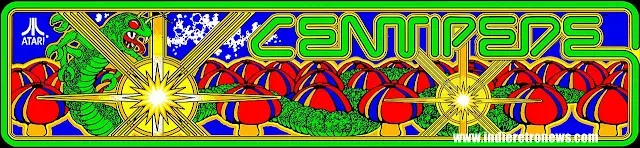
One of arcade gaming's most recognizable insect invasions is making its way to Commodore Amiga hardware. Developer Acidbottle has announced a new port of Centipede, Atari's formative arcade shooter, with the stated goal of recreating the coin-op experience across the Amiga family.
The project is currently described as a beta and remains in development, but its ambitions are clear: the conversion is intended to support the original chipset generations, including OCS and ECS machines, as well as later AGA-equipped Amigas. That is an important promise for a platform with a long and varied hardware history, potentially allowing owners of a broad range of classic systems to take on the descending arthropod menace rather than limiting the release to more powerful configurations.
Acidbottle's version is positioned as a close, pixel-accurate recreation of the arcade original. Players will once again control the small blaster positioned at the bottom of the playfield, firing upward through a dense field of mushrooms while a segmented centipede winds its way down toward danger. It is a premise that remains instantly understandable, but the pressure comes from the speed, movement, and messy interactions of the creatures filling the screen.
An arcade staple returns to a classic home computer
Centipede is among the most enduring games of the early arcade era. Created by Dona Bailey and Ed Logg, it became a major success for Atari and has retained a distinct identity over the decades through its bright visuals, unusual trackball-led control scheme, and screen-filling chaos. Its place in industry history is also notable because it was widely recognized for reaching a substantial audience of women at a time when video game marketing and arcade culture were often treated far more narrowly.
For useful background on this topic, read Guillermo del Toro Says He Has No Plans to Make Another Video Game, Reflects on Kojima and BioShock.
The central design is simple enough to explain in a sentence, yet it produces the kind of escalating complications that defined the best coin-operated games. The centipede begins near the top of the display and travels horizontally, changing direction and descending each time it encounters a mushroom or reaches the edge. Every shot that strikes the creature breaks it apart, creating separate pieces that continue their own paths. What starts as a single enemy can therefore become a more difficult swarm of independently moving threats.
The advancing centipede is only part of the problem. Spiders dart around the lower portion of the screen, creating immediate danger near the player's limited movement area. Fleas drop from above and add mushrooms to the field, while scorpions can poison mushrooms and alter the behavior of centipede segments that pass through them. These systems turn an apparently static board into something players must constantly manage. Shooting mushrooms can open safer lanes, but doing so also demands time and attention when enemies are closing in.
That balance of direct shooting and rapid prioritization is a major reason the game has remained memorable. A faithful Amiga rendition will need to preserve not just the visuals and enemy list, but the arcade game's distinctive rhythm: clearing paths, reacting to sudden movement, and surviving a field that grows more crowded as the action continues.
Support planned for OCS, ECS, and AGA hardware
The announced compatibility target is particularly encouraging for Amiga enthusiasts. OCS, ECS, and AGA refer to the graphics chipset families spanning much of the system's lifespan. Supporting all three means the port is being developed with both earlier and later Amiga setups in mind rather than treating the platform as a single, uniform specification.
For a game rooted in early-1980s arcade design, the Amiga is a natural fit on paper. Its hardware has a deep library of arcade conversions and fast-paced action games, while its community continues to produce new software for original machines, accelerators, emulation setups, and FPGA-based recreations. Still, delivering a convincing arcade conversion is about more than finding enough processing power. Timing, sprite behavior, sound, control response, and the feel of the increasingly frantic later stages all matter greatly for a game as immediately familiar as Centipede.
The project's stated aim of a pixel-perfect presentation sets a high bar. Such language suggests an effort to closely match the appearance of the original cabinet rather than simply make a loosely inspired adaptation. For players who know the arcade version well, accuracy in the mushroom layouts, enemy animation, colors, and playfield behavior can make the difference between a nostalgia piece and a port worth returning to.
There is no suggestion that the Amiga release will duplicate the arcade cabinet's trackball controls. The announced details focus on the game conversion itself rather than input options. That leaves practical questions about controls unanswered for now, including how the movement and firing setup will feel on the wide range of controllers and keyboard configurations used with Amiga systems. The arcade game's trackball is an important part of its identity, but home versions have historically needed to translate that experience to more conventional hardware.
High scores will be saved to disk
One confirmed addition is persistent high-score saving to disk. In an arcade game built around score chasing, that feature is more meaningful than it may initially sound. Original cabinet sessions were often temporary contests, with players entering initials before the machine was powered down or the score table was eventually replaced. A disk save option gives Amiga players a way to preserve their best performances over time.
It should also make the port more appealing for households, retro-computing clubs, and anyone who enjoys revisiting old games in short sessions. Centipede is especially suited to repeat attempts: its rules are clear, runs can become intense quickly, and the desire to beat a familiar score can provide a reason to return long after the first play. Keeping records on disk turns those isolated sessions into a more lasting leaderboard.
The feature fits the broader character of modern retro releases. Developers working on legacy platforms often try to retain the core of an older game while adding quality-of-life conveniences that would have been difficult, impractical, or unnecessary in the original arcade environment. Persistent records do not change the game's essential challenge, but they can make that challenge more rewarding for a home-computer audience.
A work in progress with important caveats
As promising as the announcement is, prospective players should keep the project's current status in mind. The build is described as a beta, and the developer has warned that it may crash or perform at the wrong speed depending on the machine being used. That warning is especially relevant given the goal of compatibility across several Amiga chipset generations and the countless real-world differences between individual retro setups.
Performance issues in an arcade conversion can be especially noticeable in a game such as Centipede. The original experience depends on a precise sense of momentum. If movement is too quick, the descending enemies may become unreasonably difficult to track; if it is too slow, the tension and pace that define the game can be diminished. Stability will likewise be a key area to watch as the beta is tested on a range of configurations.
The developer has also disclosed that some work on the project has been assisted by artificial intelligence. The announcement does not detail which parts of development used those tools, so it would be premature to draw broader conclusions about their role. What is clear is that the disclosure has been made directly alongside the technical warning, giving the Amiga community context as the work continues.
What remains to be seen
At present, the announcement establishes the intended hardware support, the arcade-faithful direction, the familiar enemy lineup, and the disk-based score saving feature. It does not provide a final release date, price, or detailed distribution plan. Nor does it confirm whether there will be additional modes, controller-specific options, enhancements beyond the original game, or any changes made in response to beta feedback.
For now, the appeal is in the prospect of a classic arriving on a platform that still inspires active development decades after its commercial peak. The Amiga community has long embraced both original games and conversions that demonstrate what its machines can do. A carefully tuned version of Centipede could offer a compact but compelling addition to that tradition, particularly if the finished build delivers consistent performance on the OCS, ECS, and AGA systems named in the announcement.
Until then, this is a project best viewed as an early work in progress rather than a finished recommendation. Its goals are attractive: classic arcade action, broad Amiga support, a close visual recreation, and a practical way to keep high-score rivalries alive. The remaining development and testing will determine whether Acidbottle's port can capture the fast, unpredictable energy that made Centipede an arcade fixture in the first place.
Community
Discussion
Start the conversation.
No comments have been posted yet.