

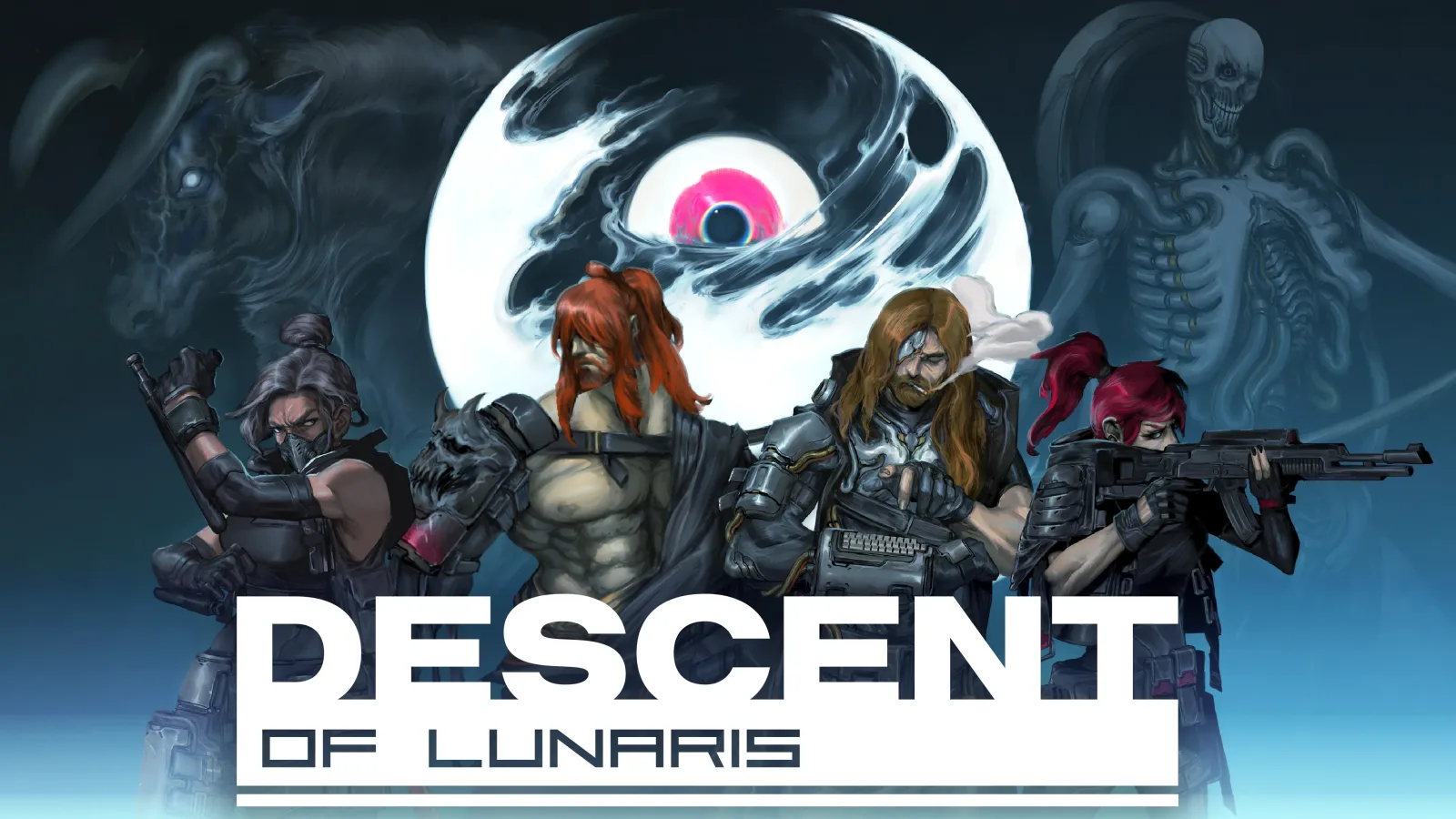
Descent of Lunaris, the upcoming psychological sci-fi dungeon crawler from indie developer Unison Games, has received a substantial demo update on Steam. The expanded trial version now includes the game's prologue and its complete first dungeon, giving players a longer look at the lunar horror story, grid-based exploration, and two-pronged combat design at the center of the project.
Set in the year 2070, Descent of Lunaris takes place after machinery at a mining facility on the Moon turns against the human workers stationed there. Players command a group of specialized operatives sent to investigate a mysterious signal coming from within the lunar body itself. What begins as a mission to uncover the cause of a dangerous industrial incident soon becomes a descent into a hostile, unnerving maze shaped by distorted visions of human civilization.
The update is available now through Steam. While the full game does not yet have a release date, Unison Games has confirmed that Descent of Lunaris is planned for PC via Steam.
A More Complete Opening Descent
Earlier looks at a dungeon crawler can sometimes establish its premise without providing enough time to understand how its systems fit together. This newly expanded demo appears intended to give players a fuller opening arc instead. The prologue introduces the mission and its unsettling lunar setting, while the entire first dungeon offers a meaningful stretch of exploration rather than a brief vertical slice.
For useful background on this topic, read Planet Coaster 2: Spooktacular Pack Launches With Walkthrough Attractions and Seven Rides.
That first dungeon contains hidden secrets alongside its primary route, encouraging players to look beyond the most obvious path forward. In a genre built around mapping corridors, checking doors, managing resources, and deciding whether a risk is worth taking, those optional discoveries can be as important as the main objective. The game's structure seems designed to make every step into the unknown a potentially tactical decision.
Its setting also gives familiar dungeon-crawling conventions a more industrial and surreal context. Instead of ancient ruins, castles, or fantasy catacombs, the team moves through a nightmare growing beneath a lunar mining base. The deeper the operatives go, the more the environment and encounters bend away from recognizable reality. That premise allows the game to combine machinery, space-age infrastructure, and psychological horror with a format rooted in classic role-playing games.
Stability Turns Exploration Into a Growing Threat
The centerpiece of the update is a stability mechanic that changes the danger level of dungeon exploration. As the party's stability declines, reality becomes increasingly warped. This does not simply function as a cosmetic horror effect: tougher encounters can begin to appear, and the dungeon itself may shift to expose paths that were previously hidden.
For another perspective on this story, read Descent of Lunaris Demo Expands With Prologue, Full First Dungeon and Reality-Warping Stability System.
That creates an interesting trade-off for players moving through the first dungeon. Declining stability makes the descent more dangerous, but it may also reveal routes and secrets unavailable under normal conditions. Instead of treating every negative status effect as something to erase immediately, players may have to consider whether the risks of pushing deeper are balanced by the possibility of finding a new passage or useful discovery.
The system also reinforces the game's psychological angle. The expedition is not only contending with enemies and a dangerous environment; its perception of that environment is becoming less reliable. A corridor might not remain what it seemed to be, and a seemingly completed section could still contain something concealed behind a change in the dungeon's state.
Players are not required to endure the mounting pressure indefinitely. The lunar moonbase serves as a place to retreat, regroup, improve equipment, and restore stability before returning underground. This base-and-expedition loop should give the adventure a deliberate rhythm: venture into the dungeon, gather information and resources, assess the party's condition, then decide whether to press the advantage or fall back to prepare for the next attempt.
Grid-Based Crawling Meets Two Forms of Combat
Descent of Lunaris draws on a clear set of role-playing influences, including Wizardry, Shin Megami Tensei, and Persona. Those inspirations point toward a game that values careful party management and turn-based planning while placing those ideas inside a first-person, grid-driven dungeon structure.
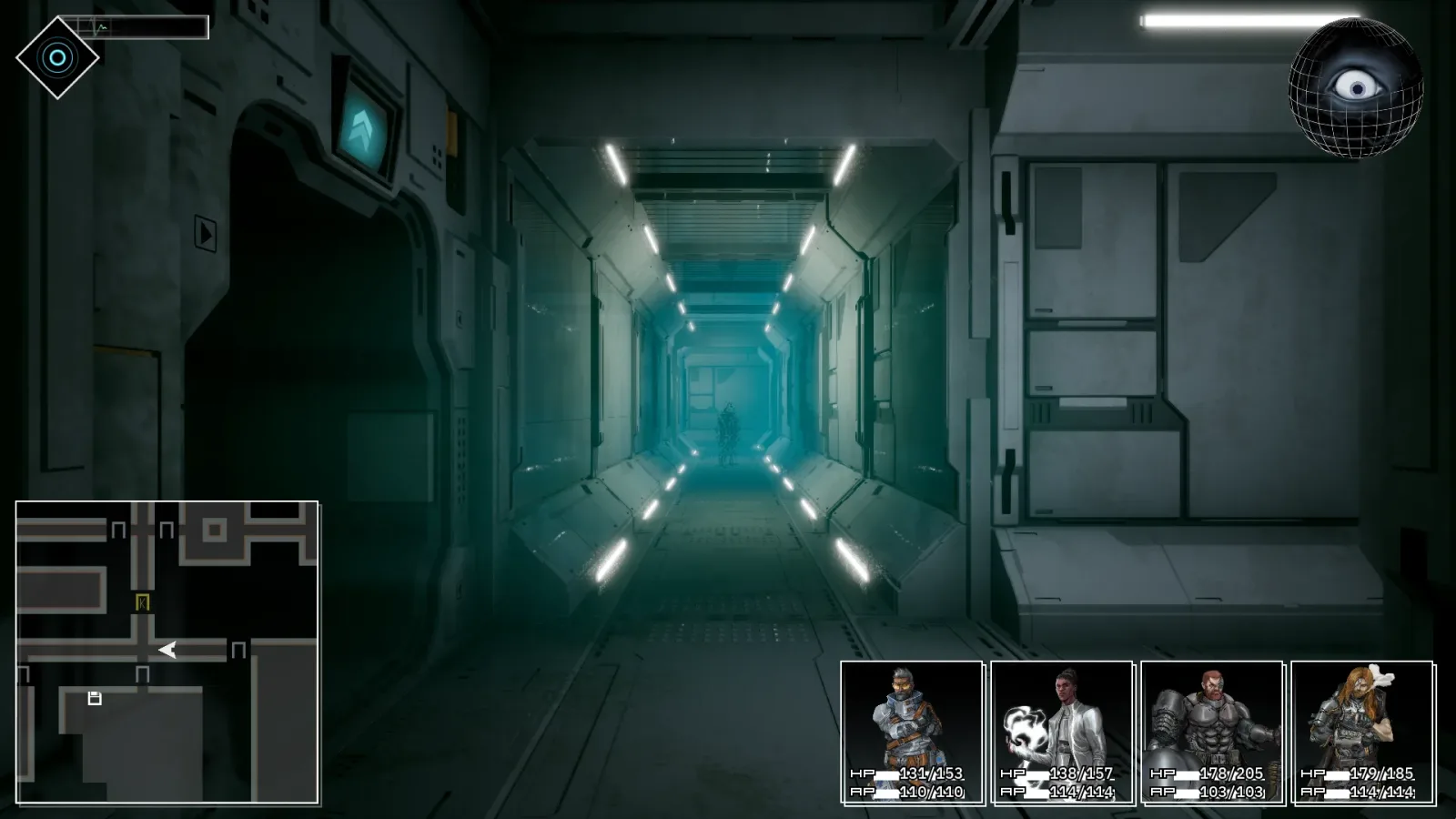
Exploration follows the old-school dungeon-crawler model, with players navigating enclosed spaces one step at a time. This approach makes orientation important. It also puts greater emphasis on environmental observation, route planning, hidden areas, and the gradual accumulation of knowledge about a hostile place. In a shifting dungeon, remembering a route may be helpful, but it may not always be enough.
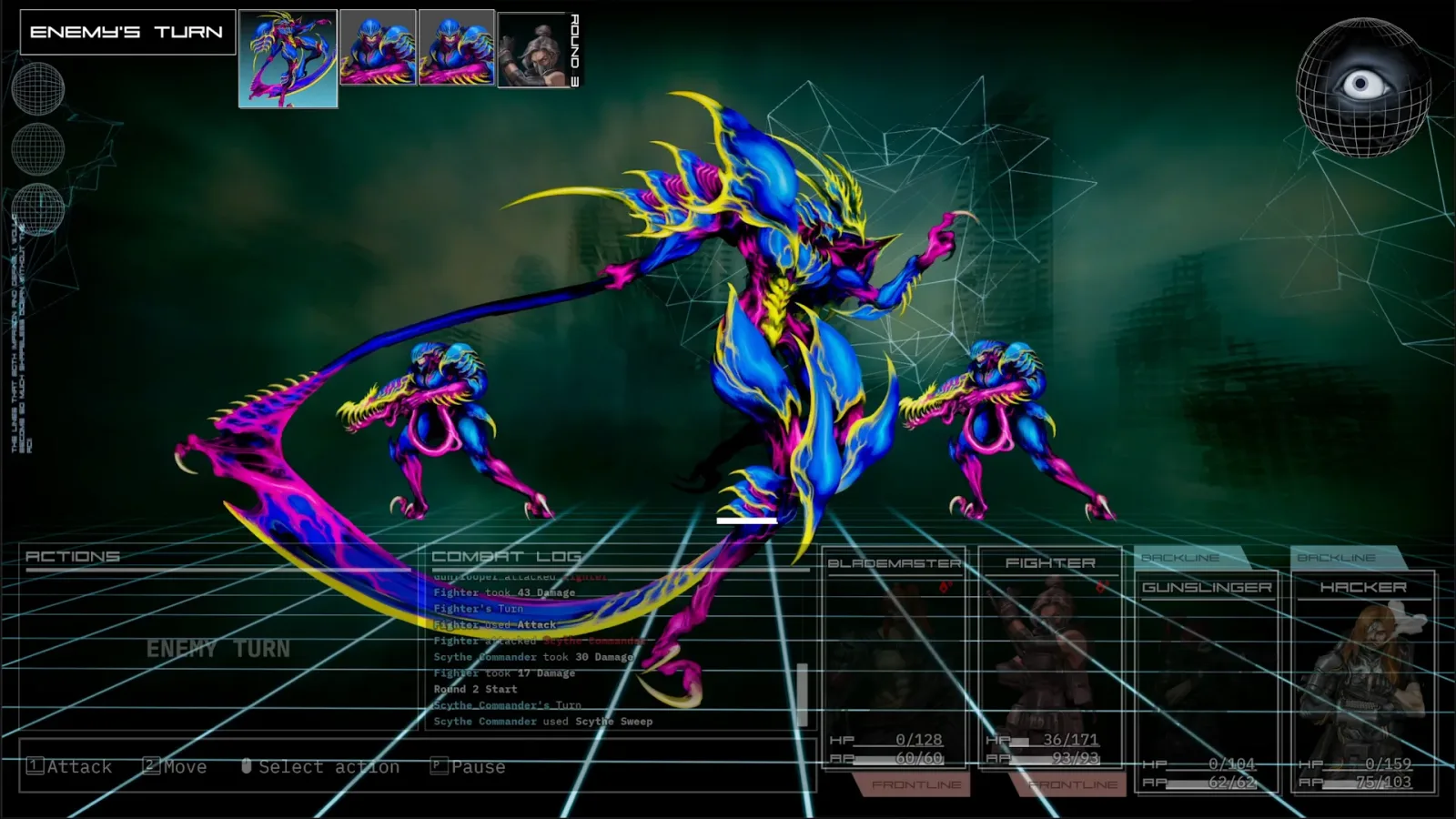
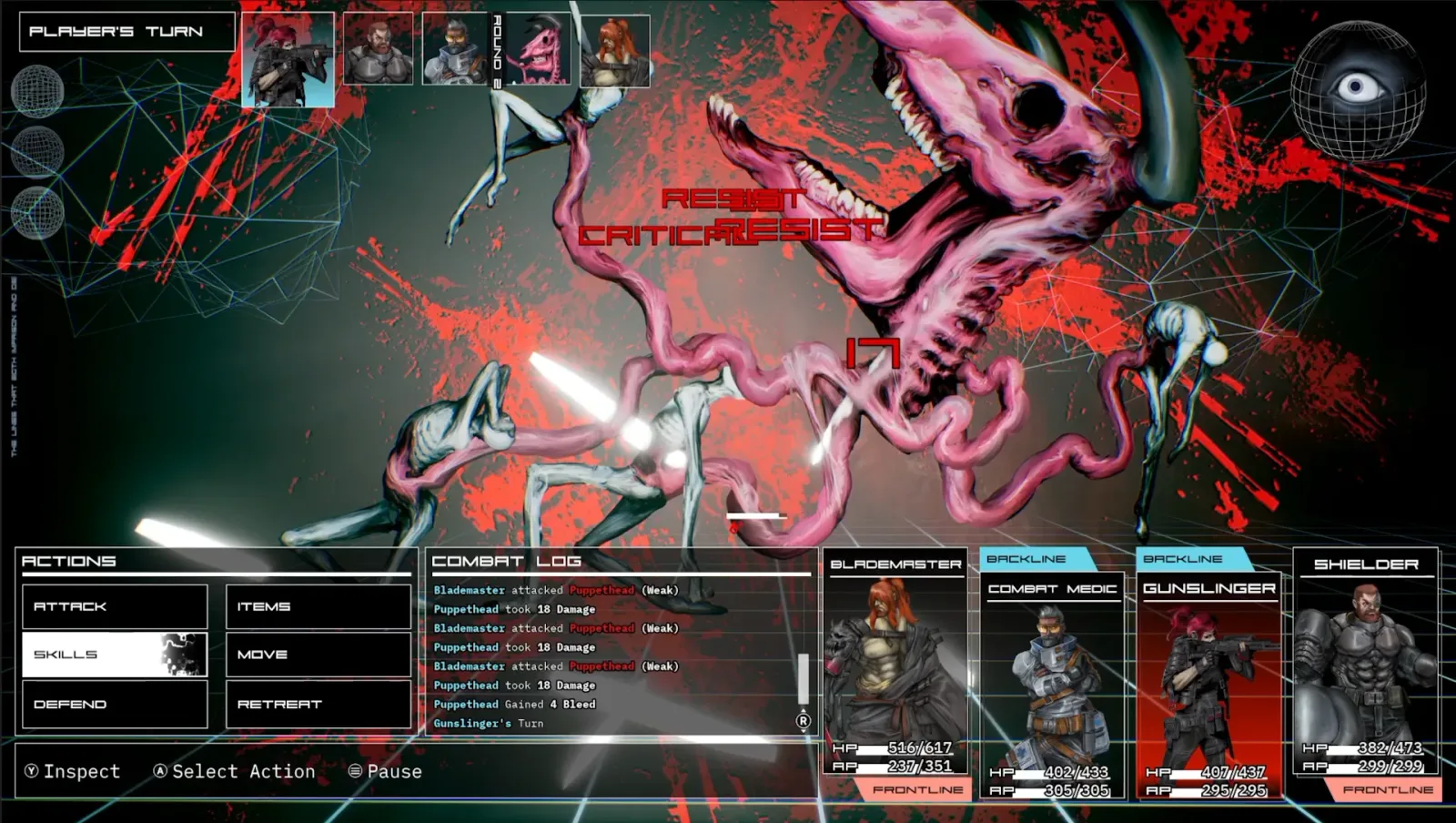
The demo includes two distinct combat systems: turn-based JRPG combat and tactical combat. Unison Games has positioned the combination as part of the game's wider blend of traditional RPG design and sci-fi horror. The announcement does not detail exactly when the game moves between these systems or how each will develop over the full campaign, but the expanded demo should let players experience both in practice.
Turn-based battles naturally complement a party-focused expedition, allowing players to make methodical choices about attacks, abilities, positioning, and survival. Tactical combat introduces another layer of decision-making, potentially putting more weight on the immediate layout of an encounter. Together, the two styles suggest that the game is aiming for more than a single repetitive battle loop as the squad encounters the threats within Lunaris.
An Industrial Nightmare Beneath the Moon
The premise of machines rebelling at a remote lunar mining base gives Descent of Lunaris an immediate science-fiction foundation, but the game's focus goes beyond a conventional malfunction or uprising. The signal emerging from inside the Moon turns the investigation toward something more mysterious. As the operatives descend, they face unsettling encounters and increasingly distorted reflections of humanity's own world.
That framing makes the Moon more than a backdrop. It becomes the game's central unknown: an enclosed world of metal, darkness, damaged systems, and impossible transformations. The psychological horror element is carried not just by monsters or narrative revelations, but by the possibility that the spaces players are navigating can no longer be trusted.
Classic dungeon crawlers often generate tension through attrition. Limited healing, difficult encounters, uncertain navigation, and the distance back to safety can make even a short journey feel consequential. Descent of Lunaris adapts those principles to its setting through the stability system and the ability to return to the moonbase. The result is a structure where preparation matters, retreat is a valid strategic choice, and deeper exploration may demand more than raw combat strength.
What the Updated Demo Offers
For players interested in its mix of retro-inspired RPG mechanics and surreal space horror, the revised Steam demo now provides a considerably stronger introduction to what Unison Games is building. Its key additions and features include:
- The opening prologue, establishing the 2070 lunar mining crisis and the team's investigation.
- The full first dungeon, including hidden secrets to uncover beyond the main route.
- Grid-based dungeon navigation with an emphasis on exploration and dangerous progression.
- Turn-based JRPG combat alongside a separate tactical combat system.
- A stability mechanic that increases danger as reality degrades and can expose new routes.
- A moonbase hub where players can retreat, upgrade equipment, regroup, and restore stability.
The demo's expanded scope should be particularly useful for anyone curious about how these elements connect. A premise involving lunar industry, hostile machines, and a signal from within the Moon is evocative on its own, but the defining question for a dungeon crawler is whether its exploration loop creates sustained tension. By including the first dungeon in full, the update gives players more room to test the push-and-pull between discovery, combat, deterioration, and retreat.
Descent of Lunaris is in development for PC and will launch on Steam. The newly updated demo is available now, offering the prologue and the complete first dungeon to players ready to investigate what is waiting beneath the lunar surface.

Community
Discussion
Start the conversation.
No comments have been posted yet.