

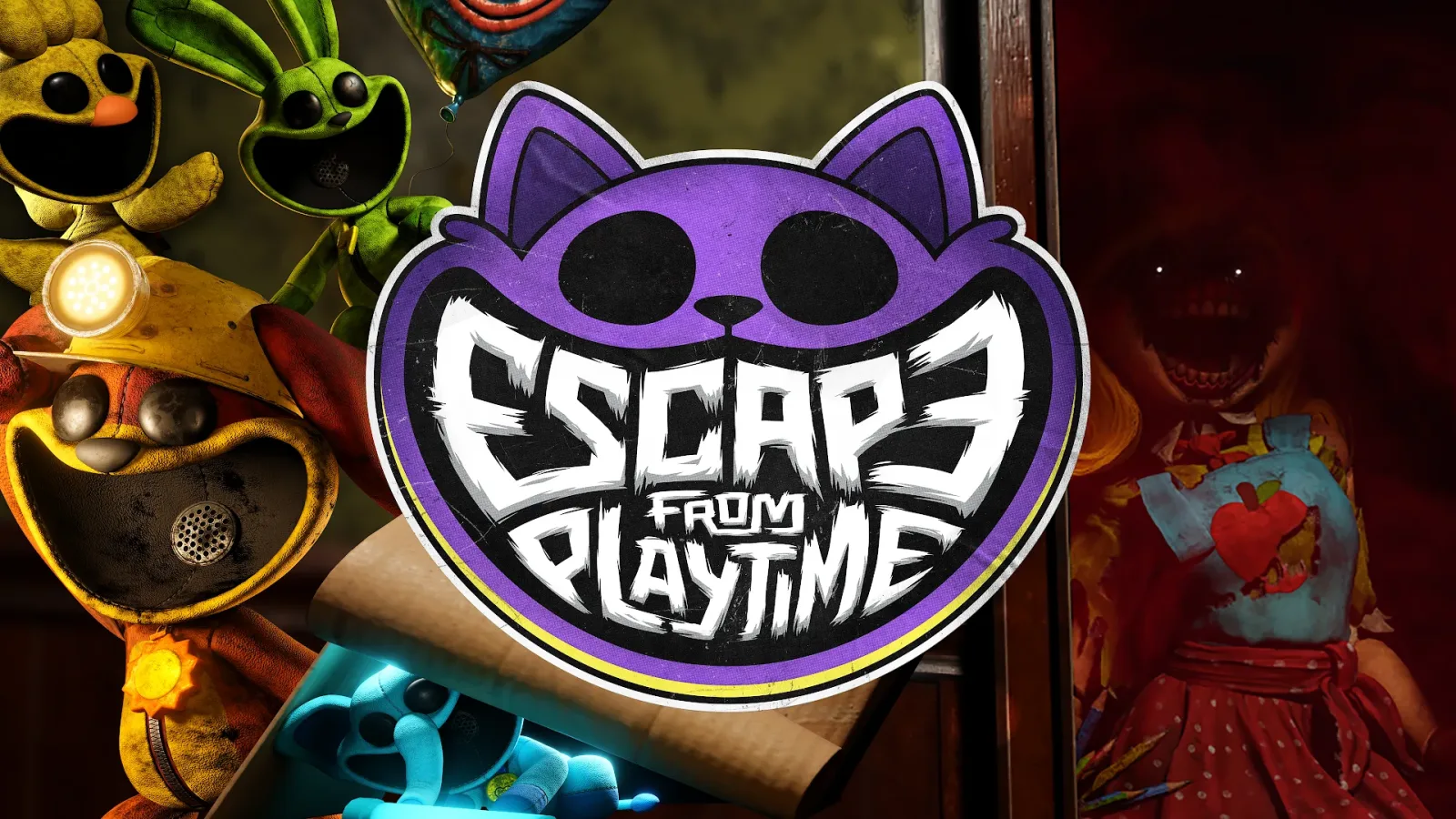
Escape From Playtime has received its first major post-launch update following its October 21 release, with Mob Entertainment making meaningful changes to how groups are formed and how runs are paced. The update introduces public lobbies, adds a fresh batch of environmental lore to uncover in the factory, and revises session and shift timing in an effort to give smaller teams a more achievable route through a full shift.
For a game built around cooperative survival inside the unsettling Playtime Co. setting, those changes reach beyond a routine patch. Finding a group, understanding the stakes of a run, and managing time under pressure are core parts of the experience. By adjusting all three within the opening week, the developer is responding to the practical realities players have encountered since the game arrived on Steam.
Public lobbies replace the previous group-play requirement
The headline addition is the arrival of public lobbies. Players are no longer limited to the earlier arrangement of mandated group play and lobby codes when trying to get into a session. Instead, they can queue up, locate a group to join, or create a lobby of their own.
Public lobbies support groups ranging from two to eight players. That range should give prospective teams more flexibility than an approach centered entirely on arranging a private code before play begins. A pair of friends can now set out together, while larger groups can organize fuller factory expeditions without relying on the same manual process.
For useful background on this topic, read Finals Week Launches on Steam With Chaotic Co-op Cheating Challenges.
The addition is particularly significant for players who want to experience the multiplayer side of Escape From Playtime but do not already have a regular roster. In co-op games, friction before a match can be as damaging as a difficult encounter during one. If players need to coordinate elsewhere just to enter a game, it narrows the audience to established groups. A public system makes spontaneous sessions more plausible and gives new players a clearer way to meet teammates.
There is also room for more intentional playstyles. Players hoping for a smaller, more coordinated run can make or seek a compact lobby, while those looking for the energy and unpredictability of a larger crew have that option too. The two-to-eight-player structure signals that team size is not merely a social preference in Escape From Playtime; it is a factor the game's broader difficulty tuning now needs to accommodate.
Timing revisions aim to help smaller teams finish shifts
Mob Entertainment has also adjusted session and shift timing based on player feedback. The stated goal is to improve difficulty balance so that smaller groups have a better chance of completing shifts in full.
For another perspective on this story, read Escape From Playtime Week-One Update Opens Public Lobbies and Adds Factory Lore.
That distinction matters. A challenge calibrated around a large group can become disproportionately demanding when only two or three players are available. Fewer people means fewer hands for objectives, less room to split responsibilities, and fewer opportunities to recover when a plan goes wrong. In a setting filled with hazards and pressure, time can quickly become the resource that determines whether a run remains tense or simply feels out of reach.
The update does not present the work as finished. Continued balancing around group sizes and timing difficulty is included among the team's planned efforts, suggesting that the new values are part of an ongoing process rather than a single definitive solution. As public lobbies bring more combinations of players into the game, the developer will have more opportunities to assess how different team sizes perform in practice.
For now, the change should be welcome for smaller parties that found full shifts especially difficult during launch week. It also aligns with the new lobby model: opening the game to groups as small as two works best when those groups have a realistic chance to see a session through.
More notes, posters and VHS tapes deepen the factory mystery
The week-one update also gives explorers more reasons to look carefully around the facility. Twelve additional mysterious notes have been placed around the factory, adding another set of clues for players who want to piece together its hidden story.
Those notes are joined by strange posters on the walls and VHS tapes that can be found throughout the building. Together, the new discoveries reinforce a familiar kind of horror-game tension: the environment is not only a place to survive, but a record of something gone terribly wrong. A poster glimpsed in a hallway, a tape discovered off the main route, or a note tucked into an overlooked corner can turn routine movement through a level into a moment of investigation.
Environmental lore works especially well in a factory setting because it rewards curiosity without forcing every player to engage with the story in exactly the same way. Teams focused on getting through a shift can stay focused on immediate objectives. Players with an appetite for secrets can slow down, search rooms, compare discoveries, and speculate about what the scattered evidence means.
The new artifacts also give repeat visits a little more texture. Even players familiar with a route may have a reason to recheck spaces and pay attention to details that previously served as background. In cooperative play, this can create a useful division of attention: one teammate may be watching for danger while another spots a clue that would otherwise have gone unnoticed.
The first update points to a broader post-launch roadmap
The developer has outlined several areas it intends to expand or refine in future updates. More discoverable lore artifacts are planned, meaning the twelve notes, posters, and tapes introduced now are not expected to be the last additions for players who enjoy digging into the factory's secrets.
Tutorial improvements are also on the way. The planned onboarding work includes a guided shift for beginners, which could be an important complement to public matchmaking. Bringing in new players is easier when they can find a team, but retaining them depends in part on whether the game clearly teaches them what a successful shift requires. A guided early experience could help newcomers learn the rhythm of objectives, cooperation, and survival before they are expected to navigate the full pressure of a standard run.
Other planned additions include new items, cosmetics, and emotes. These categories can serve different roles: items may affect the practical choices teams make during a session, while cosmetics and emotes provide avenues for personal expression and social interaction. No specific examples, release windows, or mechanical details have been announced for those additions, so players will need to wait for later patch information to see how they take shape.
The roadmap further mentions additional puzzles and challenges, alongside gameplay updates and enemy enhancements. The wording leaves considerable room for interpretation, but it makes clear that the developer is looking beyond matchmaking and timing fixes. New challenges could refresh the structure of shifts, while enemy-focused changes may alter the dangers players have to read, avoid, or overcome inside the facility.
Importantly, the balance work is included in these continuing plans. That is sensible for a game supporting teams from two to eight players, because changes to lobbies, tutorials, tools, objectives, or enemies can all affect how demanding a shift feels. The first patch addresses an immediate concern for smaller groups, but the balance conversation is likely to evolve as the game gains more systems and more players experiment with public teams.
Steam players can access the update now
Escape From Playtime is available on Steam, and the week-one update is part of the game's early post-launch support. Players looking for detailed patch information and future announcements can follow the game's Steam news hub.
The game is also participating in Steam Scream V Fest with a limited-time 10% discount. Players who have already downloaded Poppy Playtime: Chapter 1 can stack an additional 10% reduction. As with any limited-time promotion, the availability of that discount is tied to the event period rather than a permanent price change.
For Escape From Playtime, the immediate takeaway is straightforward: assembling a team should now be less restrictive, smaller groups have received timing support intended to make complete shifts more attainable, and lore hunters have new material scattered through the factory. With beginner guidance, further balancing, fresh collectibles, challenges, and enemy updates still planned, this first patch establishes a foundation for the game's next stage of development.

Community
Discussion
Start the conversation.
No comments have been posted yet.