

Evercade's cartridge-based retro platform has spent years building its identity around approachable physical collections, compact hardware, and games rooted largely in the 8-bit, 16-bit, arcade, and early console eras. That focus made a traditional D-pad-first controller a natural fit for its home systems. As the library increasingly stretches toward the fifth generation, however, analogue input is becoming less of a luxury and more of a practical requirement.
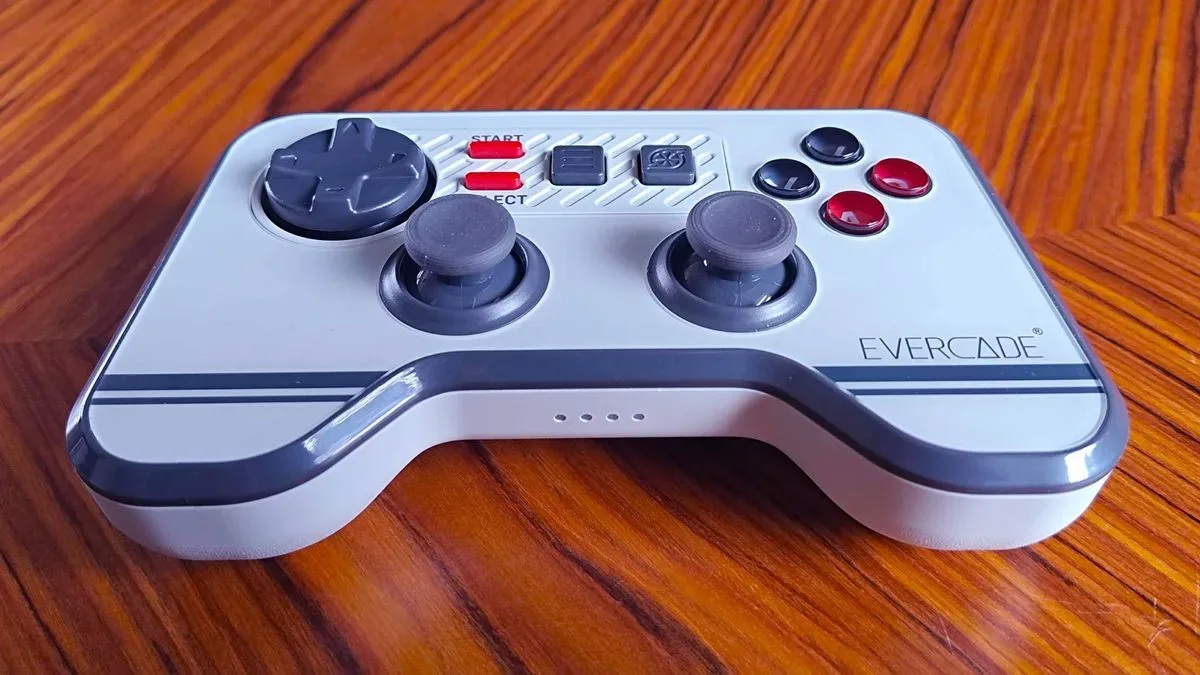
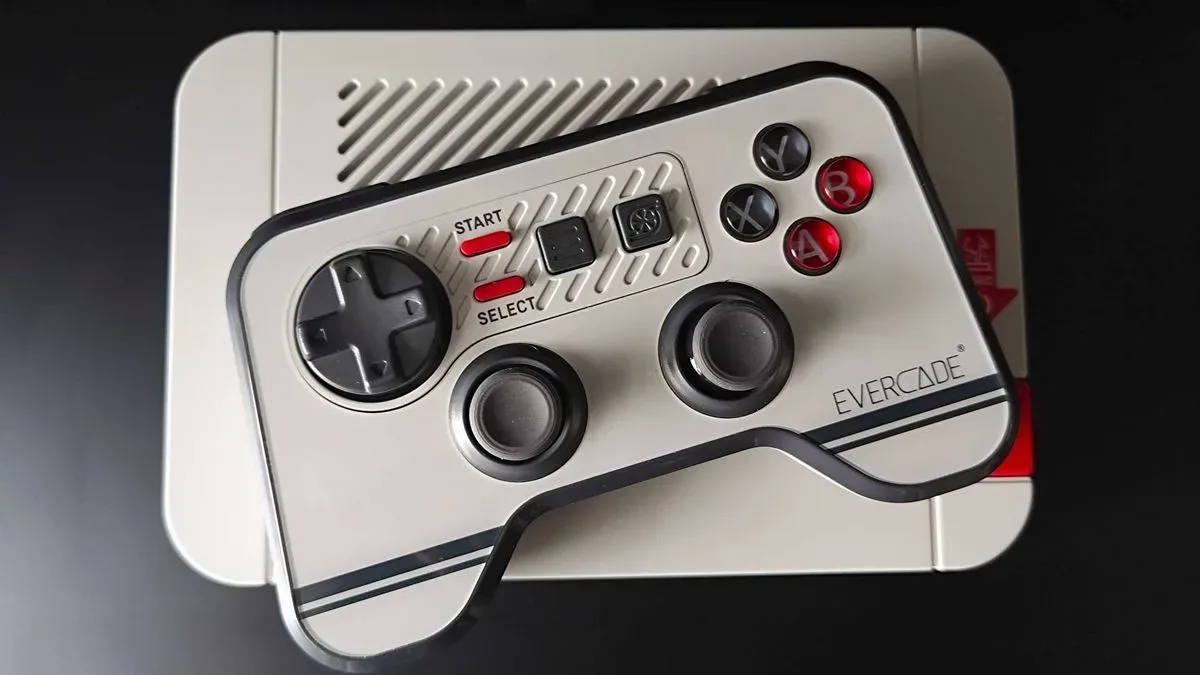
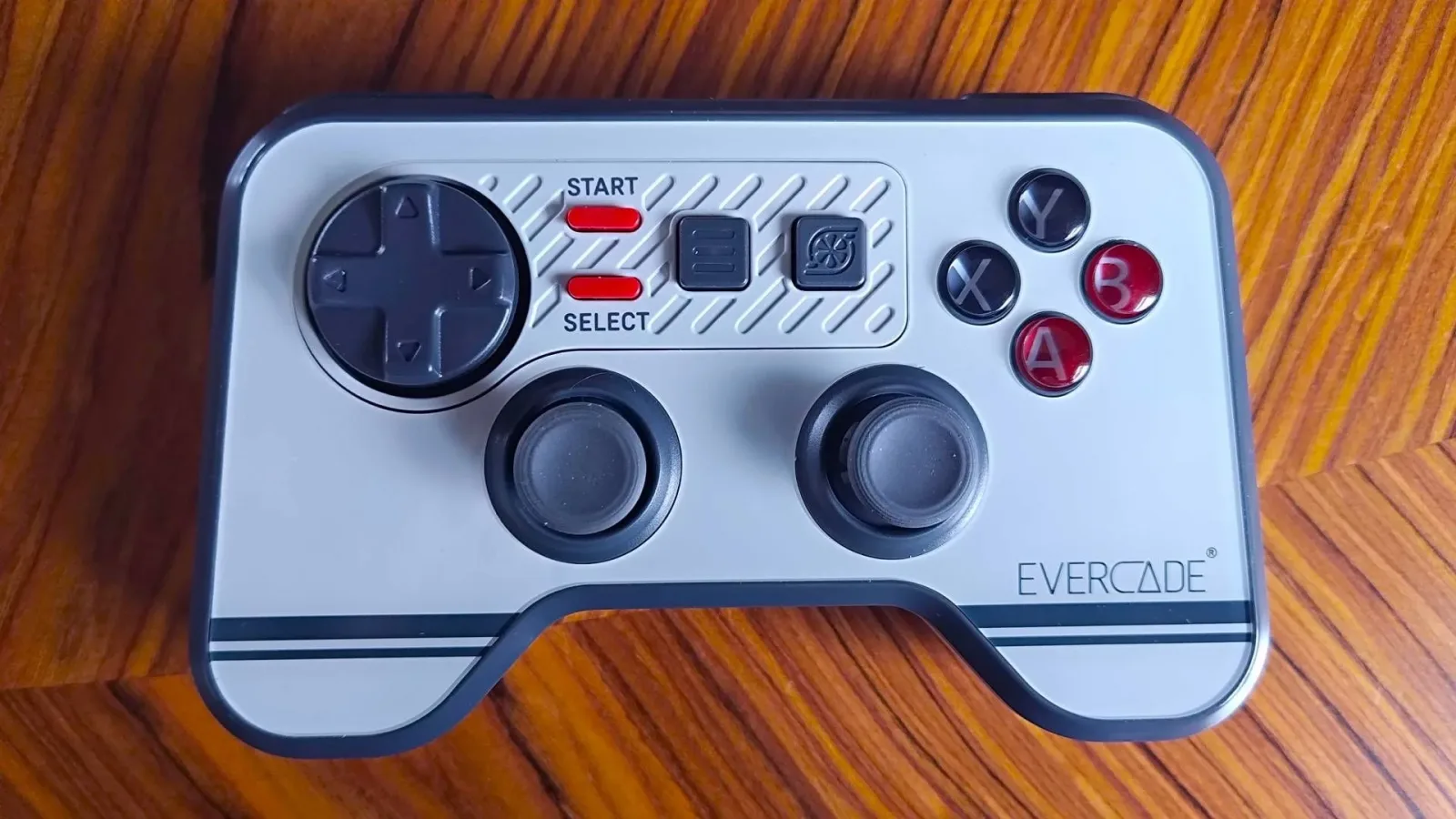
The Evercade Dual Thumbstick Wireless Controller is Blaze's answer to that shift. Built for the Evercade Alpha and VS family, the controller keeps the brand's unmistakably bold, angular aesthetic while adding two full-size analogue sticks beneath its familiar face-button layout. It is not designed to be the ultimate universal retro pad, nor does it attempt to closely imitate a classic PlayStation or Nintendo controller. Instead, it is a first-party accessory intended to make Evercade feel more complete as its catalogue broadens into games designed around 3D movement.
That makes the controller a significant accessory for existing Evercade owners. It is a capable pad with a few notable trade-offs: a chunky shape, conventional potentiometer-based sticks rather than Hall effect components, and Bluetooth wireless connectivity that may raise concerns among players who are especially sensitive to latency. Yet its strengths are equally clear. It offers dedicated, ready-to-use controls for Evercade consoles, a respectable claimed battery life, wired USB operation, and a visual identity that firmly belongs to Blaze's hardware range.
A Controller for Evercade's Early 3D Moment
Evercade began exploring three-dimensional games before this controller arrived, with Glover appearing in 2024. The need for a dual-stick solution has become more apparent as the platform moves further into the era of early 3D releases. Games featuring free movement, camera control, or analogue-sensitive input benefit from a controller that does not force players to rely entirely on a D-pad.
For useful background on this topic, read Every Resident Evil Movie Ranked From Worst to Best.
The Dual Thumbstick Wireless Controller is therefore less about replacing every pad a retro enthusiast already owns and more about preparing an Evercade setup for what comes next. The platform already supports a variety of USB controllers on compatible home systems, so there are other routes to analogue control. Some competing controllers bring higher-end specifications, including magnetic Hall effect sticks, at similar budget-oriented prices.
But compatibility alone is not the whole story. A dedicated controller gives a platform a recognizable feel. Major console manufacturers have long understood that a system's controller is part of its personality, from the shape of the hardware to the default button positions players learn over time. Blaze's new pad reinforces Evercade as a standalone console ecosystem rather than simply a box that can accept generic peripherals.
For players who already own an Alpha or VS-R and want to experience newer 3D-focused Evercade releases without researching mappings or adapter behaviour, that simplicity is a meaningful advantage. The intended layout is immediately available, the controls correspond to the platform's conventions, and there is no need to treat every compatible USB pad as a configuration project.
Blocky Design Is a Feature, Not an Accident
At first glance, the Dual Thumbstick Wireless Controller can look uncompromising. Its shell is broad, flat, and rectangular, reflecting the glossy, arcade-inspired design language that has defined Evercade hardware since the first handheld arrived in 2021. It does not chase the deeply sculpted grips and hand-hugging contours associated with many modern controllers.
That design choice will divide players. Anyone accustomed to the rounded comfort of newer PlayStation, Xbox, or third-party pads may initially find the Evercade controller unusually angular. Its front-facing profile places the shell close to the lower joints of the fingers, and longer play sessions can leave the impression of having held a rectangle rather than an ergonomic modern gamepad.
There is more consideration on the rear than the frontal silhouette suggests. Subtle shaping gives the ring and little fingers places to rest, while the area below the shoulder buttons creates room for the middle fingers. The index fingers sit naturally over the low-profile shoulder inputs. These details prevent the controller from becoming outright uncomfortable, even if it does not disappear into the hands the way a more conventional modern pad might.
In a sense, the distinctive form is part of the point. Evercade has never positioned itself as a faceless emulation accessory brand. The system's hardware leans into a stylized, slightly cabinet-like look, and the Dual Thumbstick controller follows that philosophy. A more traditionally gripped shell might have improved comfort, but it could also have made the accessory feel less specifically Evercade.
The square-ish body has one practical upside as well: it is comparatively easy to pack. Players taking an Evercade setup on a trip may appreciate a controller without long handles protruding from either side. Care is still advisable, since the analogue sticks extend from the front and are more exposed to pressure than a flat controller face.
Full-Size Analogue Sticks, With One Big Caveat
The headline addition is, naturally, the twin-stick configuration. The sticks sit symmetrically below the D-pad and face buttons, echoing the general placement favored by PlayStation controllers. For players who prefer symmetrical stick placement, the layout should be familiar. Those who favor the offset arrangement common on Xbox pads may find the lower placement tighter, particularly if they have larger hands or longer thumbs.
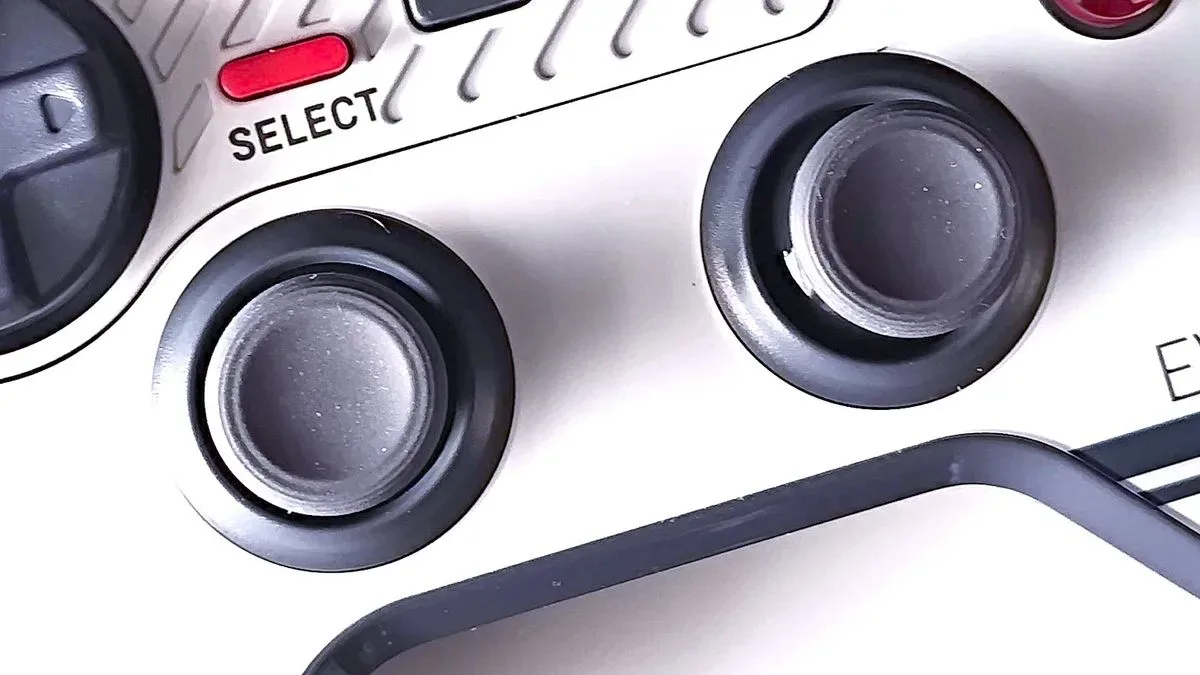
Blaze has opted for full-size sticks with concave, rubberized tops. That is an important decision for a controller intended to handle early 3D games. Smaller thumbsticks can save space, but they often compromise precision and comfort. The grips here provide a secure contact point whether a player naturally uses the thumb tips or rests more of the thumb across the surface.
The primary concern is the internal technology. These are traditional potentiometer sticks, rather than Hall effect sticks that use magnetic sensors. Potentiometer designs remain widespread and can deliver solid performance, but they are also the stick type most often associated with eventual drift as components wear over time. Drift is not inevitable, and long-term durability will depend on use and manufacturing choices, but the omission is more conspicuous in a market where brands such as 8BitDo and GameSir have helped make Hall effect options more common in the lower-cost controller space.
For a controller positioned below $40, the choice may be understandable from a cost perspective. Still, it is a specification that informed buyers will notice. It also means owners should avoid placing unnecessary pressure on the sticks while transporting the pad.
Buttons and D-Pad Keep the Familiar Evercade Formula
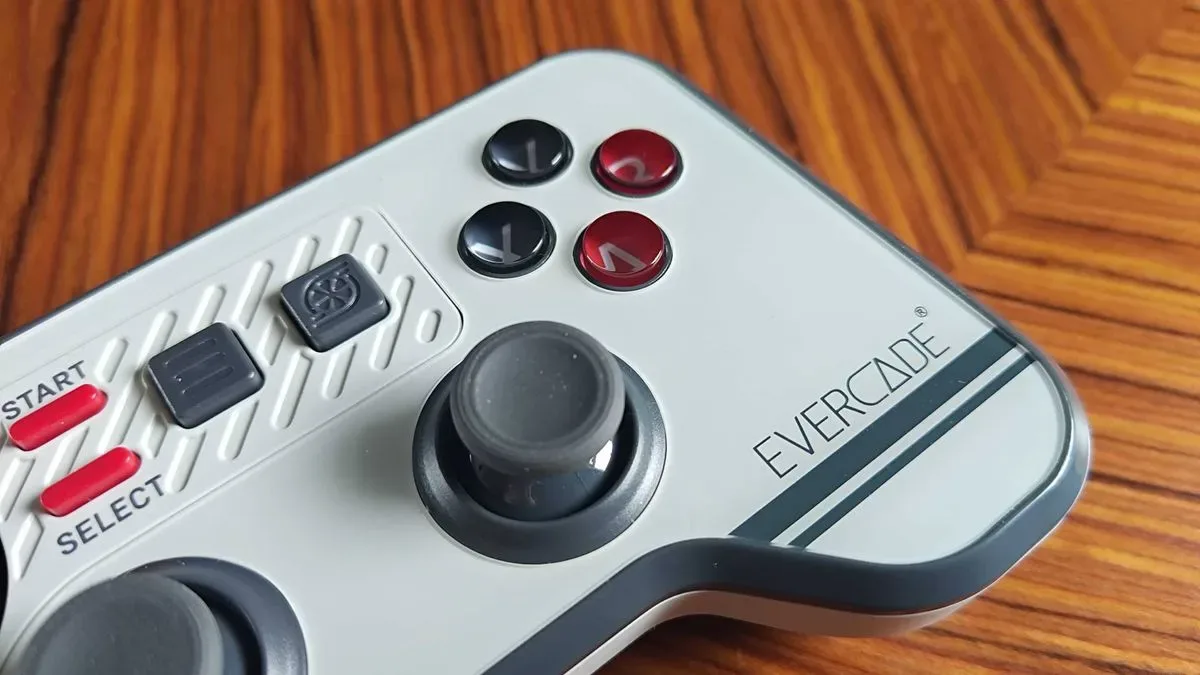
A dual-stick layout would mean little if the controller neglected the 2D games that still make up much of Evercade's appeal. Fortunately, its core controls retain the feel of the company's prior home-console pad. The face buttons use membrane switches with a tactile response, though they are somewhat shallower than some players may prefer.
The floating D-pad performs well for the kinds of classics Evercade systems are built to play. It avoids major issues with pivots and supports directional motions reliably, including the rolling inputs needed for fighting games such as Street Fighter. That matters because the right stick may have no role in many older releases, leaving the D-pad as the essential control for a substantial portion of the cartridge library.
Four digital shoulder buttons round out the design. They are clicky, easy enough to reach, and suitable for the older games at the center of Evercade's catalogue. Their digital nature naturally limits their usefulness in titles that would ideally use analogue triggers, but that limitation reflects the platform and its ports as much as the controller itself. Features like rumble are also absent, consistent with Evercade's broader approach rather than a surprise specific to this pad.
Bluetooth Wireless and USB Flexibility
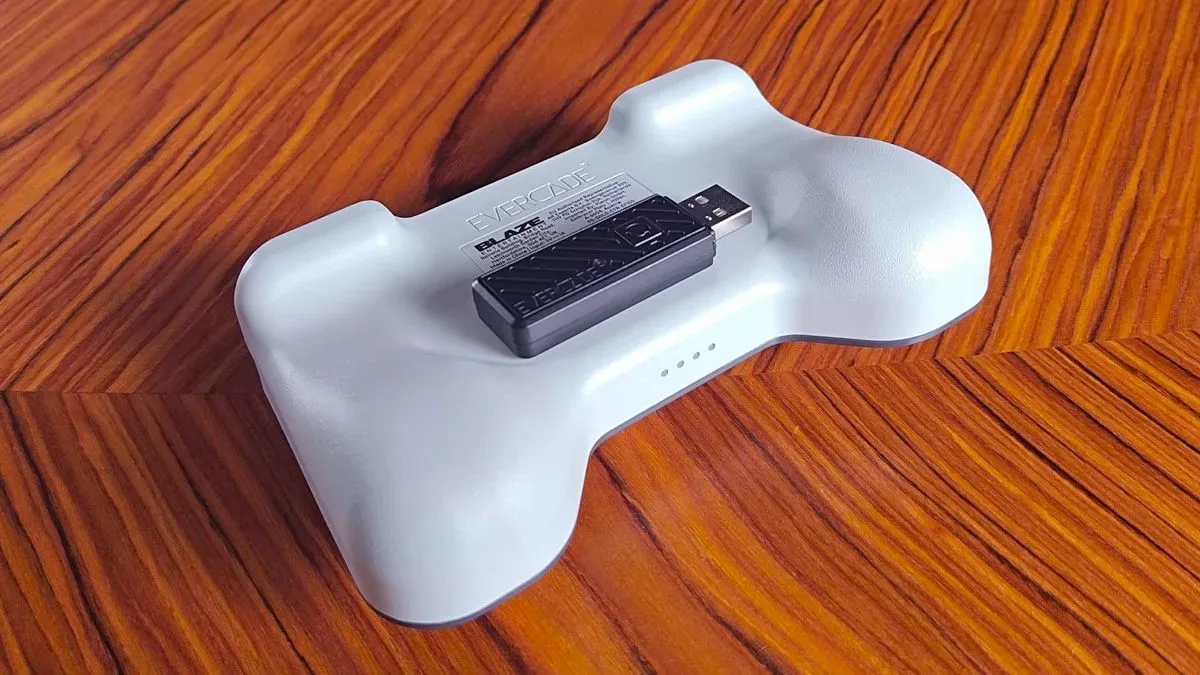
The controller includes a wireless dongle, but its connection method is Bluetooth rather than 2.4 GHz wireless. That distinction will matter most to competitive or latency-focused players. Bluetooth has improved greatly and many users are unlikely to perceive meaningful delay in everyday retro play, but 2.4 GHz remains the preferred option for enthusiasts looking to minimize wireless latency wherever possible.
Using a receiver for Bluetooth can initially seem unusual when a 2.4 GHz dongle could have been used instead. The decision may nevertheless provide a path for Blaze's future hardware plans. The receiver enables support with existing compatible Evercade systems, while a later console revision could potentially communicate with the controller more directly. That possibility has not been confirmed, but the approach suggests the accessory may have been designed with future expansion in mind.
Bluetooth also supports battery efficiency. The controller is rated for up to 15 hours on one charge, a figure that compares favorably with some 2.4 GHz pads that can land closer to roughly 11 hours depending on usage. Actual battery endurance will vary, but a claimed 15-hour ceiling should cover multiple extended sessions before recharging becomes necessary.
Wired use is available through USB for Evercade consoles and PC. On a computer, the pad is recognized as an Xbox 360 controller, which makes it a useful fallback option beyond Blaze's own hardware. The controller's wireless receiver is also designed to attach magnetically to the back of the pad when not in use, though anyone prone to misplacing tiny adapters will still want to keep track of it.
Who Should Buy It?
The Evercade Dual Thumbstick Wireless Controller makes the strongest case for itself to people already invested in Blaze's ecosystem. Owners of an Evercade Alpha or VS-R who want a dedicated, straightforward way to play the platform's expanding selection of 3D games will find it an easy recommendation. It gives the console range an official analogue option without sacrificing the D-pad and button setup required for its extensive 2D back catalogue.
It is not the ideal choice for someone seeking the most feature-rich controller for PC emulation or a general-purpose retro collection. Better ergonomics, Hall effect sticks, 2.4 GHz wireless, and additional premium features can be found elsewhere, sometimes for comparable money. Evercade's USB controller compatibility means buyers are not locked into this option.
What Blaze has delivered, however, is a purposeful controller rather than a generic accessory. Its blocky silhouette, symmetrical sticks, familiar buttons, and direct Evercade integration all contribute to a more cohesive console experience. The controller has clear imperfections, but it arrives at a time when the Evercade catalogue has begun to need exactly what it provides: proper analogue controls for a platform that is moving confidently beyond the flat planes of classic 2D gaming.
Community
Discussion
Start the conversation.
No comments have been posted yet.