

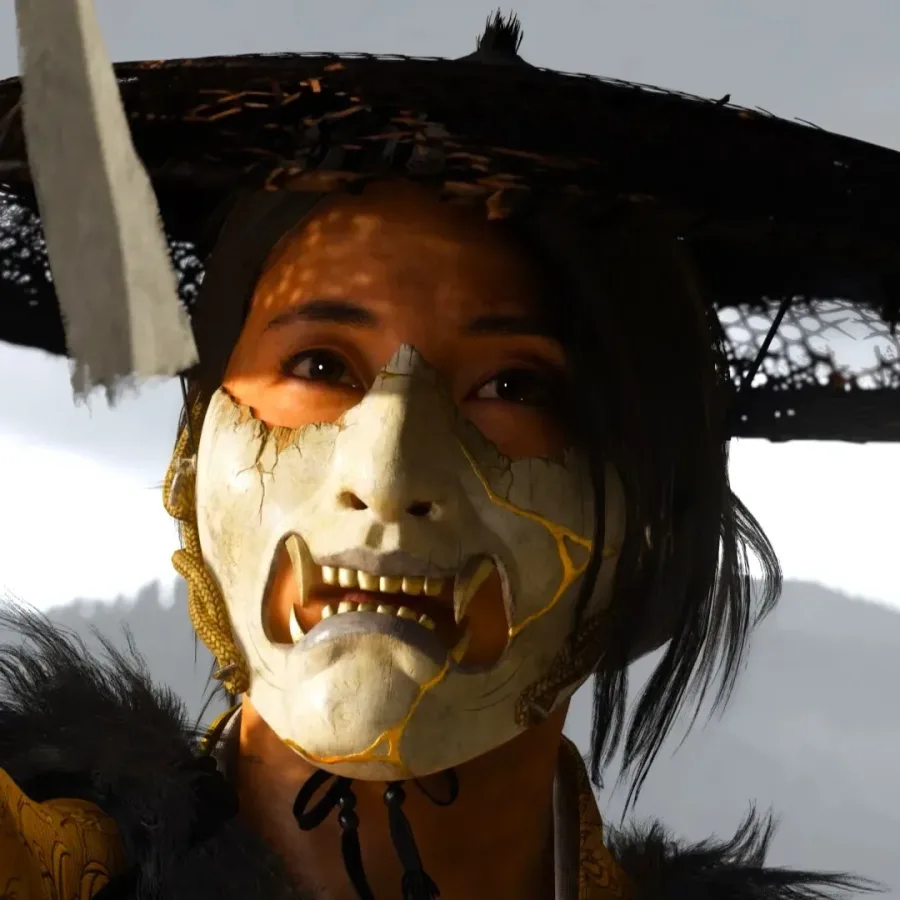
Ghost of Yotei appears to be a major commercial success for PlayStation 5, even if its estimated sales trajectory has not matched the remarkable early pace set by Ghost of Tsushima. New estimates place Sucker Punch Productions' 2025 sequel at roughly 5.4 million copies sold so far, producing approximately $407 million in revenue.
The figures come from Rhys Elliott, head of marketing analysis at Alinea Analytics, and have not been formally confirmed by Sony. They nevertheless paint a useful picture of how the PS5-exclusive action adventure has performed during its first year. By the estimate, Ghost of Yotei remains a substantial release with continued sales activity and post-launch engagement, while also illustrating how difficult it can be for a sequel to replicate an earlier game's momentum under very different market conditions.
A strong result, but behind Ghost of Tsushima in units
Elliott's estimate puts Ghost of Yotei at around 5.4 million units sold, with revenue close to $407 million. That is a huge number for a single-platform release, particularly one limited to PS5 rather than launching across both a current and previous PlayStation console generation.
Embedded X/Twitter post
However, the comparison with Ghost of Tsushima is unavoidable. The original game launched in July 2020 on PS4, before later reaching PS5, and had reportedly brought in around $418 million at the equivalent point in its life. Once differences in price are considered, Elliott estimated that Ghost of Tsushima had sold almost 7 million copies by then.
For useful background on this topic, read Kingdom Hearts' Opening Still Makes Its Disney Fantasy Feel Unsettling.
That creates a notable gap in unit sales. Ghost of Tsushima was estimated to be ahead by roughly 1.6 million copies, despite revenue between the two titles being nearly level. The contrast is largely explained by pricing: Ghost of Yotei launched at a $70 base price, while Ghost of Tsushima started at $60. Discounts, regional pricing, editions, and the changing mix of physical and digital purchases can all affect the final relationship between copies sold and total revenue as well.
The result is a more nuanced commercial story than a straightforward comparison of unit totals. Ghost of Yotei may be moving fewer copies than its predecessor did by this stage, but it is still generating revenue at a very similar level. That is far from a weak showing for a premium, first-party PS5 game.
"Anyone who says that Ghost of Yotei is a flop is flat-out wrong," Elliott said while clarifying the estimates.
The PS5-only audience changes the comparison
The biggest factor behind the difference may be the available hardware audience. Ghost of Tsushima arrived when there were roughly 117 million PS4 consoles and 10 million PS5 consoles in circulation, according to Elliott's comparison. That gave the first game access to an enormous combined PlayStation audience, even before considering the unusual conditions surrounding its release period.
By contrast, Ghost of Yotei is only available on PS5. Elliott noted that the PS5 installed base is now nearing 100 million systems, an exceptionally large number for a current-generation console, but still smaller than the combined PS4 and early PS5 audience that could buy the earlier game at the same point in its lifecycle.
Platform availability does not explain everything, of course. Sequels do not automatically appeal to every owner of the original, and a game's launch calendar, marketing cycle, reviews, genre competition, price, and long-term discount strategy can all influence demand. Still, comparing a PS5-only game with a title that sold to users across two PlayStation generations requires some context.
Ghost of Tsushima also released in July 2020, during a period in which pandemic restrictions had significantly changed entertainment habits around the world. More players were spending extended time at home, while software sales patterns and consumer behavior were unlike those of a normal release year. That environment likely helped shape the original's rapid early commercial run, though it is impossible to isolate its exact effect.
Physical copies retain a sizeable share
One of the more interesting details in the estimate is the continued importance of boxed copies. Physical sales are said to account for 36.8% of Ghost of Yotei purchases. In an industry increasingly centered on digital storefronts, subscriptions, downloadable expansions, and deluxe editions, that is a meaningful portion of the game's overall business.
The number suggests that PlayStation's retail audience remains relevant for high-profile first-party releases. Collectors, players with disc-equipped PS5 consoles, gift buyers, and consumers who prefer to trade or resell games all contribute to the physical market. Retail promotions and regional buying habits can matter as well.
At the same time, the analysis indicates that PlayStation Store discounts for Ghost of Yotei have been relatively limited. That may help explain why its revenue remains so close to Ghost of Tsushima despite the lower estimated unit count. Maintaining a higher average selling price can support revenue totals, although it can also make it harder to accelerate late-cycle sales compared with a title receiving frequent or deeper discounts.
The game reportedly sold around 500,000 copies in the third quarter of 2026 alone. For a title that launched in October 2025, that continued quarterly volume points to durable demand rather than a release that relied entirely on its opening weeks.
Complete Edition and Echoes of Sekigahara add momentum
Post-launch content is also becoming part of the picture. PlayStation recently introduced a digital Complete Edition of Ghost of Yotei, replacing the standalone digital base game. The package includes newer content, including the Echoes of Sekigahara expansion.
In the first two weeks following its launch, the Complete Edition is estimated to have sold 50,000 copies. That is not a figure on the scale of the main game's launch, but it represents an early indication that new buyers are still arriving after the expansion's release and that the revised edition has found an audience.
The analysis also estimates that about 6% of the existing player base returned to play the new content. Engagement figures should be viewed cautiously, especially when based on external estimates rather than platform-holder disclosures. Even so, the data suggests the expansion has encouraged at least some former players to revisit Yotei.
For a large single-player adventure, sustained engagement after launch can matter beyond immediate expansion sales. New content may renew conversation around the game, bring it back into storefront promotions, encourage word-of-mouth recommendations, and create a reason for prospective buyers to choose a complete package rather than waiting for a lower price.
The game has also continued to receive smaller additions. One recent update introduced an armor set inspired by The Last of Us, connecting the title with another of PlayStation's most recognizable franchises.
Revenue flattening is the key trend to watch
Despite the encouraging totals, Elliott noted that Ghost of Yotei revenue has begun to flatten more than Ghost of Tsushima did at a comparable stage. This does not erase the sequel's strong performance, but it could be important in determining how close it ultimately gets to the original's longer-term sales totals.
A flattening curve is common for big releases after the initial launch window and subsequent content bursts. The question is whether future promotions, new buyers entering the PS5 ecosystem, seasonal demand, or other events can give the game another lift. Elliott suggested that a potential influx of PS5 owners connected to the arrival of the next Grand Theft Auto could increase the addressable audience and potentially help soften that slowdown.
That remains speculative. Hardware growth does not automatically translate into sales for any specific game, and future purchasing behavior will depend on factors PlayStation and Sucker Punch cannot entirely control. Yet the possibility underlines why a game's sales life should not be judged solely by its first year.
What Sony has already said
Sony has not publicly confirmed the 5.4 million-unit estimate or the revenue figure. Earlier in 2026, however, the company said Ghost of Yotei had exceeded Ghost of Tsushima sales and had contributed significantly to its financial performance for that quarter. That statement reflected an earlier point in the sequel's release window, while the newer analysis focuses on its broader first-year trajectory and the comparison at a similar point after each game's launch.
Those statements are not necessarily in conflict. A sequel can outperform its predecessor during a particular early period and then later fall behind the original's pace over a longer comparison window. Sales curves change as launch enthusiasm fades, content arrives, discounts begin, and the available audience shifts.
Ghost of Yotei launched in October 2025 exclusively for PS5. Its combination of sweeping landscapes, sword-focused combat, and a familiar samurai-film-inspired fantasy has helped it remain visible well beyond release. While it may not be on course to immediately eclipse the unit-sales pace of Ghost of Tsushima, the available estimates portray it as one of PS5's stronger premium releases: a multimillion-selling sequel with hundreds of millions of dollars in revenue and an audience still responding to new content.
Community
Discussion
Start the conversation.
No comments have been posted yet.