

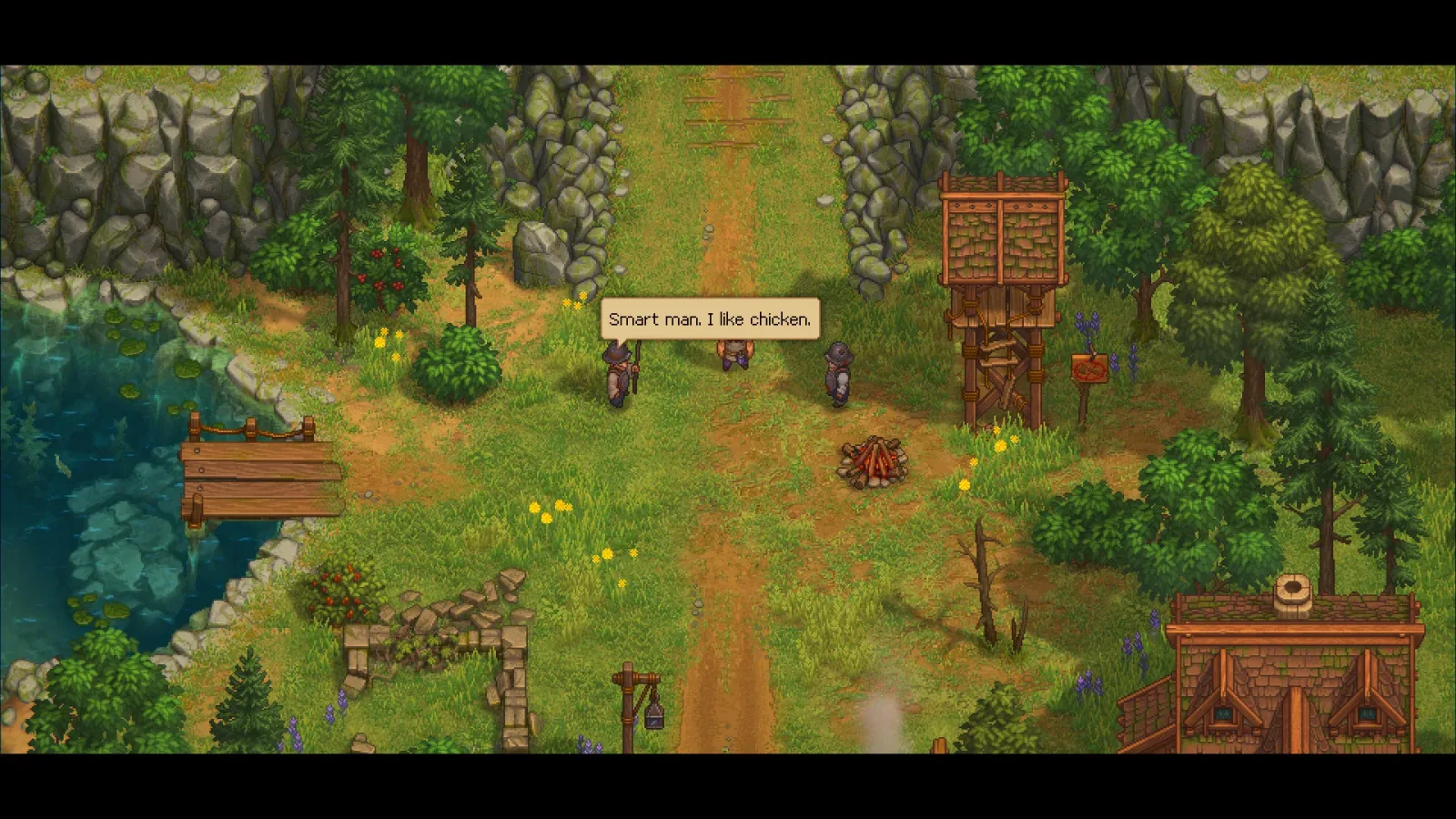
Graveyard Keeper 2 arrived on September 22 with a familiar proposition: take the morbidly charming resource-management formula of its predecessor and give players more reasons to build, gather, process, sell, and expand. For players who enjoyed the first game's macabre spin on pastoral life sims, much of that foundation remains intact. The sequel is still built around an appealingly compulsive chain of labor, in which one material enables a station, that station produces a component, and that component opens the door to another tool or upgrade.
That basic loop has always been the central appeal of Graveyard Keeper. Its graveyard setting distinguishes it from more cheerful farming games, but the real hook is the pleasure of turning a sparse collection of resources into an increasingly efficient operation. Chopping wood, mining stone, crafting supplies, tending crops, preparing bodies, and improving facilities all feed into a web of long-term progress. It is a rhythm that can comfortably occupy dozens of hours when the game gives players room to set their own priorities.
After around 20 hours with the sequel, the biggest surprise is not that it preserves this structure. It is that it repeatedly interrupts it. Graveyard Keeper 2 has introduced a much more prominent narrative layer, complete with fully voiced dialogue and frequent scenes involving its cast of eccentric townspeople. The intent appears to be an expanded, more guided adventure. In practice, the constant demands for attention can make the simulation feel less free-flowing than before.
A Familiar Management Sim With Useful Refinements
There is plenty here that makes Graveyard Keeper 2 feel more accommodating than the original. Its quality-of-life adjustments reduce some of the friction associated with gathering and inventory management, making routine work feel less punishing. The sequel is also less likely to make players feel as though every trip out of the workshop must be planned around limited carrying space and a looming series of chores.
For useful background on this topic, read 007 First Light's Free Extended Operations Update Adds New Game Plus and TacSim Missions.
Those changes matter because the game's resource systems are intentionally dense. This is not a management sim in which progression is handed over quickly. Advancement often means following several steps: collect raw materials, process them at a workbench, transform the resulting items into better equipment or structures, and then use those new tools to reach the next tier of materials. For fans of older Harvest Moon-style routines and slow, practical development, that layered design is a strength rather than a drawback.
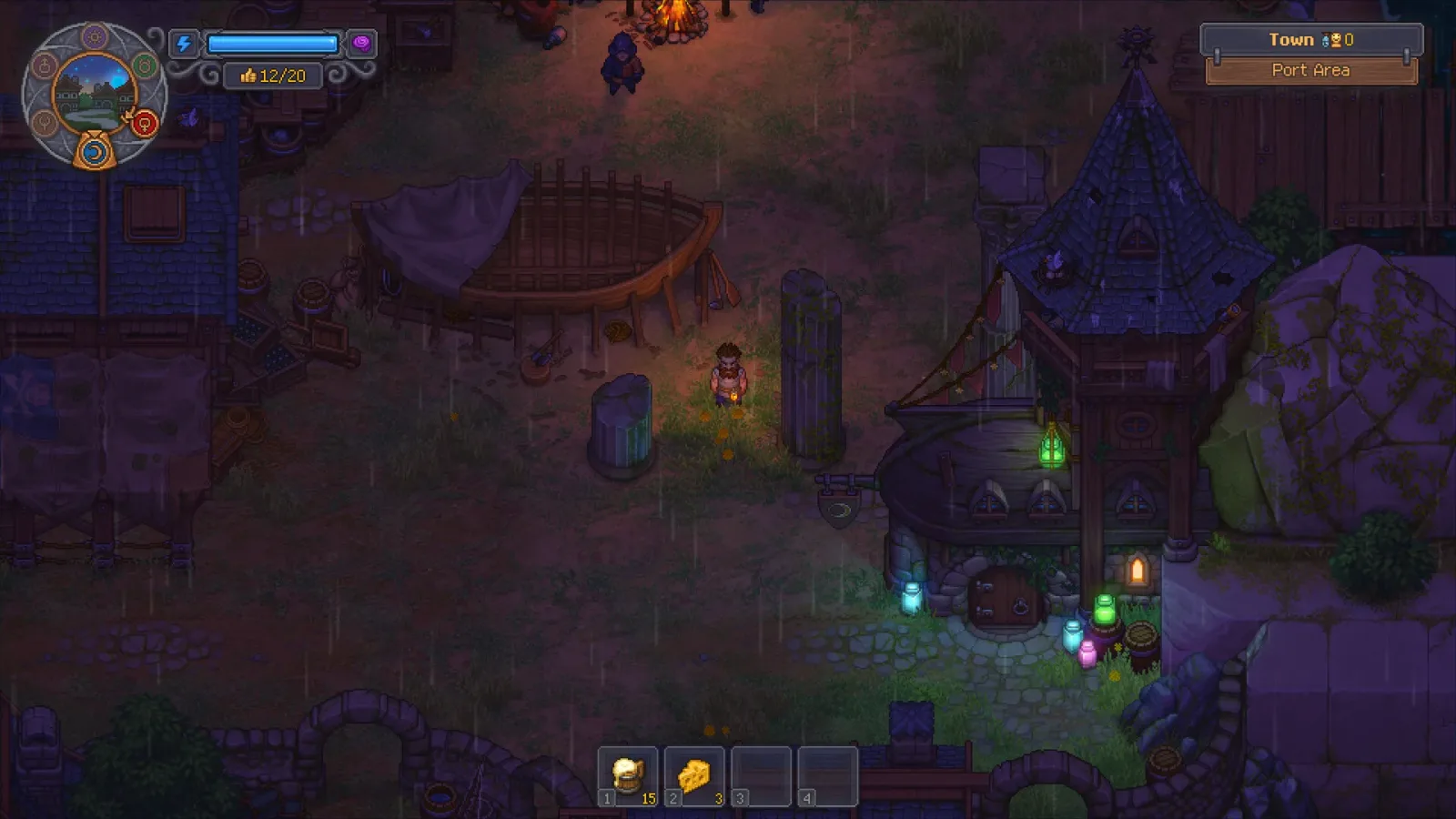
The presentation has also received a lift. The pixel art looks crisper, while the addition of voice acting gives the sequel a more overtly produced feel. Players who wanted the original's strange medieval world to be more animated may appreciate hearing its characters perform their lines. On paper, these are all sensible ways to iterate on a well-liked template without abandoning what worked.
That is why the narrative issue stands out so sharply. Graveyard Keeper 2 is not fundamentally failing because it changed genres or discarded its predecessor's core. It is still recognizably the same kind of game, and many of its mechanical adjustments are improvements. But the sequel's new emphasis does not sit comfortably alongside a play style centered on self-directed work.
The Cost of Constant Interruptions
The problem is less that Graveyard Keeper 2 has a story than that its story is difficult to avoid. Entering town can trigger an extended exchange. Turning in one task can lead to a lengthy explanation of why another character must be visited next. Even quiet transitional moments, such as preparing to sleep, can become opportunities for another lore discussion, quest prompt, or cutscene.
Individually, these scenes may not seem especially damaging. A single conversation is a normal feature of nearly every life sim. The frustration comes from accumulation and timing. When a player is trying to make a quick trade, plant crops, refine materials, or finish a project before ending the day, repeated dialogue sequences create a stop-start cadence. The game keeps pulling attention away from the activity that makes its economy satisfying.
For a management sim, flow is crucial. A player should be able to decide whether this in-game day is for gathering wood, upgrading the workshop, making money, advancing a quest, or simply tidying up a backlog of chores. Graveyard Keeper 2 too often turns those ordinary goals into a route through compulsory conversations. Even when text can be advanced rapidly, repeatedly pressing through scenes is not the same as choosing not to engage with them.
The issue becomes more significant because progression in the management systems is often attached to those conversations and quest chains. Players cannot always simply retreat to their graveyard, optimize their production, and ignore the town until they are in the mood for narrative content. To unlock and advance important elements of the game, they must deal with the characters, their requests, and the dialogue surrounding them.
More Dialogue Needs Stronger Writing
A heavier story focus could have been an asset if the writing gave players a compelling reason to welcome these interruptions. Graveyard Keeper has always used broad dark humor and oddball personalities, but its first game could keep that material somewhat peripheral. Players who did not connect with the jokes could move on quickly and return to their work.
In the sequel, that same comedic style has a larger presence. The cast is more persistent, the conversations are more numerous, and the game has placed more narrative material directly in the path of mechanical advancement. For players who find the humor flat or the characters thinly drawn, this creates a particularly awkward trade-off: the better the player wants to do at the resource-management side, the more dialogue they may need to endure.
Voice acting does not automatically solve that problem. Full performances can add personality and atmosphere when the dialogue is memorable, but they also make the game's pacing more dependent on scenes that some players may prefer to skip. The cast's constant reappearances risk making them feel less like quirky residents of a strange world and more like obstacles between the player and a trading menu, workbench, or bed.
This is especially notable in a sequel that otherwise does not radically reinvent its predecessor. Graveyard Keeper 2's core mechanical identity is so close to the original that its new narrative volume becomes one of the clearest differentiators. That makes the choice feel more consequential. If the expanded storytelling does not appeal to a player, there may be little else in the sequel's new direction that outweighs the added friction.
Why Player Control Matters in Life Sims
Games in this broader genre often succeed because they let players set boundaries around social and narrative content. A player who loves relationship systems can spend time giving gifts, pursuing events, and learning every resident's history. Another player can focus on crops, crafting, fishing, mining, or home improvement with relatively few forced detours. Both approaches can feel valid because the game respects the player's chosen pace.
Graveyard Keeper 2 illustrates what happens when that balance shifts too far toward mandatory narrative engagement. A town full of characters does not inherently threaten a crafting loop. The difficulty comes when routine errands repeatedly become a delivery mechanism for scenes the player did not seek out. Advance warnings for major events, more optional conversations, or clearer opportunities to defer story content could have helped preserve the sense of agency that makes this kind of simulation rewarding.
There is still an audience for the sequel as it stands. Players who already enjoy Graveyard Keeper's humor, want more voiced interactions, and are happy to follow a more structured sequence of quests may find the added story material welcome. The improved convenience features and sharper visuals give the game a more polished surface, and the underlying management formula remains capable of consuming long stretches of time.
An Improved Foundation With a Frustrating Trade-Off
Graveyard Keeper 2 is not a wholesale misfire. Its strongest elements remain its systems: the steady expansion of a workshop, the interconnected production chains, and the gratifying feeling that a small, limited operation is becoming a capable enterprise. The sequel's quality-of-life improvements directly support that appeal, reducing busywork without removing the satisfaction of building toward better tools and facilities.
Yet its aggressive storytelling can work against those strengths. The result is a sequel that may be more convenient and better presented, but also less relaxing for players who came primarily for the management sandbox. When every visit to town, quest hand-in, or attempted rest carries the possibility of another extended interruption, the game's rhythm can begin to feel controlled by its NPCs rather than by the player.
For newcomers, the decision may come down to priorities. Those looking for a darkly comic sim with an active cast and extensive dialogue may appreciate the sequel's approach. Those who chiefly want to lose themselves in gathering, crafting, and expanding a grim little business may find that the original's lighter narrative footprint remains more inviting. Graveyard Keeper 2 has polished several meaningful details, but its most substantial addition may also be the one most likely to test players' patience.
Community
Discussion
Start the conversation.
No comments have been posted yet.