

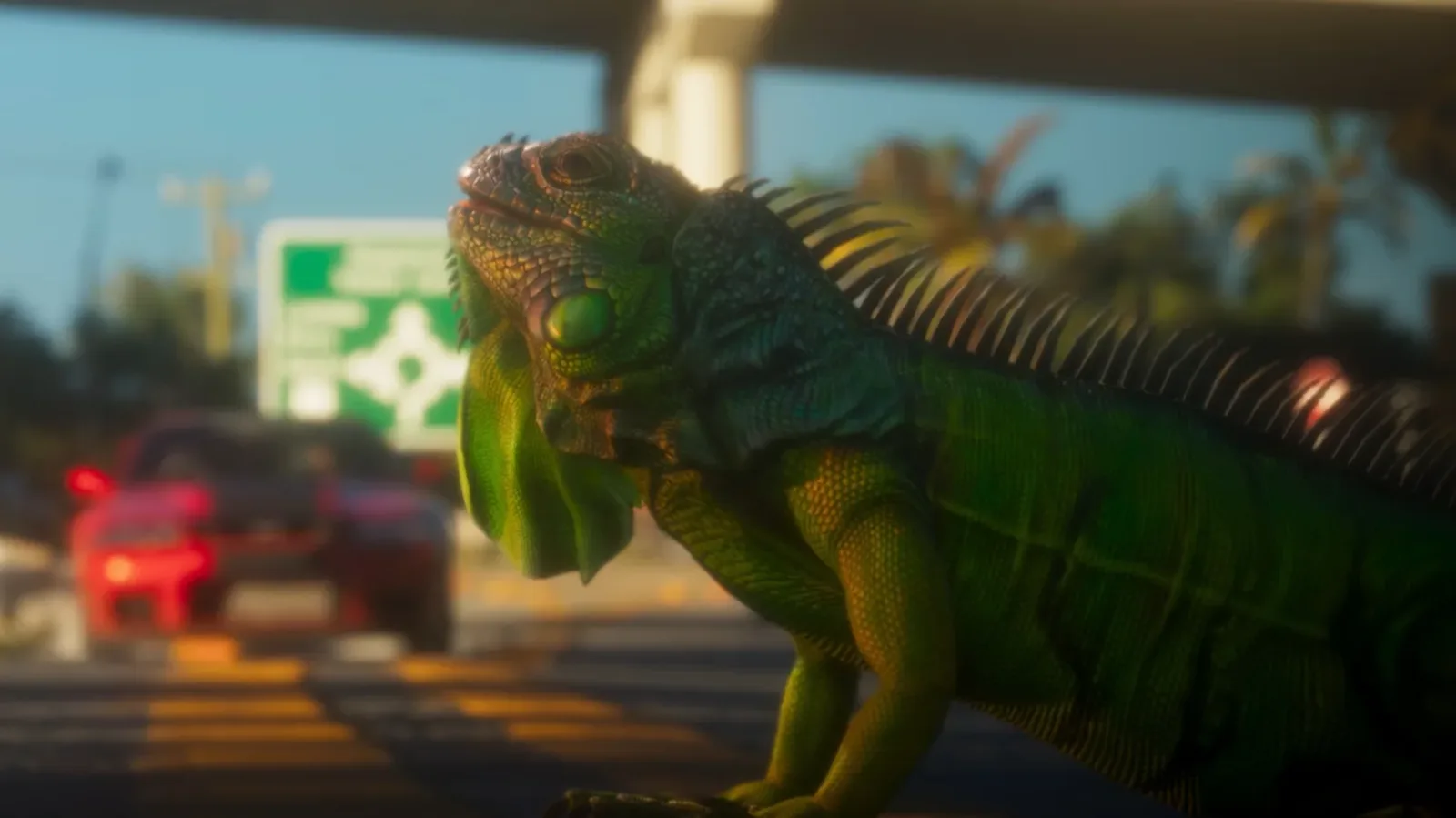
A new Grand Theft Auto 6 trailer has reignited a familiar kind of pre-release argument: are the visuals changing, or are viewers simply seeing a different creative presentation? The roughly minute-and-a-half video contains the expected collection of high-stakes action, character drama, criminal-world spectacle, and adult material. Yet one of its most heavily discussed details is not a car, a location, or a plot clue. It is the image itself.
Some fans have focused on what they describe as a soft, smudged, or blurry quality across portions of the latest footage. Comparisons with the first trailer have spread online, with critics arguing that the newer video appears less sharp and, in the most dramatic version of that claim, represents a graphical "downgrade" ahead of launch. Other viewers have pushed back, pointing to the likelihood that the perceived softness is a deliberate image-processing choice rather than evidence of reduced asset quality or technical ambition.
It is an understandable debate in a vacuum, but it is also one that illustrates the difficulty of judging a game's final visual output from heavily edited promotional footage. A trailer is not merely a direct feed from gameplay. It is a piece of marketing, built around pacing, mood, composition, transitions, color work, and cinematic emphasis. Rockstar Games appears to have leaned into that presentation here, and a blurred-lens aesthetic can substantially change how individual shots are perceived when they are paused, cropped, compressed, and compared frame by frame.
Embedded X/Twitter post
Embedded X/Twitter post
Embedded X/Twitter post
Why the trailer's soft focus is drawing attention
The new footage includes a broad range of scenes: material touching on an army-related backstory, an intimate shower sequence, Jason violently throwing a man from a boat, and the familiar voice associated with the series name. In between those attention-grabbing moments, viewers have noticed an effect resembling lens softness or a Gaussian blur. Rather than keeping every corner of every shot clinically crisp, the trailer occasionally presents a more diffused image.
For useful background on this topic, read Arc Raiders Could Find Its Strongest Stories Beyond the Game in TV and Film.
That approach can serve several purposes. Film and game trailers often use focus effects to direct the eye toward a character, object, or action in the center of a composition. A softened background can establish depth, make lighting feel more atmospheric, or give a scene a hazier and more subjective mood. The effect may also be part of color grading or other post-processing intended to make a collection of disparate scenes feel visually unified.
In short clips viewed under ideal conditions, that style can read as cinematic. In internet discourse, however, it can read very differently. Fans frequently pause trailer footage, capture still images, enlarge them, and position them next to older material. Once that happens, visual choices designed for motion can look like a loss of detail. Video compression on social platforms and repeated re-uploads can further complicate the picture, making it difficult to separate the trailer's intended look from artifacts introduced after it left Rockstar's hands.
"Downgrade" has become a loaded word
The word downgrade carries particular weight in game marketing. It suggests that a developer previously showed a more technically impressive version of a game and later reduced the visual standard. That can happen in game development for many reasons, including performance requirements, the scale of open worlds, late technical changes, and the need to make a finished product run consistently. But calling something a downgrade requires more evidence than a perceived change in sharpness between trailers.
There is no indication in the available trailer discussion that Rockstar Games has said its underlying graphical technology has been reduced. Nor does the presence of blur alone demonstrate weaker models, lighting, animation, textures, draw distances, or world simulation. A soft-focus pass is a presentation layer. It can obscure fine detail, certainly, but it does not automatically mean that detail is absent from the game.
That distinction matters because trailers do not always use the same visual settings from shot to shot. One sequence may use motion blur, depth-of-field, lens distortion, atmospheric effects, or a particular color treatment to create a mood. Another may be presented more directly to highlight a skyline, vehicle, or character animation. Comparing these scenes as if they were identical technical test environments is unlikely to produce a reliable conclusion.
It is also possible that any such visual settings could be adjustable. Nothing in the latest trailer confirms the available options for Grand Theft Auto 6, so players should avoid treating that as a guarantee. Still, the idea is not unusual in Rockstar's work. Red Dead Redemption II included a range of visual filters, giving players ways to alter the presentation of its world. That precedent helps explain why many fans believe the contentious look may be an optional or trailer-specific effect rather than a fixed representation of the game's final appearance.
Trailers are built to create a feeling
Grand Theft Auto has never been a series presented solely through raw technical demonstration. Its trailers sell a fantasy of place: traffic, nightlife, violence, sun-drenched streets, criminal ambition, radio-ready energy, and the collision of ordinary routines with extraordinary chaos. The newest GTA 6 footage seems designed around that same goal. A little softness or lens treatment may be intended to make scenes feel humid, glamorous, grimy, dreamlike, or dangerous, depending on the moment.
That creative choice will not appeal to everyone. Players who want to inspect the world's details may reasonably prefer the cleanest possible image. They may also be especially sensitive after years of scrutinizing every GTA 6 reveal for clues about its technology, its characters, and its broader scope. Given the enormous anticipation surrounding the game, even a subtle processing effect can become the basis for extensive analysis.
But personal dislike of an aesthetic is separate from a verified technical regression. A trailer can be too soft for one viewer's taste without providing evidence that Rockstar has compromised the game. The most useful response is to identify what is actually visible: a stylized blur or soft-focus treatment in some footage, a noticeable contrast with the earlier trailer's appearance, and no confirmed explanation establishing that the game itself has been downgraded.
Why frame-by-frame comparisons can mislead
Side-by-side comparisons are valuable when they use like-for-like material. For instance, the same environment, similar lighting, the same camera angle, equivalent image quality, and known settings can reveal meaningful differences. Trailer comparisons generally lack those controls. Two shots might be captured at different times of day, use different weather, feature different post-processing, or be composed for completely different narrative purposes.
There is also the issue of motion. Blur is often far less noticeable when an image is moving at its intended pace. A still frame freezes an effect that may have lasted only a moment and turns it into the entire subject of examination. What feels immersive in motion can look muddy when isolated as a screenshot. Conversely, a sharp frame may appear impressive as an image while looking less natural in a moving scene if it lacks the visual treatment used elsewhere.
This does not mean fans should never question promotional material. Developers and publishers benefit from informed audiences that ask how a game will actually look and perform. It does mean the conversation should leave room for uncertainty. At this stage, the trailer is better understood as a curated glimpse of GTA 6's tone than as a final benchmark for every visual setting and every moment of play.
Waiting for clearer evidence
The practical takeaway is simple: the blurred moments in Grand Theft Auto 6's latest trailer are real enough to be noticed, but the leap from "I do not like this visual effect" to "the game has been downgraded" is not supported by what has been shown. The effect resembles an artistic processing choice, one that may have been selected to give the trailer a more cinematic identity.
Until Rockstar Games offers a direct explanation, more extensive footage, or a look at the game under clearly defined conditions, there is no reason to treat the soft-focus presentation as proof of a diminished final product. Fans can debate whether the style works, and many clearly will. For now, though, the blur appears to be one more part of a trailer carefully shaped to make an impression--not a definitive verdict on GTA 6's graphics.
Community
Discussion
Start the conversation.
No comments have been posted yet.