

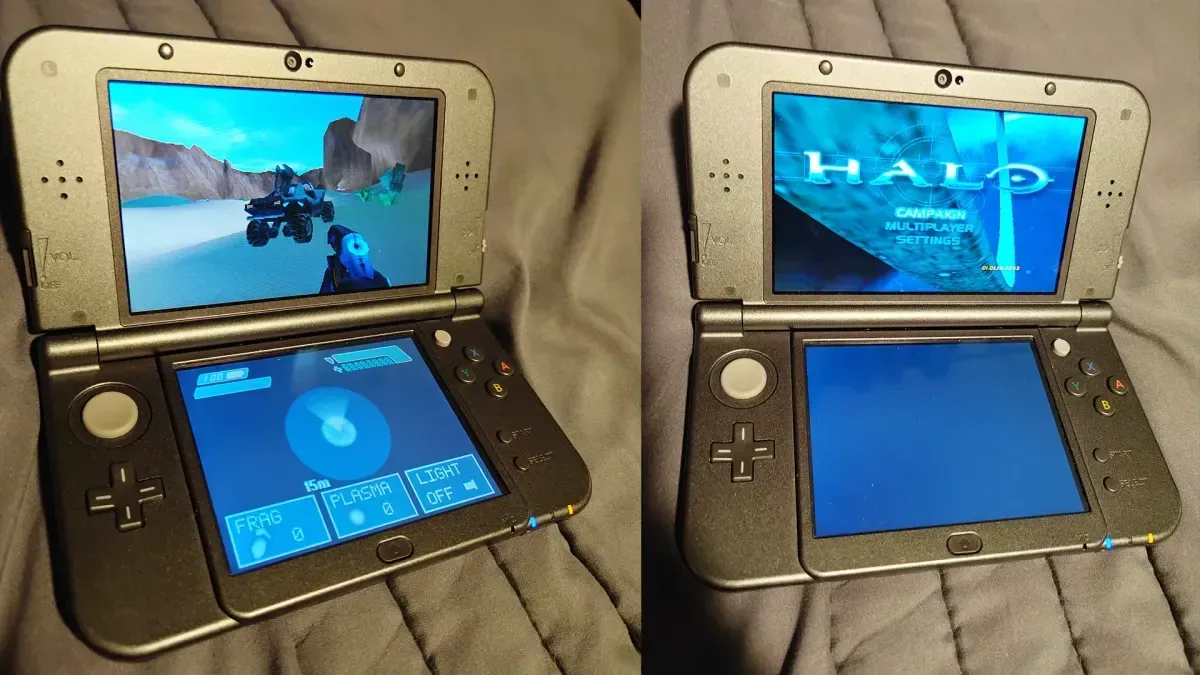
Halo: Combat Evolved, the landmark first-person shooter that helped define the original Xbox, is now the subject of two striking fan-development efforts: one targeting Nintendo's New 3DS family of handhelds and another designed to run through a web browser. Neither project should be mistaken for an official release, and both are still in development, but the demonstrations and feature claims underline how far community porting work has progressed.
The handheld version is being developed by Generalkidd, while browser work has also surfaced with an unusually ambitious set of multiplayer goals. Each project approaches the 2001 game from a very different technical angle. The New 3DS adaptation has to reduce the visual load enough for aging portable hardware, while the browser version is intended to make the game accessible without a conventional native installation.
For Halo fans, the news is fascinating less because it promises a definitive way to experience the game and more because it shows the unusual destinations that classic PC and console software can reach after extensive reverse-engineering and decompilation work. A game once synonymous with a large home console is being reshaped for a glasses-free 3D handheld and, separately, the browser window.
A New 3DS Version With Major Visual Compromises
The Nintendo handheld project has been shown running on original 3DS hardware, specifically with the extra performance offered by the New Nintendo 3DS line appearing to be important to the effort. Video and images shared by the developer indicate that the fundamental Halo experience is present, but it has undergone substantial cuts in visual quality to get there.
For useful background on this topic, read Pokémon Axón Brings a Slavic-Inspired Karelia Region to a New Fan Adventure.
Generalkidd has said the project is not yet ready to be released. The developer described the assets as original models running at significantly reduced quality so that the New 3DS can handle them. That trade-off is immediately understandable when considering the gap between the original Xbox and Nintendo's 2014-era upgraded handheld. Halo's broad outdoor spaces, enemy encounters, lighting, vehicles and large environments were demanding in their day; translating them to a portable system built around much more limited CPU and graphics resources requires careful compromise.
The current build is said to retain the game's feel despite that downgrade. Footage suggests that the presentation is recognizably Halo even when geometry and overall detail have been scaled back. Performance has been described as landing around 20 to 30 frames per second on average, an understandable target for such an experimental project but also a reminder that this is not a simple conversion with parity to the original release.
Features Reported for the Handheld Build
Despite the technical cuts, the New 3DS project is already aiming beyond a basic proof of concept. Its listed functionality includes:
- Campaign mode
- Local multiplayer
- Stereoscopic 3D support
- Sound
- Second-screen map use
The use of the lower screen for the map is particularly fitting for the platform. Halo's original interface was designed around a television and controller, whereas the 3DS provides a separate touch display that can keep navigational information visible without interrupting play. The top screen's 3D effect is another distinctly platform-specific addition, though how comfortable and practical it will be during the game's fastest firefights remains to be seen.
Online multiplayer is also reportedly being investigated, but it is not currently presented as a finished feature. The work is expected to require considerably more development before it can be made available. Another developer associated with the broader effort, mitchellhynes, has acknowledged that the project presently contains many bugs. That candor matters: a build capable of loading a level and a release-ready port are very different things, particularly when campaign progression, networking, saving, controls and compatibility all need to work reliably.
Why Halo on 3DS Is Such a Technical Curiosity
Halo: Combat Evolved was built around a different era of hardware assumptions. Its original console version used twin analogue sticks, shoulder buttons and a powerful-for-its-time fixed platform. The 3DS has a smaller display, less processing headroom and a control layout that can vary substantially depending on the model. New Nintendo 3DS systems add the C-Stick and extra shoulder inputs, which make a modern-style shooter control scheme more viable than it would be on the launch 3DS.
Even so, mapping Halo's weapons, grenades, jumping, looking and vehicle controls to handheld inputs without making the game awkward will be a major design consideration. The reported focus on New 3DS hardware makes sense because the additional controls and performance bump both help address the port's biggest obstacles.
There is also an important distinction between an impressive fan project and an official portable Halo product. Microsoft has not announced a retail or digital Nintendo 3DS edition of Halo: Combat Evolved. Anyone following the project should therefore expect an experimental community release rather than the support, polish, certification and long-term stability associated with a commercial launch.
A Browser-Based Take With Huge Multiplayer Ambitions
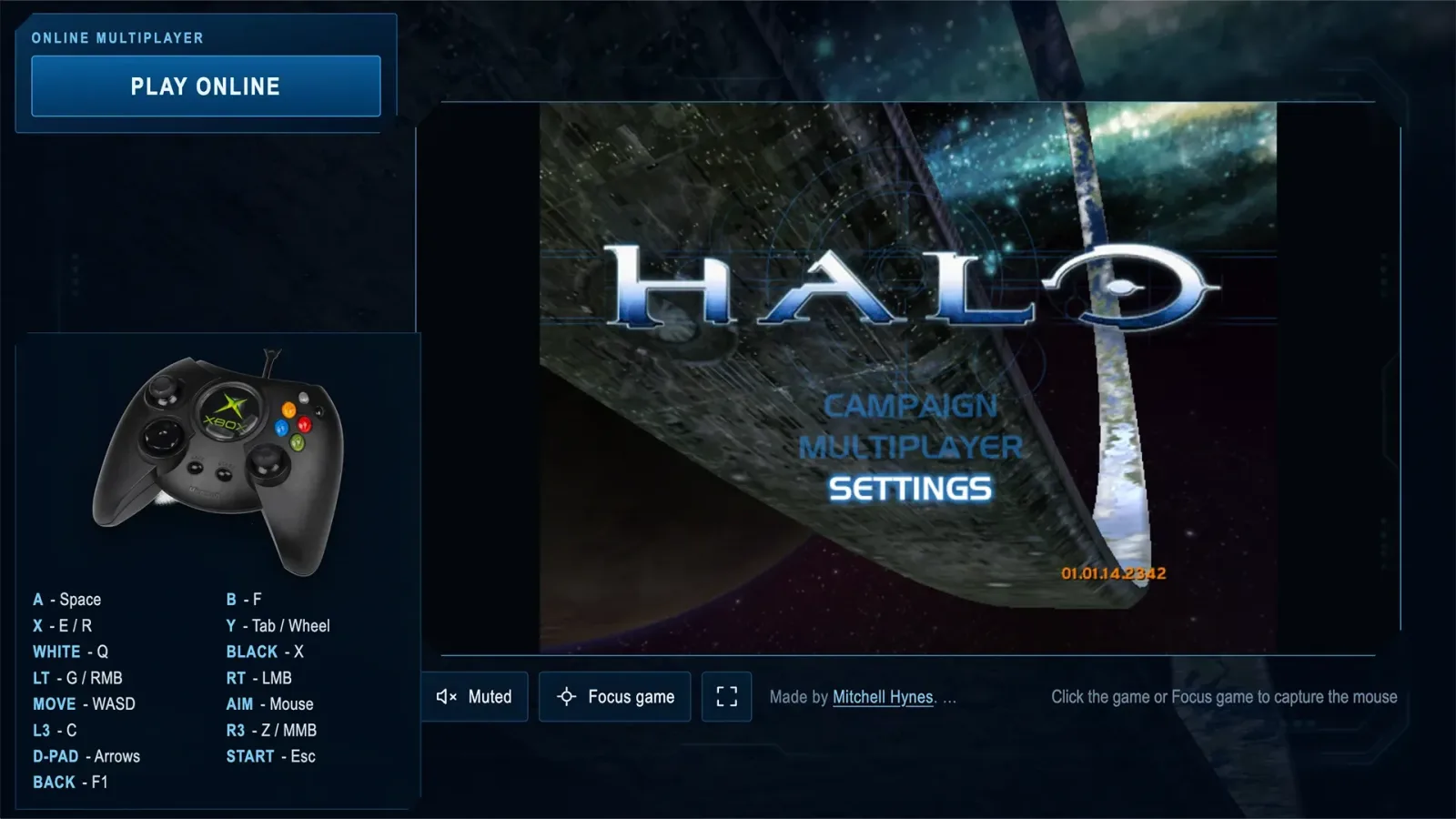
The second effort takes Halo: Combat Evolved in the opposite direction. Rather than asking players to use a specific legacy handheld, the browser-based project seeks to run the game on devices capable of accessing the web version. It is described as including the campaign, split-screen co-op, controller support and online play.
Most notably, the browser port has been associated with matches supporting up to 128 players at once. If that target proves functional in public use, it would be a dramatic departure from the multiplayer scale traditionally associated with Halo: Combat Evolved. The original game's arena combat is remembered for tighter contests and LAN-party culture, where a handful of players produced memorable battles across maps such as Blood Gulch and Hang 'Em High. A 128-player match is less an attempt to recreate the period experience exactly and more an experiment in pushing classic Halo systems into a much larger format.
The browser edition is also said to support split-screen co-op, preserving one of Combat Evolved's most important social features. Halo's campaign was built around cooperative play, from the first landing on the ringworld to the final Warthog escape. Offering that mode in a browser environment is an attractive prospect, but it can also introduce practical complications involving input devices, local display arrangements and browser performance.
Reports from people trying the web build suggest that it has a significant number of bugs. That is unsurprising for a project with this scope, especially one attempting campaign functionality, controller support, local co-op and high-player-count online sessions. The developer is reportedly addressing problems quickly, but prospective players should set expectations accordingly. Early access to a remarkable technical experiment can come with crashes, visual issues, connection trouble, missing features and inconsistent performance.
Decompilation Opens New Doors, Not Simple Solutions
Both projects emerge from a wider pattern in game preservation and fan development. When older games are decompiled or otherwise deeply understood by enthusiasts, developers can investigate new hardware targets, fix long-standing limitations, add platform-specific features or create alternate ways of running the software. That does not make the process easy. In many cases, it simply turns a previously impossible task into a long engineering project filled with compatibility problems.
Halo is especially interesting because its legacy is split across several generations of technology. Combat Evolved began on the original Xbox, reached PC, received later anniversary treatment and has remained part of Microsoft's broader Halo catalog. That history gives fans a strong basis for comparison. A browser port and a reduced-quality New 3DS adaptation will inevitably be judged not only on whether they run, but also on how they preserve movement, weapon handling, enemy behavior, atmosphere and the rhythm of the original missions.
For now, the right way to view both efforts is as work in progress. The 3DS build is not ready for release, its online component still needs substantial work, and its current visuals have been heavily reduced for the hardware. The browser project offers an exciting feature list, but reports of bugs mean it should be approached as an evolving experiment rather than a finished replacement for established versions.
What These Projects Say About Halo's Staying Power
More than two decades after its debut, Halo: Combat Evolved continues to inspire unusual technical projects because its core design remains instantly recognizable. The assault rifle, shield system, vehicle combat, open combat arenas and cooperative campaign structure have enough identity that they can survive dramatic changes in presentation. Seeing those elements squeezed onto a New 3DS, or placed inside a browser, is a testament to the game's durability as much as it is to the persistence of its fan community.
There are still many unanswered questions. The handheld project needs a public release, further bug fixing and clarity on which New 3DS models and features will be required. The browser version needs to demonstrate stable performance across its promised modes, especially its unusually large online matches. Yet even at this unfinished stage, both projects offer a compelling glimpse of where dedicated preservation and porting communities can take a classic shooter.
Halo: Combat Evolved has been played on consoles and PCs for years. If these works mature as intended, it may soon have two more very unconventional homes: Nintendo's aging dual-screen handheld and the everyday web browser.
Community
Discussion
Start the conversation.
No comments have been posted yet.