

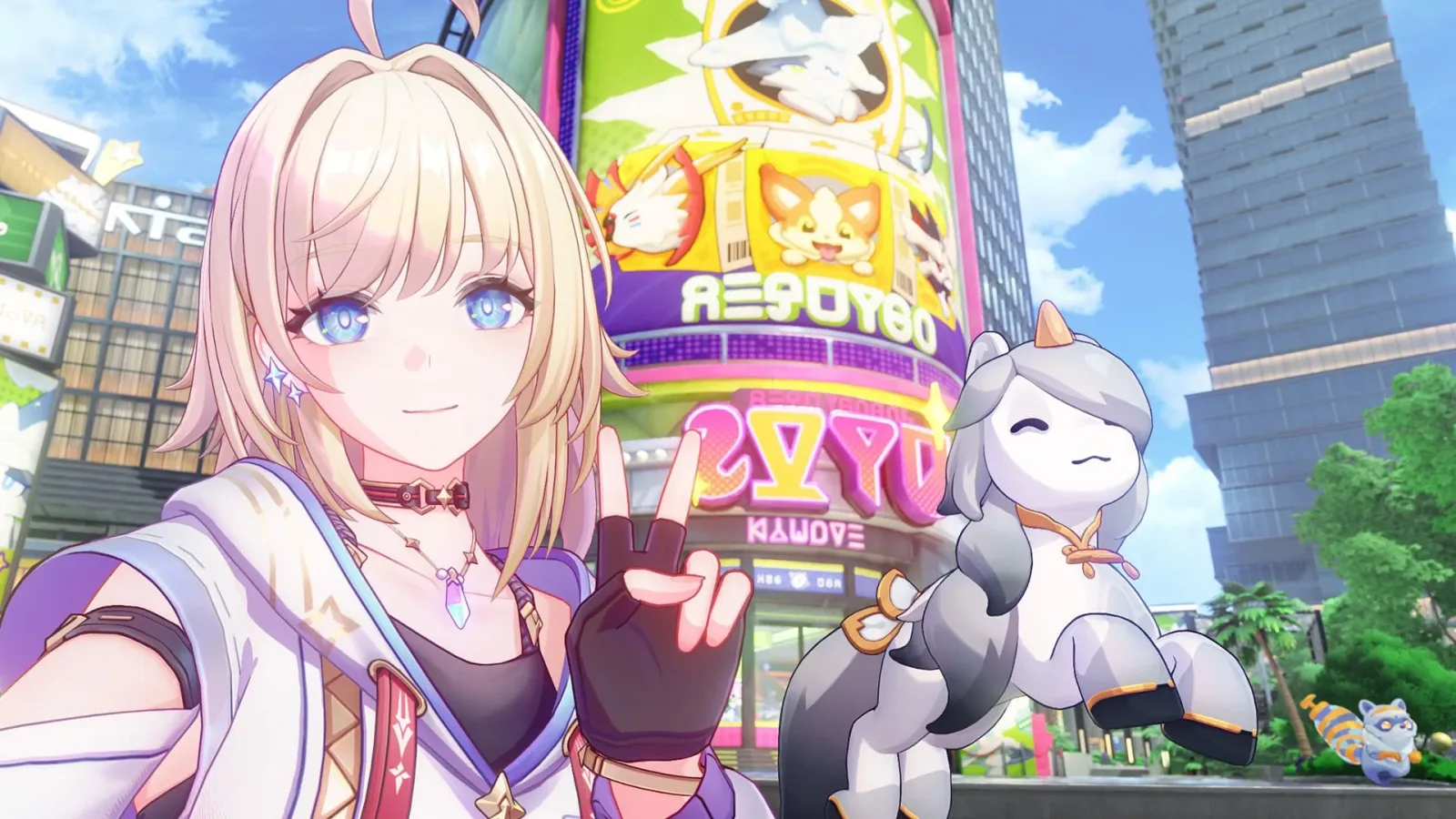
Honkai: Nexus Anima is making a strong early case for itself on creature design alone. HoYoverse's upcoming creature-collecting strategy game is full of imaginative companions called Anima, and many of them pair animal traits with food-inspired visual ideas. There are creatures that resemble pancake dogs, ramen-loving seals, donut-selling rabbits and more besides. It is a playful direction that gives the game an immediate personality in a genre where the appeal of meeting, collecting and building a bond with new creatures is everything.
That charming foundation is especially important for a project entering a crowded field. Pokémon remains the defining name in creature collecting, while games with very different interpretations of the formula continue to compete for attention. Honkai: Nexus Anima appears to have a strong answer to the question of how it can stand out aesthetically. Its more complicated question is whether players will connect with its combat, which uses a real-time autobattle format that can make the colorful creatures difficult to appreciate once a match begins.
A recent hands-on session provided a look at both sides of the game. The result is encouraging for anyone seeking memorable monster designs, but less immediately convincing for players who want direct, tactical control over every battle.
A world of Anima built to be collected
The biggest immediate strength of Honkai: Nexus Anima is the variety and appeal of its creatures. Food-themed Anima are an obvious highlight. Donubi, a rabbit merchant with a donut motif, has the kind of distinctive silhouette that makes a creature memorable at a glance. Pupanoo brings the unlikely but effective concept of a ramen seal, while Puddlipup turns a pancake-inspired dog into another particularly cute collectible.
For useful background on this topic, read DigiBitPlay V4 Adds SNES, Nintendo 64, Xbox 360 and Steam Deck Support.
The food ideas are not the game's only trick. Hoggit, a notably fashionable pig-like Anima, demonstrates that the broader roster can be appealing even when it is not leaning into culinary inspiration. That balance matters. A game can certainly build a successful visual identity around a single theme, but a bestiary feels more rewarding when it can surprise players with different moods, species and concepts as they explore.
These designs also seem suited to the central appeal of the genre: the simple joy of encountering something new and deciding that it belongs on the team. Honkai: Nexus Anima has no shortage of creatures that seem likely to generate that reaction. The challenge will be ensuring that the gameplay gives those designs enough room to breathe after they are caught.
A late-game demo with a lot to explain
The hands-on build did not begin from the opening moments of the adventure. Instead, it dropped the player into a prepared save already in the late level 40 range. It is unclear exactly how many hours of progression that represents, but it meant a large amount of content and several layered systems were available immediately.
That setup offered freedom to roam, capture Anima, engage in fights and pursue story objectives, but it also made the first impression of the battle mechanics more difficult to parse. A player starting from scratch may be introduced to these ideas gradually. In a high-level save, the game presents a considerable amount of terminology, class-like roles and team-building rules at once.
Anima are assigned to Frontline and Backline positions, with their traits affecting how they contribute in combat. Protectors, for instance, can draw enemy attention and recover energy when attacked. Masterminds are geared toward damage output, with skills that regenerate on a per-second basis. Those distinctions point toward a system where placement and composition should be meaningful rather than cosmetic.
There are further variables as well. Individual Anima can have different Dispositions, granting unique effects even within the same species. One Marshalbird encountered in the demo possessed a trait that restored 5% of the rest of the team's health when it was defeated. That sort of variation has the potential to make collecting more than a search for a species checklist. Players may have a reason to seek out alternative versions of the same Anima, experimenting with different passive benefits and team synergies.
The game also appears to link team composition to status effects. Joy, for example, can trigger a status named Ecstacy. In the demo, however, there was no clear explanation readily available for what that status specifically did. This may be a matter of tutorial pacing, interface clarity or the unusual nature of beginning with an advanced save, but it is still notable. Strategy systems are most satisfying when players can understand why a particular setup succeeded or failed.
Combat proceeds with limited player control
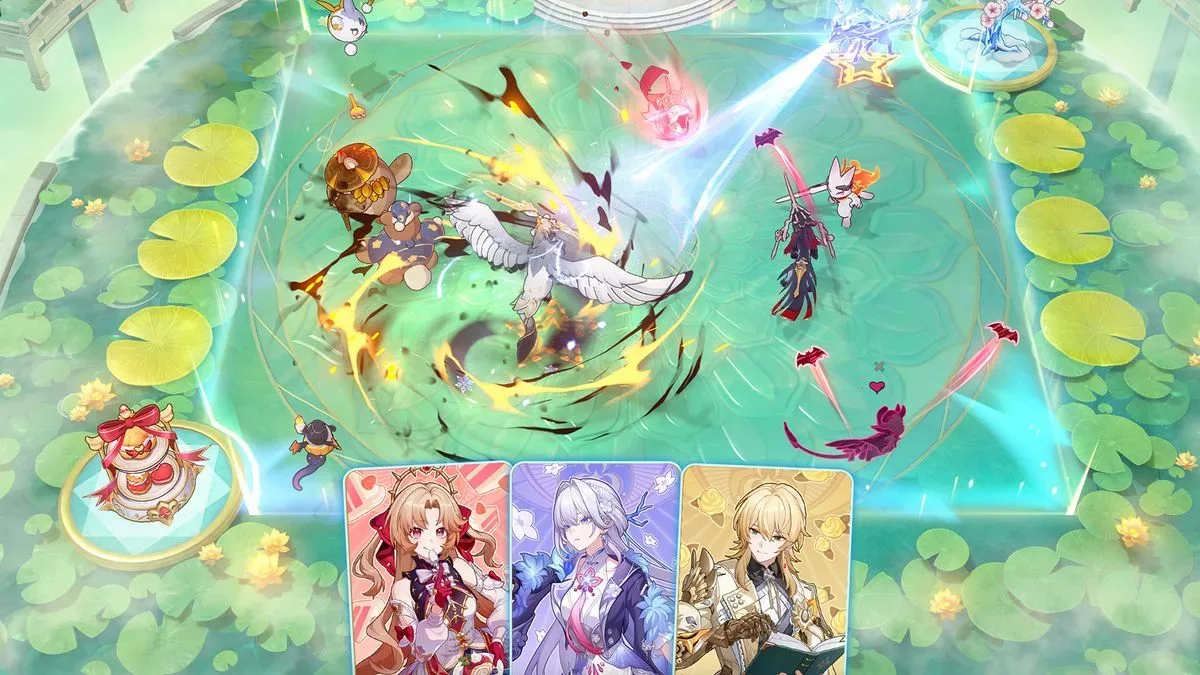
Once combat starts, Honkai: Nexus Anima shifts from its promising roster-building ideas into a more divisive format. Matches take place in compact, top-down arenas. Teams enter the battlefield and automatically move toward opponents, charging abilities and using them autonomously in real time.
The player is not completely removed from the action. Human characters known as Eidos are represented by cards along the bottom of the screen, and their skills can be activated manually when cooldowns allow. Those interventions can potentially provide a timely tactical edge, whether through damage, support or another battlefield effect. Still, the core Anima-versus-Anima action largely takes care of itself.
For players who enjoy autobattlers, that structure may be exactly the point. The strategy is likely meant to come before the fight: selecting a squad, arranging Frontline and Backline positions, accounting for traits, considering Dispositions and deciding which Eidos support options complement the plan. The battle then becomes a test of preparation rather than a contest of rapid inputs.
But the demo raised concerns about how visible or necessary those decisions feel in practice. The provided team dispatched enemies extremely quickly, sometimes so quickly that it was difficult to follow the sequence of events or identify which abilities were responsible for the result. It is possible that the prepared squad was unusually powerful for the encounters, or that the demo's opposition was not designed to fully test the system. Neither possibility can be ruled out from a short session.
Even so, first impressions matter. When a game introduces numerous mechanics only for battles to end in seconds with little obvious decision-making, the depth can feel theoretical. Players may see tooltips for roles, status conditions and individual passive effects, yet have limited opportunity to understand their impact from one match to the next.
Great designs deserve readable battles
The fast pace also creates a presentation problem. Honkai: Nexus Anima's creature designs are expressive and inventive, but they can become visually diminished in small top-down arenas packed with simultaneous action. If a player is collecting an Anima because they love its look, personality or animation, there is value in allowing that creature to be seen clearly during the gameplay loop that occupies the most time.
A turn-based format would naturally give individual abilities more focus, while a more directly controlled real-time model could make each Anima feel like an active companion. Honkai: Nexus Anima is choosing another route: a strategic, semi-observational approach where the player manages the conditions around the battle and steps in through Eidos cards. That is not inherently a weaker choice, but it demands excellent feedback. The game needs to show players why their lineup worked, what changed during a fight and how each beloved creature contributed.
There is plenty of room for that to improve as players spend more time with the game. Starting from the beginning could make the many systems feel far less overwhelming, and tougher content may demand the optimization that the demo did not appear to require. The Eidos cards may also become more important when opponents survive long enough for timing and cooldown management to matter.
For now, Honkai: Nexus Anima looks like a game with an unusually compelling collection hook and an open question at its mechanical center. HoYoverse and developer miHoYo have created Anima that seem easy to adore, from Puddlipup and Pupanoo to Donubi and Hoggit. The next task is proving that the combat format gives players a similarly strong reason to keep using them.
Honkai: Nexus Anima is planned for PC and mobile, with no release date announced.

Community
Discussion
Start the conversation.
No comments have been posted yet.