

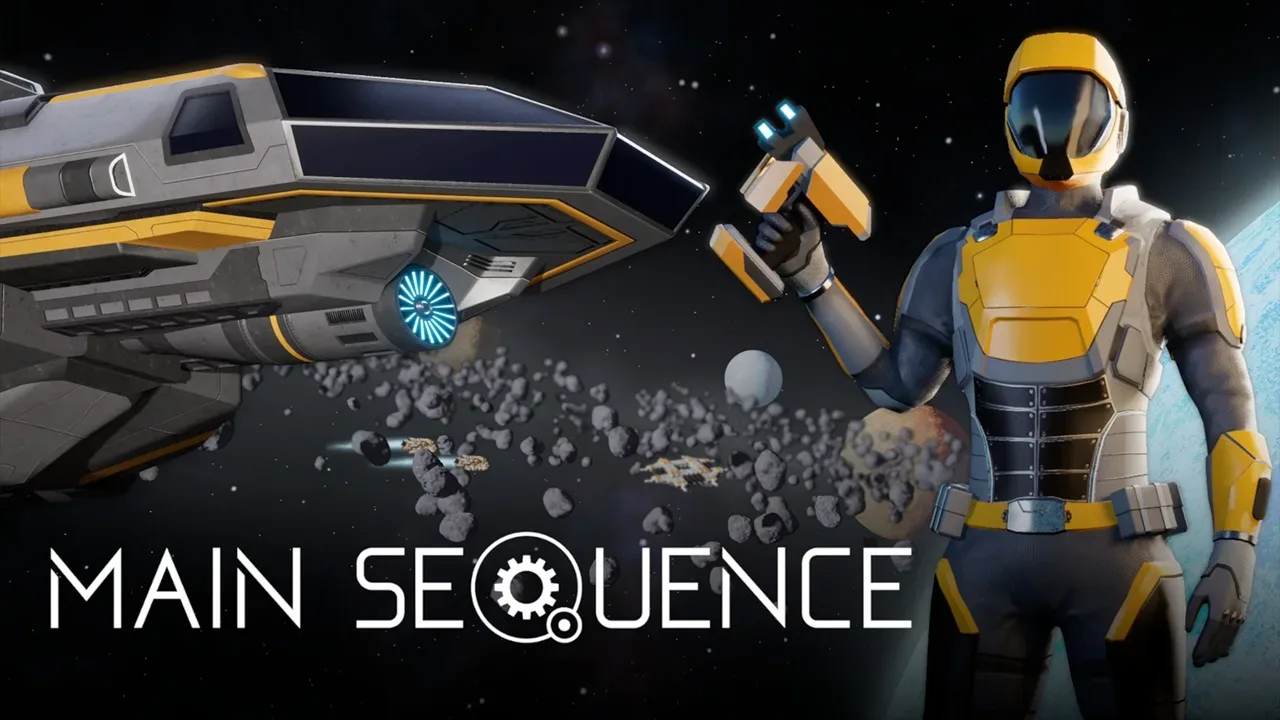
Main Sequence, a first-person space simulation and factory-building game from developer Tumbling Dumpling Studio, has opened a new Steam playtest that gives players access to its current work-in-progress build. The test is free to download and play now, and it will remain available until September 25.
Published by Mythwright, Main Sequence is built around an expansive sci-fi progression loop: begin with a lone mining vessel in an asteroid belt, gather raw resources, turn those materials into more useful components, and gradually establish an industrial presence that can reach far beyond humanity's starting point. The new playtest is described as an unrestricted opportunity to try the full in-development version rather than a narrowly limited demo, with dozens of hours of potential content for players who want to dig into its systems.
That is a meaningful proposition for a game combining several demanding genres. Main Sequence is not only concerned with steering a ship through space or arranging production lines from a distant management screen. Its central premise puts players in a first-person perspective while they mine, construct machinery, build ships, research technologies, and assemble station modules piece by piece. The result aims to connect the immediate feeling of operating in space with the long-term planning of a factory sim.
A single mining ship is only the beginning
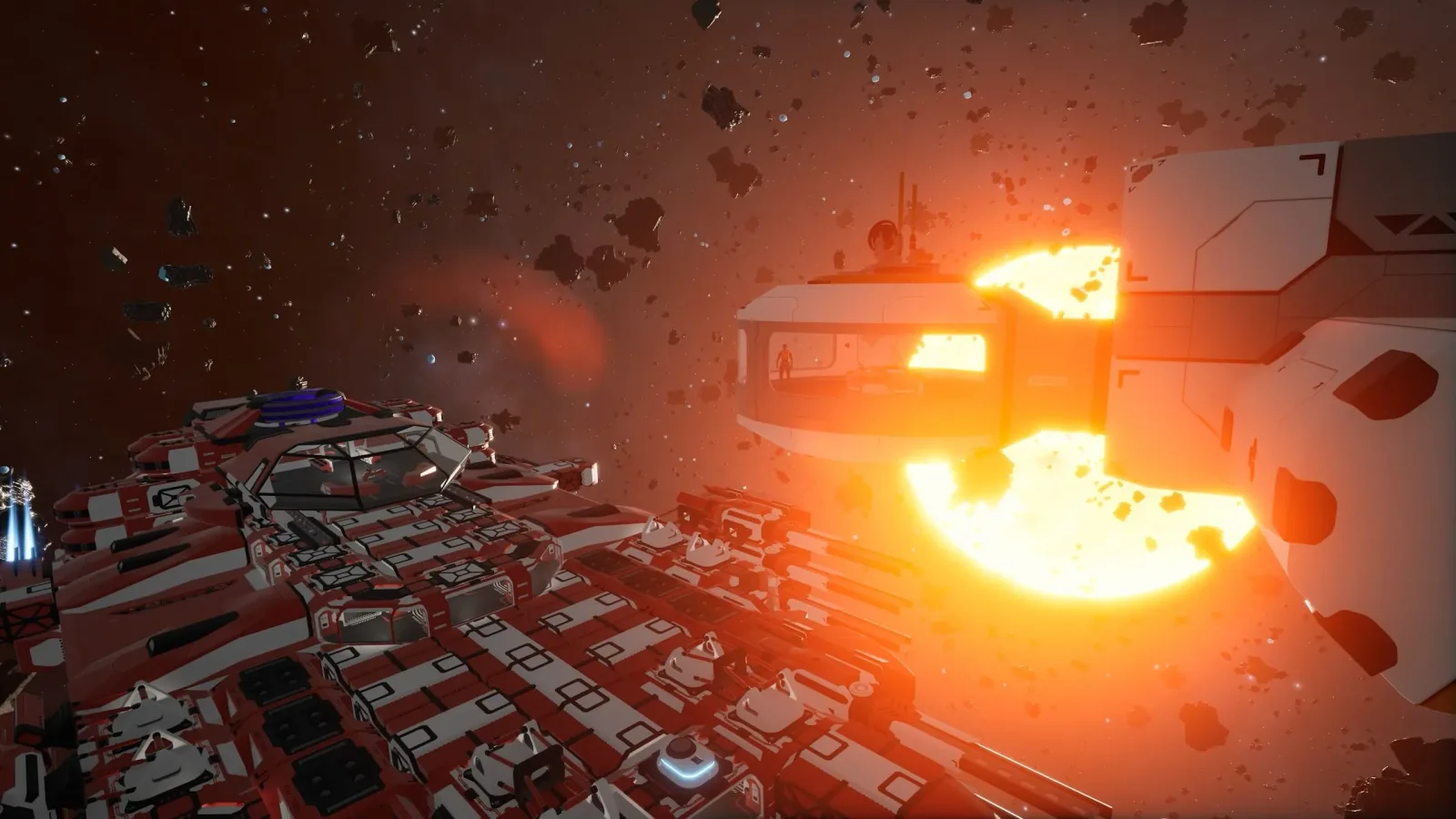
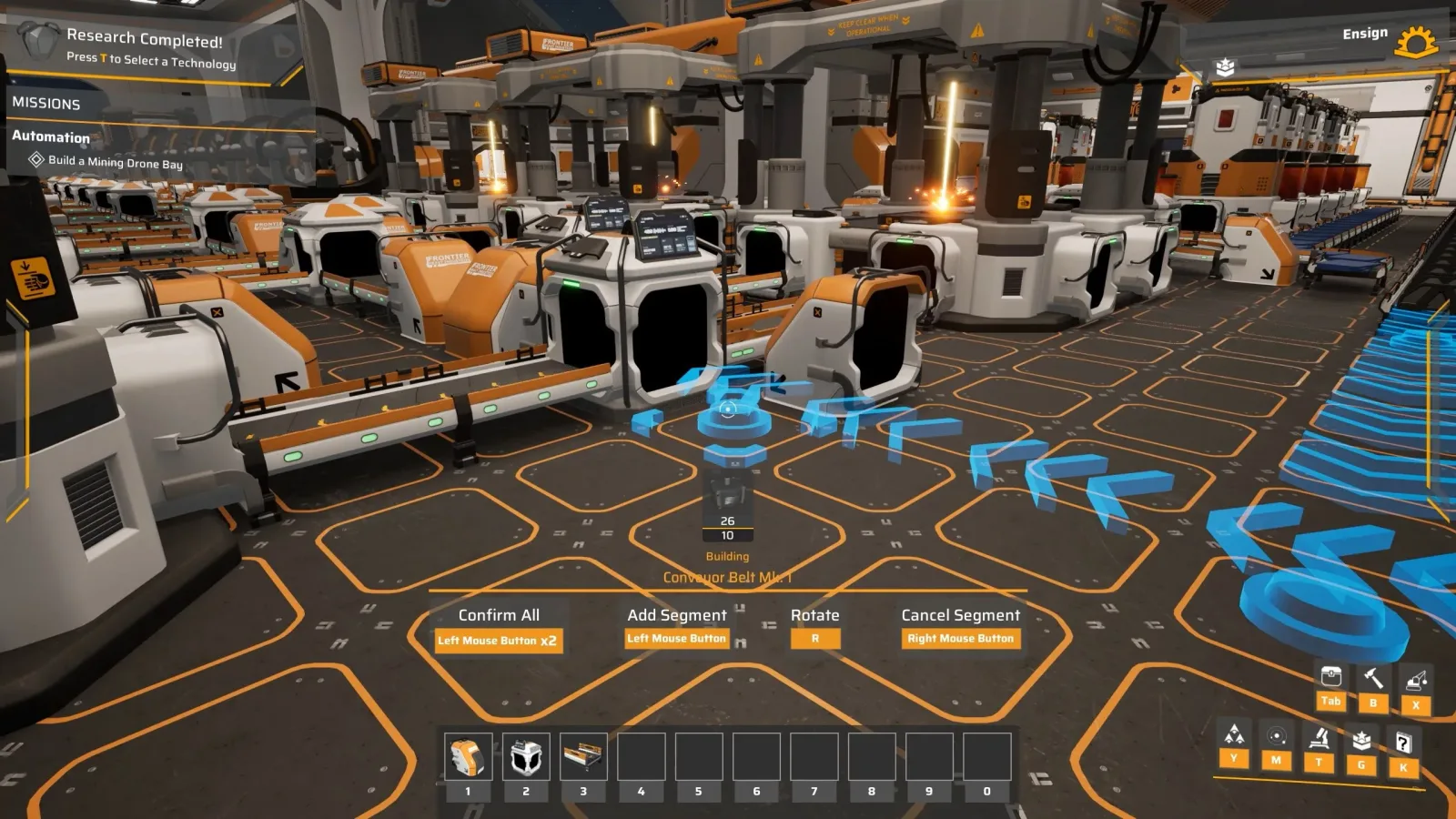
The opening setup places players in a resource-rich asteroid belt with just one mining ship at their disposal. From there, progress depends on collecting materials and refining them into the parts needed to support increasingly complicated production. Building factories and introducing automation are essential steps, turning an initially hands-on survival-and-extraction routine into a larger industrial network.
For useful background on this topic, read Halloween the Game: How to Detain Michael Instead of Simply Escaping.
That familiar factory-game escalation is being applied to an interstellar scale. Instead of stopping at a local base, Main Sequence asks players to expand humanity's reach across the stars. New technologies can be researched, ships can be constructed, and space-station modules can be created individually as players work toward a more capable operation. The game's progression is intended to carry players from the first asteroid-belt foothold to the outer edge of the solar system and, eventually, toward distant star systems.
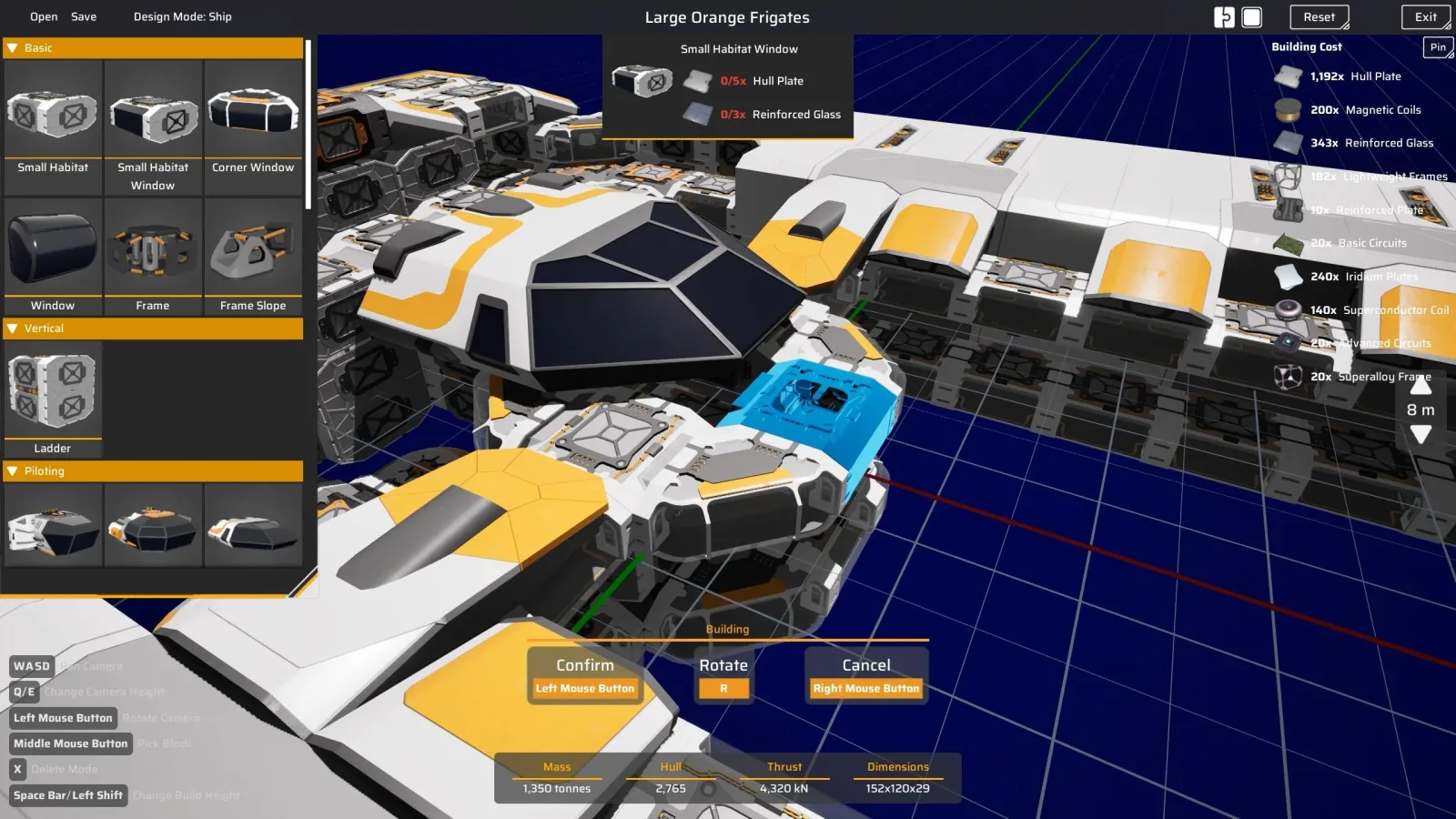
The modular construction angle is particularly important to the game's identity. Players are not simply selecting a completed station or vessel from a menu and placing it into the world. Main Sequence lets them construct ships and station sections module by module. That approach should make expansion feel more personal while also tying building decisions directly to the resources, manufacturing capacity, and research choices that came before them.
For players who enjoy optimization, the appeal will likely come from finding efficient paths from extraction to refinement to production. The game's first-person presentation could add another layer to those decisions, since factories and stations are spaces players are meant to inhabit and interact with rather than purely abstract diagrams. The playtest offers an early chance to see how successfully Main Sequence balances those direct interactions against the broader logistical demands of an automated empire.
For another perspective on this story, read Main Sequence Steam Playtest Opens a Short Window on Its First-Person Space Factory Ambitions.
Exploration, conflict, and deep-space objectives
Industrial growth is only one part of the planned experience. Main Sequence also includes exploration across an interstellar setting. Players can travel outward in search of deep-space resources, and advancement through the technology and progression systems opens the possibility of reaching more remote destinations. The stated goal is not merely to collect everything within the starting region, but to push farther into the solar system and beyond it.
Those journeys may bring players into contact with abandoned space stations, giving exploration a sense of discovery alongside its practical hunt for materials. The presence of derelict structures suggests there will be places to investigate beyond player-made installations, which could help make long-distance travel feel like more than a route between mining sites.
Deep-space combat is also among the gameplay elements included in the current build. Exact details about enemy types, weapon systems, or how conflict fits into the larger economy have not been outlined, so prospective players should approach the playtest as an opportunity to learn how that aspect functions in its present state. Still, combat's inclusion means expansion is not framed solely as a peaceful logistics exercise. Industrial capability, ship construction, and the ability to operate at range may all have a role in preparing for threats encountered away from the safety of a home base.
The mixture of management, exploration, construction, and combat gives Main Sequence a notably wide scope. Such a blend can be difficult to develop, especially when players are expected to move naturally between first-person activity and large-scale planning. A public test of the full work-in-progress game is therefore useful not just for curious players, but for identifying how the many systems connect during extended sessions.
Solo and co-op options in the current test
Main Sequence supports both solo play and co-op. Players who would rather control every stage of an industrial operation themselves can approach the game alone, while groups can share the workload involved in harvesting resources, building infrastructure, undertaking research, constructing vessels, and traveling into deep space.
Co-op is a natural match for a game with overlapping responsibilities. One player could focus on extraction and resource transport while another expands the factory side, with others working on construction or heading out to investigate distant locations. The precise structure of co-op sessions, including player limits and progression rules, has not been detailed, but the available support means the playtest can be used to sample Main Sequence as either a solo-building project or a collaborative space enterprise.
As with any test centered on a work-in-progress build, players should expect elements to remain unfinished or subject to change. The current version is being presented as extensive rather than final. That distinction matters: the purpose is to provide a broad look at the game's systems ahead of Early Access, not to signal that every feature has reached its release-state form.
A short test period before Early Access
The Steam playtest began on September 17, 2026 and is scheduled to run until September 25. Its availability window is brief, so anyone interested in testing the game's factory simulation, first-person construction, or cooperative space exploration will need to download it during that period.
Early Access is planned for later in 2026, though a specific launch date has not been announced. The timing makes this test an early look at what Tumbling Dumpling Studio is building before the game enters its next public development phase. Players who spend time with the playtest will be able to get a sense of the intended journey from one mining ship to a star-spanning industrial network, while seeing the current state of the systems that will underpin that journey.
Factory builders often thrive on the satisfaction of transforming a modest beginning into a complex machine, and Main Sequence is taking that idea into a setting where the machine can become an entire network of ships, stations, production facilities, and far-flung expeditions. Starting in an asteroid belt, refining the first loads of material, and automating early tasks may sound familiar to fans of the genre. Traveling across the solar system, discovering abandoned stations, and pursuing distant stars gives that progression a distinct sci-fi scale.
For now, the Steam playtest is the place to find out how those ambitions feel in practice. It is free, it includes the game's current broad work-in-progress offering, and it closes on September 25. Main Sequence's Early Access launch is still ahead, but this limited test provides a substantial first chance to begin building humanity's next industrial frontier among the stars.
Community
Discussion
Start the conversation.
No comments have been posted yet.