

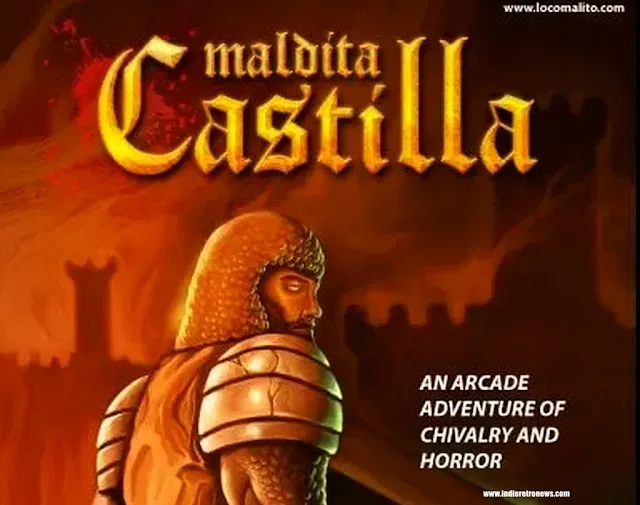
Maldita Castilla, the dark-fantasy action-platformer also known as Cursed Castilla, is set to make an unlikely but highly fitting move to classic hardware. Developer MainakeProject is working on an Amiga AGA conversion of Locomalito's 2012 game, bringing its punishing arcade-style combat, folklore-inspired monsters, and unmistakable pixel-art identity to Commodore's celebrated home computer line.
The project has been announced with the blessing and support of original creator Locomalito. That detail matters greatly for a retro conversion of a modern indie favorite: this is not simply a game borrowing an idea or loosely recreating its look. The port uses authentic game assets and retains the original music by Gryzor87, whose soundtrack is a major part of Maldita Castilla's old-school atmosphere.
Better still, Amiga owners do not have to wait to see whether the concept works. MainakeProject has released a playable demo that contains the complete first level, including the stage's climactic boss encounter. It offers an early opportunity to judge how one of the most well-regarded modern homages to arcade action feels on Amiga AGA hardware.
A natural match for Amiga AGA
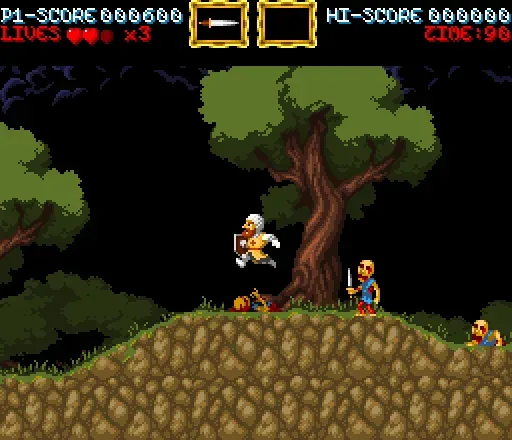
Maldita Castilla has always worn its influences openly. Its run-and-gun platforming structure, enemy pressure, projectile-based combat, and unforgiving hazards immediately recall the design traditions of arcade-era action games, especially Ghosts 'n Goblins. Players are expected to learn enemy patterns, make precise jumps under pressure, manage limited opportunities to survive, and accept that progress may require repeated attempts.
For useful background on this topic, read This Fan-Made PlayStation arcade cabinet Looks Incredible, but Its Design Makes Little Sense.
That design language makes the game a particularly appealing candidate for an Amiga conversion. The Amiga remains beloved for its extensive library of action games, platformers, shooters, and arcade conversions, while its AGA chipset is associated with later machines capable of displaying richer visuals than the platform's earlier configurations. Maldita Castilla's intentionally retro visual style should therefore feel at home on the system, even though the original game was created decades after the Amiga's commercial peak.
MainakeProject describes the work as a production made by Amiga fans for Amiga fans. That enthusiasm is visible in the choice of game alone. Rather than attempting to force a contemporary 3D release onto vintage hardware, the team has selected a title whose structure, controls, art direction, and difficulty philosophy all have roots in the period that Amiga players remember so fondly.
A dark quest shaped by Spanish folklore
While its mechanical inspiration can be traced to classic arcade action, Maldita Castilla distinguishes itself through its setting. The game builds a grim fantasy world from Spanish myths, chivalric literature, and broader European folklore. This gives the adventure a personality beyond simple nostalgia, placing its armored hero against creatures and dangers drawn from a different cultural well than the more familiar medieval fantasy found in many action games.
The result is a game with a harsh, haunted identity. Its environments, monsters, and tone evoke a corrupted kingdom in need of saving, but the journey is not framed as a comfortable power fantasy. Like the arcade games it celebrates, Maldita Castilla asks players to earn every advance through concentration and familiarity. The action can look simple at first glance, yet its challenge comes from the way enemies, platforming demands, and hazards overlap.
For players encountering the game for the first time through the Amiga demo, that may be its biggest surprise. The project is not merely a technical showcase for old hardware. It is also a chance to experience a carefully made action-platformer built around the principles that defined many classic computer and arcade games: readable but dense scenes, immediate controls, memorable enemy designs, and a steep learning curve.
The first level is available to test
The currently available demo includes all of the game's opening stage. That is a substantial sample rather than a brief title-screen tease, allowing players to work through the first area, face its ordinary threats, and take on the level's final boss.
A complete opening level is especially useful for this kind of port because it can demonstrate more than basic movement. Players can assess the responsiveness of the hero's attacks, the pacing of the stage, the behavior of enemies, the quality of audiovisual presentation, and the game's performance during a boss fight. Those are the moments where a conversion has to prove that it can preserve the original experience rather than simply display similar graphics.
The demo also lets seasoned Maldita Castilla players compare the Amiga version with the game they know. Since the conversion uses original assets and Gryzor87's music, there is a clear foundation for a faithful presentation. The important remaining question for enthusiasts will be how the feel of the action translates to the target hardware and how closely the finished release follows the original across later stages.
Why preservation and permission matter
Homebrew development on legacy systems often thrives because creators continue to explore hardware long after its original commercial life. New games, ports, and technical experiments keep communities active, and they regularly introduce younger players to machines they never owned during their initial run. However, projects based on existing games can raise obvious questions about authorization, assets, and respect for the original work.
In this case, MainakeProject has stated that the port is being developed with Locomalito's full support and approval. Combined with the use of authentic assets and the original soundtrack, that gives the Amiga edition a stronger connection to the 2012 release than a typical unofficial tribute might have. It also means the conversion can be viewed as a collaborative extension of Maldita Castilla's legacy, rather than a detached reinterpretation.
That relationship is important because Maldita Castilla is itself deeply engaged with video game history. Locomalito did not make a generic retro-looking platformer; the game was designed around specific arcade sensibilities, then fused with folklore and an original dark-fantasy world. Bringing it to Amiga AGA hardware creates an interesting circular connection. A modern game inspired by an earlier era is now being adapted for one of the machines most closely associated with that era's home-computer culture.
A promising project for classic-computer players
The announcement will naturally be most exciting to Amiga AGA enthusiasts, but it may also draw attention from fans of difficult 2D action games and from players interested in the ongoing homebrew scene. Ports like this demonstrate that older platforms are not frozen in time. They can still receive ambitious projects that are tailored to their strengths and made with a clear appreciation for the people who continue to use them.
There is still much that has not been detailed publicly, including a final release timeframe and the full scope of the completed port. No additional platforms, price, or distribution specifics have been confirmed here, so interested players should treat the existing demo as an early look rather than assume details about the final package.
What is clear is that the project already has several strong ingredients: a proven action-platformer, participation from its original creator, the recognizable music of Gryzor87, authentic visual material, and a developer motivated by affection for the Amiga. The available first-level demo gives MainakeProject an immediate way to put those ambitions in players' hands.
For anyone who misses the severe but satisfying rhythm of classic arcade adventures, Maldita Castilla on Amiga AGA looks like a project worth watching. Its world of cursed knights, folklore horrors, difficult stages, and demanding boss battles was built to evoke gaming's past. Soon, it may be experienced on hardware that helped define that past in the first place.
Community
Discussion
Start the conversation.
No comments have been posted yet.