

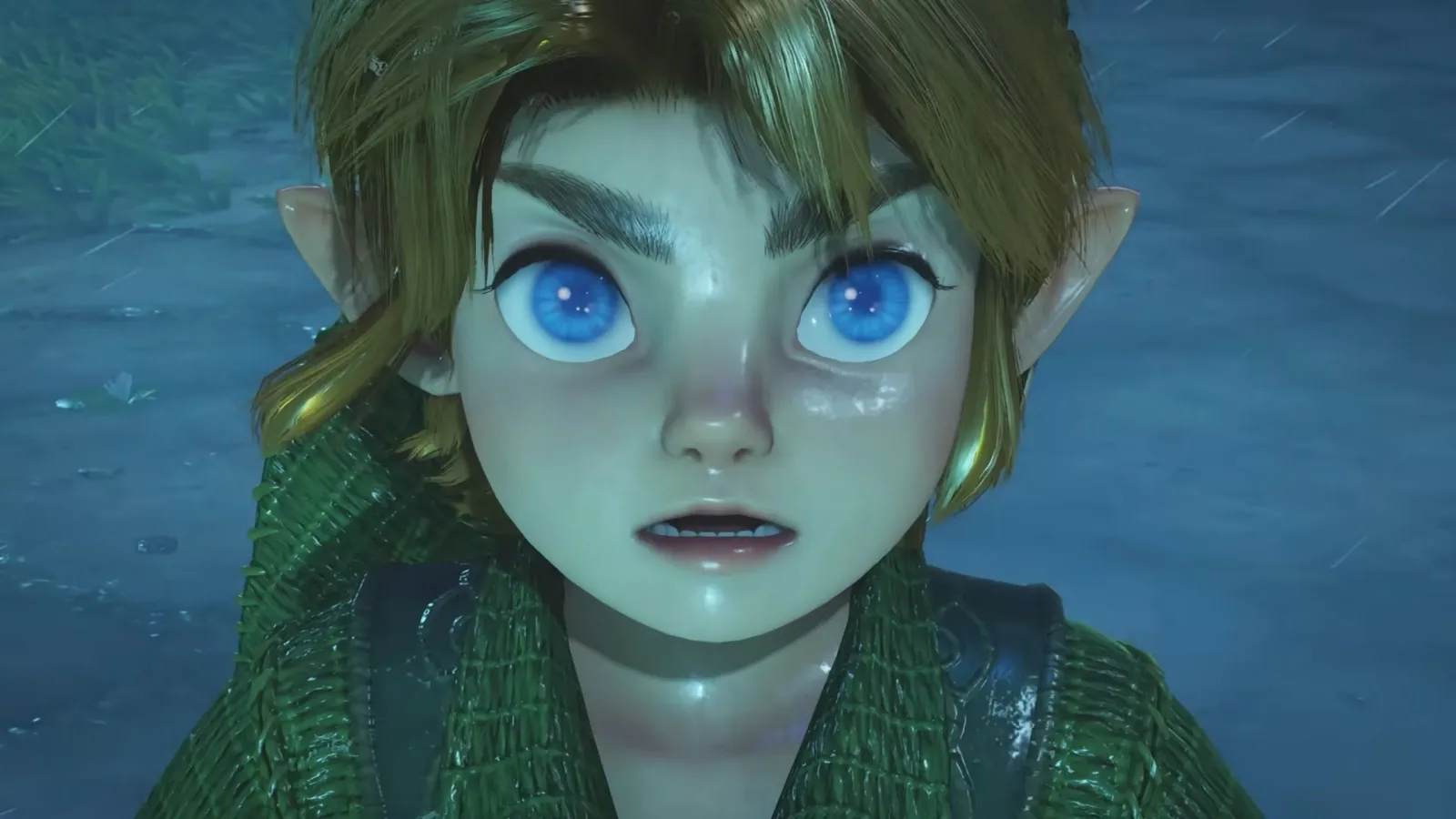
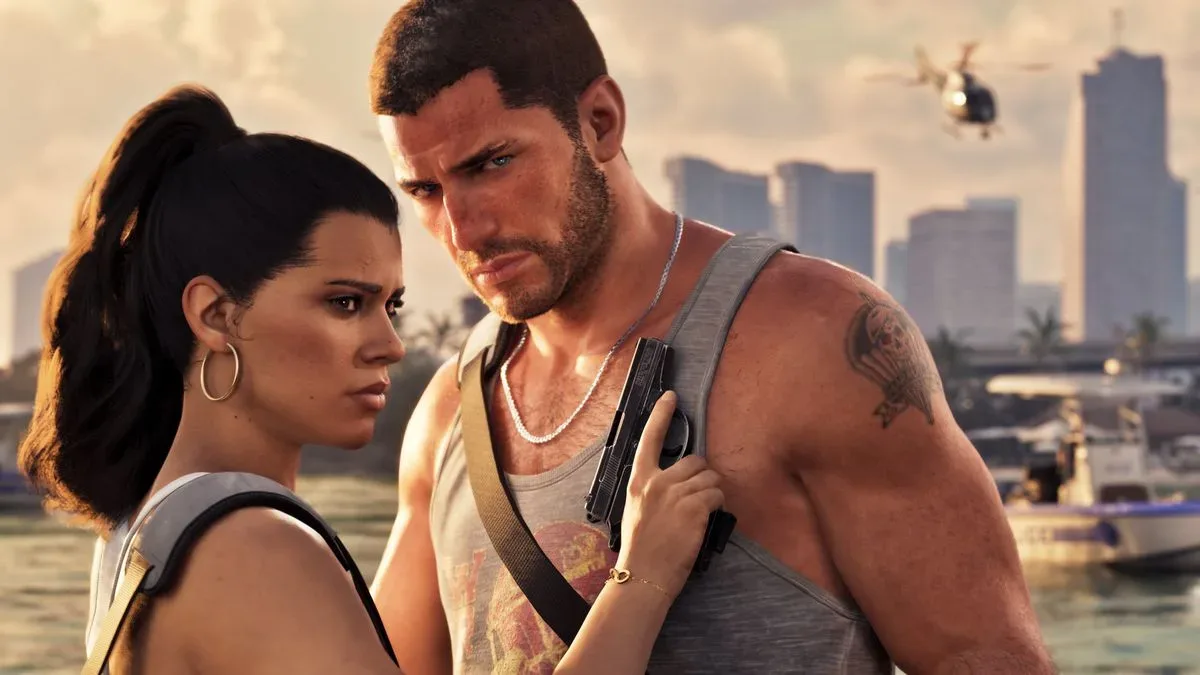
November is shaping up to host one of gaming's most unusual release-date standoffs. Grand Theft Auto 6, the looming Rockstar release expected to command attention across the entertainment business, is approaching a month that many major publishers appear to have deliberately avoided. Yet one major release is not moving out of the way: Nintendo's remake of The Legend of Zelda: Ocarina of Time.
The two games are scheduled two weeks apart, making this less of a direct same-day clash than a contest over attention, spending, conversation, and the limited time players have for enormous games. Still, the contrast is striking. On one side sits GTA 6, a crime epic with extraordinary commercial expectations. On the other is a new version of one of the most celebrated games ever made, built around a series with an audience that has repeatedly shown up for Nintendo's biggest releases.
Product-growth strategist and former Epic Games Fortnite producer Aakash Gupta has described Nintendo as uniquely equipped to make that call. His argument is straightforward: nearly every other large publisher has reason to fear being buried under GTA 6's cultural weight, but Nintendo has a distinct hardware ecosystem, an unusually committed audience, and a game whose reputation needs little introduction.
That does not mean the stakes are low. It means Nintendo's calculation is different.
For useful background on this topic, read System Shock 2: 25th Anniversary Remaster Is Free on Epic, With Controller Support Giving the Classic a New Option.
A release calendar reshaped by GTA 6
Release schedules are normally competitive long before games reach store shelves. Publishers weigh genre overlap, audience behavior, holiday spending, marketing costs, review coverage, and the simple difficulty of being noticed in an overcrowded season. When a game on GTA 6's scale selects a date, those ordinary decisions become far more consequential.
Gupta characterized the process as a kind of release-calendar game of chicken. Once the largest project on the road chooses its path, competitors often choose another lane. The reasoning is easy to understand. GTA 5 generated $1 billion in sales during its first three days in 2013, a performance that made it one of the fastest-selling entertainment launches ever. DFC Intelligence has projected that GTA 6 could exceed $3.2 billion in its first year.
To put that estimate into a broader entertainment context, 2024's biggest Hollywood release, Inside Out 2, earned $1.7 billion during its worldwide theatrical run. A single game potentially generating far more than that in a year illustrates why publishers may be wary of releasing alongside Rockstar's next giant.
The practical effect has been a crowded period before November and a relatively sparse one once GTA 6 is about to arrive. Recent weeks have already included releases such as Marvel's Wolverine, Fire Emblem: Fortune's Weave, Control Resonant, Silent Hill: Townfall, and The Witcher 3 Remastered. More releases, including Final Fantasy Resonance and Switch Sports Resort, are also due ahead of the month's major confrontation.
Gupta pointed to Call of Duty landing in late October rather than November as part of the wider movement around GTA 6. That interpretation deserves some caution, however. A late-October launch is not unprecedented for Activision's annual shooter series: Black Ops 6 and 2022's Modern Warfare 2 also arrived in October. Likewise, Phantom Blade Zero was delayed from early September to late October, which technically places it closer to GTA 6 rather than farther away, even if it avoids the same launch window.
Even with those qualifications, the overall pattern remains notable. November has become unusually quiet for a period that often contains a packed run of high-profile releases. GTA 6 has not merely become another major game on the calendar; it has become the event other calendar decisions must account for.
Why Nintendo can make a different bet
Nintendo's decision to release an Ocarina of Time remake two weeks before GTA 6 rests on several advantages that few other companies could claim.
First, GTA 6 does not run on Nintendo hardware. That does not completely separate the audiences--many players own more than one system, and gaming budgets are never unlimited--but it reduces the direct platform-level collision. A player buying a Nintendo remake is not choosing between two games that require the same machine in the same immediate way.
Second, the games appeal to very different moods and traditions. GTA 6 is positioned as a vast modern open-world event, surrounded by years of anticipation and enormous mainstream visibility. Ocarina of Time is a fantasy adventure with deep nostalgic meaning for generations of players. A remake also offers a familiar journey reinterpreted for a newer audience, while giving longtime fans a reason to revisit Hyrule.
Third, Nintendo has a rare ability to turn beloved first-party releases into events that extend beyond the usual launch-week rush. The company's audience has often demonstrated willingness to return to its franchises across remasters, remakes, sequels, and new hardware generations. That history gives Nintendo confidence that a Zelda release can hold attention even when the industry's biggest blockbuster is waiting just over the horizon.
Gupta's central point is that Nintendo may be the only company with a fanbase loyal enough to take this particular risk. It is a bold claim, but the logic behind it is not that Zelda must outsell GTA 6 to succeed. The objective is more realistic and more strategic: give a revered remake a clear two-week runway, establish its own moment, and benefit from an audience that is unlikely to abandon Nintendo's release simply because another major game arrives later.
Two weeks of room to breathe
The timing may prove more important than the apparent rivalry. Two weeks is a meaningful amount of space in modern game marketing. It allows for reviews, launch streams, social discussion, retailer visibility, and word-of-mouth before GTA 6 becomes the dominant topic across much of the industry.
For a remake of Ocarina of Time, that runway could be especially valuable. The original game's standing is extraordinary: it holds a 99 Metacritic score, often cited among the highest aggregate scores in the medium's history. Its influence on 3D adventure design, targeting systems, dungeon structure, and cinematic presentation remains a central part of gaming history. A faithful remake would arrive with both enormous expectations and an instantly recognizable identity.
There is, of course, a potential downside. If players view the remake as too cautious, too expensive, or insufficiently ambitious, nostalgia alone will not settle the conversation. And once GTA 6 launches, the scale of Rockstar's promotional and cultural impact may make it difficult for almost any other release to maintain the spotlight. The two-week gap creates opportunity, not immunity.
Former Nintendo of America PR manager Krysta Yang has offered a candid perspective on that balance. She called the Zelda release timing great, but also said that if a faithful remake had launched on the exact same day as GTA 6, she would choose GTA instead. That distinction captures why the two-week buffer is so important. Nintendo does not need to challenge GTA 6 head-on in a same-day battle. It needs Zelda to have its own launch occasion before the industry shifts its gaze.
A pop-culture battle before sales begin
The matchup has already moved beyond ordinary release-date chatter. A recent Saturday Night Live sketch used the GTA 6 and Ocarina of Time remake situation as the basis for a joke, presenting the two titles as wildly different entertainment propositions. But the audience response became part of the story: enthusiasm for Link's return to Hyrule appeared to rival, and in some moments exceed, the reaction attached to Rockstar's blockbuster.
That reaction should not be treated as a sales forecast. Studio audiences are not market research, and a comedy sketch cannot determine which game will have the larger commercial impact. GTA 6 remains the release with the extraordinary financial projections and the broadest expectation of mass-market dominance.
What the moment does show is that Zelda's cultural reach is not limited to dedicated Nintendo fans. The prospect of revisiting Ocarina of Time has enough immediate recognition to become a mainstream punchline, a nostalgic trigger, and an object of real excitement. For Nintendo, that is exactly the kind of awareness that can make a two-week head start count.
Success does not require beating GTA 6
The most useful way to view November's clash is not as a winner-takes-all battle. GTA 6 and an Ocarina of Time remake can both be major successes while serving different players, platforms, and commercial purposes. Rockstar is expected to create one of the defining entertainment launches of the decade. Nintendo is reviving a landmark game with a built-in audience and the chance to create a separate celebration of Zelda's legacy.
Still, the decision is a revealing display of confidence. Many companies appear to have looked at November, considered GTA 6's gravitational pull, and moved elsewhere. Nintendo looked at the same calendar and found a window worth claiming.
Whether that confidence is rewarded will depend on the remake itself, its reception, and how strongly its audience responds in the days before Rockstar takes over the conversation. But the strategy is already clear: Hyrule gets its moment first, and Nintendo is betting that its players will make that moment matter.
Community
Discussion
Start the conversation.
No comments have been posted yet.