

ModRetro's M64 was announced with a promise that the hardware would eventually become fully open source, an appealing prospect for players and developers interested in taking an FPGA-based retro machine beyond its standard feature set. The company has already made the system's schematics available, although the stock firmware has not yet received the same treatment. That gap has not stopped the community from moving ahead.
A developer using the Reddit name fulviov is building OM64, an unofficial open-source custom firmware intended as a replacement for the M64's standard software. The project has been created from ModRetro's published schematics rather than from an official firmware release. It is still experimental, and it is not yet ready for general public testing, but the feature list suggests an ambitious attempt to turn the M64 into a more flexible multi-system FPGA platform.
Most importantly for prospective users, OM64 does not yet include its Nintendo 64 core. That core is in active development and is described as being close to readiness. Its completion is the key remaining milestone before the firmware is expected to be made available for download through the developer's Ko-fi page. There is no announced release date, and the eventual public build will still be positioned as experimental software rather than a finished consumer alternative.
A firmware replacement built around flexibility
Custom firmware projects can mean very different things depending on the hardware. Some merely adjust menus or add a few convenience features. OM64 is aiming considerably higher. It is being developed as a full replacement environment for the M64, covering the front-end experience, video configuration, networking, controller connectivity and the ability to run different hardware cores.
For useful background on this topic, read Neo Geo AES+ Delay Linked to Chip Supply Problems After Pre-Order Surge.
The current version includes a fully graphical loader with support for skins and themes. Rather than treating the menu as a permanent drain on the machine's main FPGA resources, the loader is designed to operate as its own separate core. In practical terms, that architecture is intended to leave the available FPGA capacity focused on the active console implementation once a game is launched.
That distinction may matter to enthusiasts because FPGA platforms attempt to reproduce the behavior of original hardware at a low level. Resource allocation is therefore more than a cosmetic concern. A lightweight front end can help ensure the system's core has as much room as possible for its emulation or hardware-recreation work, while still giving users a modern interface for choosing content and changing settings.
The inclusion of themes and skins also points to a benefit that often drives custom-firmware interest: ownership. People who purchase niche FPGA systems frequently want to configure their devices around their own preferences, whether that means a specific layout, a favorite visual style or a workflow that gets them into games quickly. OM64's graphical loader is intended to make the M64 feel less fixed in its presentation than a typical stock firmware environment.
Modern display options and low-latency goals
OM64's planned and currently listed display controls are another major part of its appeal. Users can select 720p, 1080p or 4K output, with three separate video modes: Buffered, Low Latency and VRR. Each of those choices addresses a different priority, and their presence suggests that the project is trying to accommodate both visual quality and responsive play.
Buffered output generally prioritizes stability by giving the system additional room to handle frame delivery. A low-latency option is particularly relevant to games where immediate controller response is important, including platformers, fighters, shooters and many Nintendo 64 titles. VRR, or variable refresh rate, is designed for compatible displays and can help synchronize output behavior more smoothly when frame timing is not perfectly uniform.
None of these settings automatically guarantee a particular result on every television, monitor or capture setup. Display behavior depends on the screen in use and the state of the firmware as it develops. Still, offering the choices is notable for an early community project. Retro hardware users often have sharply different needs: one person may be building a 4K living-room setup, while another may value latency above all else on a gaming monitor.
The M64's eventual stock software may establish its own video priorities once it is released and updated. OM64, however, is already showing how alternative firmware can become a place for experimentation before an official software stack is fully open. It gives technically minded owners a potential route to try different approaches to display handling instead of waiting for a single default configuration.
Wi-Fi, Bluetooth and OTA updates
Beyond video output, OM64 lists Wi-Fi networking, over-the-air updates and Bluetooth gamepad support. These are features many players now expect from contemporary gaming hardware, but they are meaningful additions in an FPGA and retro-console context.
Wi-Fi support can provide the foundation for a more convenient setup process, while OTA updating could reduce the friction of maintaining the firmware as development continues. Experimental builds often change rapidly, particularly when new cores and hardware functions are being tested. An update process that does not require a complicated manual procedure can make it easier for users to stay current--provided that they are comfortable participating in an evolving project.
Bluetooth controller support is equally straightforward but useful. It opens the door to a wider selection of gamepads and a cleaner living-room setup without requiring every player to be tethered by a cable. The project's feature outline specifically includes Bluetooth gamepads, though users should avoid assuming compatibility with every controller until public builds and documentation establish exactly what is supported.
For a device associated primarily with Nintendo 64 hardware, these capabilities could make OM64 feel like a more general-purpose platform. That idea is reinforced by the project's existing alternate cores.
Game Boy and SNES cores arrive before Nintendo 64
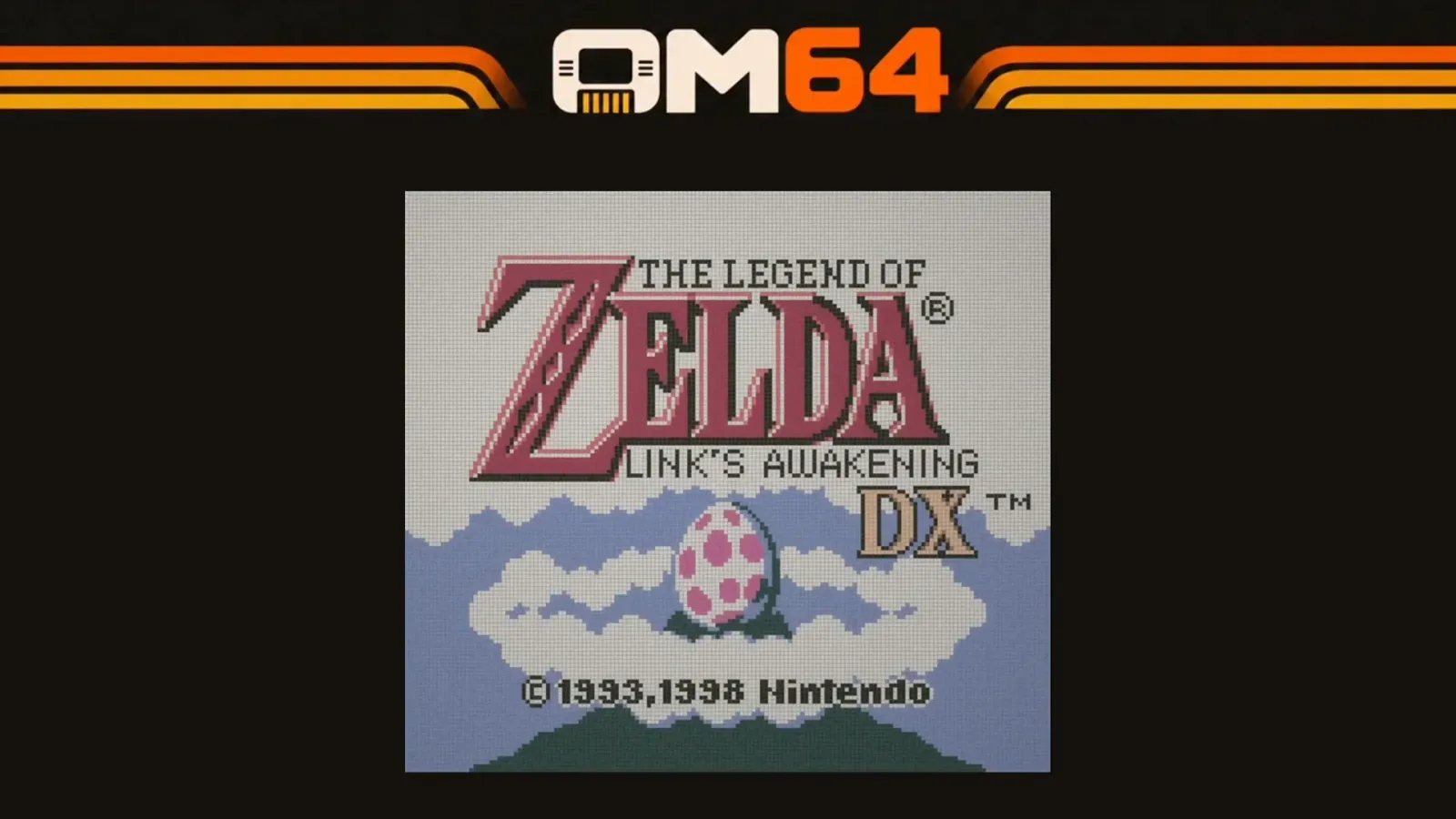
It may seem unusual that a firmware project for the M64 has reached Game Boy and Super Nintendo support before delivering its Nintendo 64 core, but those early cores serve an important development role. OM64 currently includes Game Boy and SNES cores to test core switching and the wider platform framework.
In other words, they are not simply bonus systems added for a longer compatibility list. They help validate how the firmware loads, changes between and manages distinct console cores. That testing can reveal issues in the menu system, controller handling, video output, storage workflow and the transition from one implementation to another. Building those foundations before finalizing the Nintendo 64 core could make the eventual flagship experience more robust.
At the same time, prospective users should keep expectations in check. The M64's defining use case remains closely tied to Nintendo 64 play, and OM64 cannot yet be viewed as a complete replacement firmware for that purpose until its N64 core is available. The developer has indicated that the core should be ready soon, but "soon" is not a fixed schedule. Complex FPGA development can uncover technical problems late in the process, particularly when compatibility, timing and peripheral behavior are involved.
The project is therefore best understood as promising work in progress. Its present features demonstrate the direction of travel, while the Nintendo 64 core remains the decisive component for owners considering whether to test it.
Experimental software brings real risks
OM64's experimental status deserves emphasis. The developer warns in the project FAQ that installing it could brick an M64. That is not an abstract caveat: replacing low-level device software always carries the possibility that a failed installation, unexpected hardware issue or unfinished feature could leave a system unable to boot normally.
Users interested in trying OM64 when it becomes publicly available should be prepared to follow its instructions carefully, understand the recovery process and accept the possibility of troubleshooting. This is not the same proposition as downloading an ordinary game update. It is software designed to sit at the center of the system's operation, and its developer is candid that it remains in an experimental stage.
There is, however, a path back to the M64's original firmware for users who decide OM64 does not meet their needs. That reversibility is reassuring, but it should not be mistaken for a guarantee that every installation or recovery attempt will be effortless. Anyone unwilling to accept a degree of risk will likely be better served by waiting for more mature builds, detailed user feedback and ModRetro's own firmware plans.
AI-assisted development disclosed upfront
The development process has also prompted discussion because fulviov has said that AI tools were used to speed up work on OM64, specifically naming Codex and Claude. The developer's stance is direct: people who fundamentally object to AI's use in software development may not consider this firmware a suitable project for them.
That disclosure gives potential users useful context as they decide whether to follow or support the project. AI-assisted coding remains divisive across the software and creative communities, with opinions varying on code quality, authorship, training data and the appropriate role of automated tools. OM64's developer is not presenting the project as untouched by those tools, instead acknowledging their role in accelerating development.
For the M64 community, OM64 represents an early test of what open hardware documentation can enable even before official firmware becomes open source. Its graphical loader, display settings, wireless features and multi-core ambitions paint a compelling picture, but its unfinished Nintendo 64 core and explicit brick-risk warning are equally important parts of the story. If the core reaches a stable enough state for public testing, M64 owners will soon have a significant unofficial option to watch closely--one that could expand the machine's possibilities while demanding patience and technical caution from its earliest users.
Community
Discussion
Start the conversation.
No comments have been posted yet.