

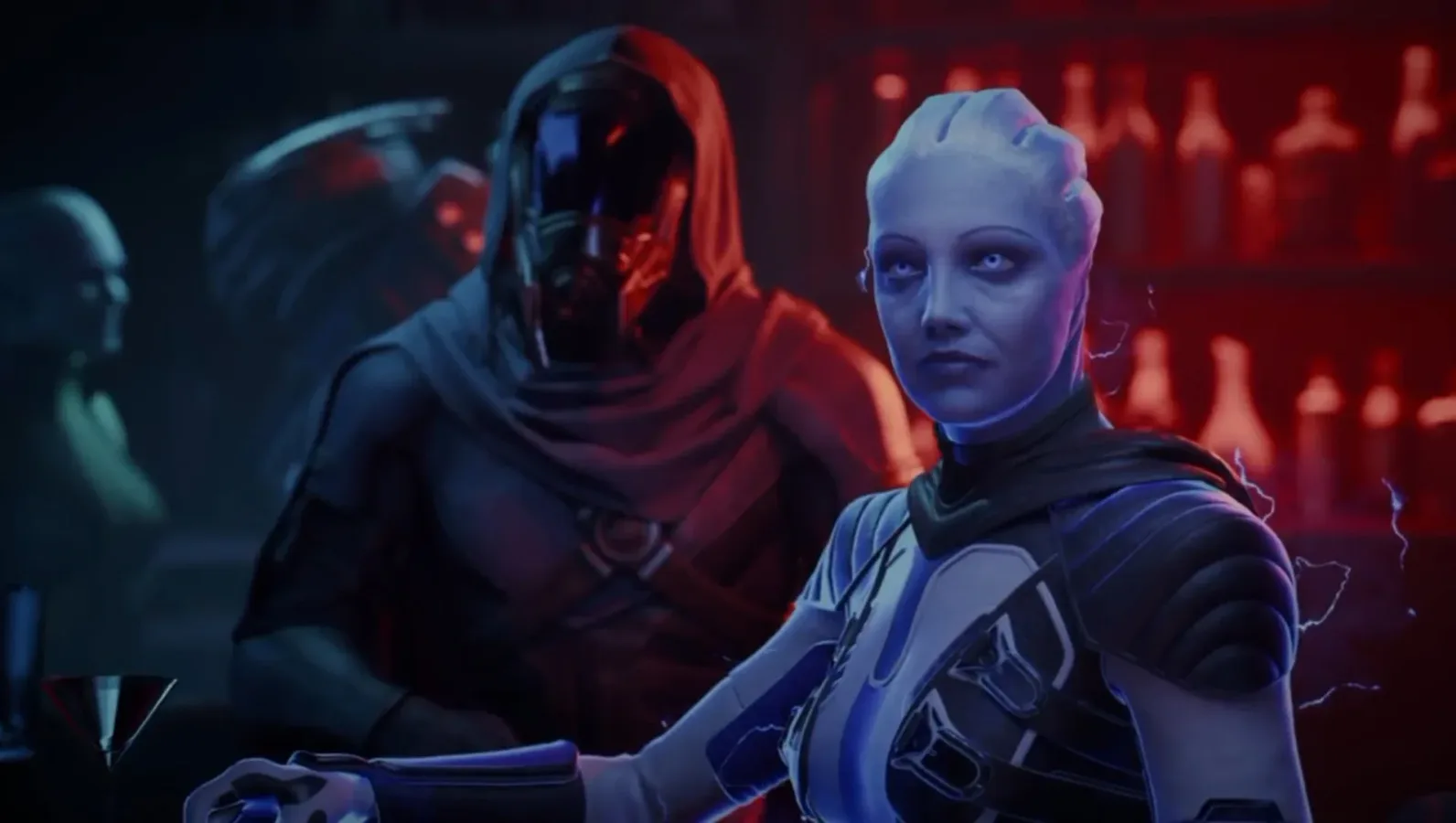
The call to "Save Mass Effect" is easy to understand. Following BioWare's closure and the cancellation of Mass Effect: Universe, more than 200,000 people have signed a petition asking Electronic Arts to secure a future for the long-running science-fiction role-playing series. For fans who have spent years with the original trilogy and followed the franchise through its later chapters, the instinct is emotional as much as it is practical. A world that mattered to them appears to have been cut off before its next story could be told.
But the slogan also conceals an uncomfortable question: what, exactly, is being saved?
A franchise is not merely its name, its recognizable aliens, a familiar galaxy map, or the promise of player choices carrying into the next adventure. Those elements matter, of course. They are part of the language players use to describe why they love Mass Effect. Yet games are also made by people: writers, designers, artists, engineers, producers, testers, audio teams, community staff, and countless other specialists whose decisions turn an owned intellectual property into a particular work with a particular voice.
That distinction is at the heart of the debate now surrounding the campaign. The petition asks EA to commit resources, staffing, and development time toward continuing Mass Effect. It also leaves open another possibility: licensing the property to an external studio that could develop a new game. On the surface, those are understandable routes for a fan movement to propose. Neither requires the unlikely prospect of rebuilding BioWare exactly as it was. Both recognize that a publisher controls the legal rights and the money needed to authorize a major project.
For useful background on this topic, read Austin Wintory Shares 20 Minutes of Music He Envisioned for Mass Effect 5.
Still, the suggestion of an outside studio has become the most contentious part of the conversation. It reflects a common assumption in entertainment: if the brand survives, the thing fans love survives with it. That is not always true. A new developer could make a good game under the Mass Effect banner. It could even make a game that reaches an audience the earlier entries did not. But it would not automatically be the continuation of a creative process interrupted by a studio shutdown.
A cancelled game and a broad demand
Mass Effect: Universe was announced in 2020 as the fifth game in the series, but it has now been cancelled as part of the circumstances surrounding BioWare's closure. The loss arrives after years in which BioWare had already changed substantially. Like many long-running studios, it had endured staffing reductions, shifts in corporate priorities, and the departure of prominent figures who helped shape its earlier reputation.
Casey Hudson, the original creative director of Mass Effect, had not been at BioWare since 2020. He also was not part of the development of Mass Effect: Andromeda or the work completed on Universe. That fact complicates any simplistic claim that only one set of individuals can make a "real" Mass Effect. The original trilogy was never the product of a single author, and neither were later projects. Hundreds of people contributed to its characters, combat, world-building, technical foundations, performances, art direction, and branching narrative structure.
There were also experienced hands on Universe. Michael Gamble, who had worked on the series since Mass Effect 2, led the project until its final days. Other veterans of the trilogy were part of the team as well. That does not mean the cancelled game would have duplicated the conditions that produced the first three titles. No sequel can fully do that, especially across more than a decade of industry and personnel changes. It does mean that the people working under the BioWare name were not interchangeable placeholders waiting for another studio to take over.
The central tragedy is therefore larger than a cancelled product. It is the loss of a creative workplace and the dispersal of people who had accumulated knowledge of a universe, production pipeline, and audience over many years. When fans say they want Mass Effect: Universe back, they may mean they want answers, companions, choices, and another chance to explore space. But the version of that game that was being made was inseparable from the team making it.
What the petition is, and is not, asking for
Campaign organizer Joe Smith has addressed concerns that licensing could treat the franchise as something any developer can reproduce from a formula. Smith said the petition seeks either a properly supported future for Mass Effect under EA or consideration of qualified external development and licensing proposals. He emphasized that BioWare's developers are central to the series' identity and that their work deserves recognition.
Smith also said any future project should take that legacy seriously and that former developers would be welcome to participate if they chose. At the same time, the campaign does not make restoring BioWare as an organization a requirement. It is designed to leave alternate arrangements available, while acknowledging that every possible route depends on EA's approval, financing, and the existence of a capable development team.
That is an important clarification. The petition does not promise a new game, and its signatures cannot compel EA to fund one. Nor can a public campaign guarantee that an external studio would have the right staff, time, leadership, or creative freedom to produce a worthy successor. A petition can express the depth of feeling around a series. It cannot solve the conditions that led to a studio closing in the first place.
For some supporters, though, keeping every avenue open is the point. There is no certainty that EA will revive Mass Effect, whether internally or through a partner. If the company does elect to revisit the property, an external development arrangement may be the most plausible outcome. Modern publishers routinely retain ownership of major brands even when the teams most associated with them are gone, and a recognizable name can remain commercially valuable long after the original studio is no longer operating.
The ownership problem behind the nostalgia
That commercial reality is what makes the language of saving a series so fraught. Fans understandably want the stories they care about to continue. Corporations, meanwhile, can interpret enduring demand as proof that the asset itself is what matters most. The danger is that affection for the work becomes detached from concern for the workers who made it.
EA recently cut 400 jobs from its workforce, adding another layer to the petition's timing. Calls for the publisher to revive Mass Effect may be motivated by genuine love for the games, but they also unfold amid a broader industry pattern of layoffs, closures, and restructurings. In that environment, a successful hashtag or a six-figure signature count can be read in more than one way. It can be a tribute to the people who built a cherished series. It can also become market research demonstrating that fans will continue asking for the brand no matter who is left to make it.
Neither reading invalidates the grief behind the campaign. Rather, it shows why the desired outcome deserves precision. "More Mass Effect" is not necessarily the same as "better conditions for the people who create Mass Effect." A studio can be replaced. Individual developers can be hired elsewhere. The IP can be licensed, rebooted, remastered, or held dormant. Yet none of those options restores the particular collaboration that was ended.
There is also no clean dividing line between past and present talent. Longtime fans sometimes invoke key names from the trilogy as if their departures alone ended BioWare's legitimacy. That overlooks the collaborative reality of game development and undervalues the people who remained. Conversely, treating a trademark as sufficient proof of continuity overlooks the experience and craft carried by those workers. Both extremes reduce a vast, collective process to something simpler than it has ever been.
A future worth supporting would need people first
If Mass Effect returns someday, the most meaningful measure will not simply be whether it has a new logo, a familiar species, or a trailer that triggers nostalgia. It will be whether the project has the time, funding, staffing, and creative stability needed to become something more than a corporate attempt to reactivate a valuable name.
That could include opportunities for former BioWare developers, if they want them. It could mean giving a new team the space to make its own contribution rather than demanding an imitation of the trilogy. It could mean recognizing that a sequel will inevitably be different, while still respecting the narrative ambition and player-driven identity that made the franchise distinctive. Above all, it would mean treating the people doing the work as more than replaceable labor attached to an established universe.
Fans are not wrong to mourn Mass Effect: Universe, and they are not wrong to hope that the series has another future. More than 200,000 signatures show how much the galaxy still means to players. But saving a franchise should not mean preserving only the parts that can be bought, sold, and licensed. A universe is not alive because a company owns its name. It is alive because artists and developers are able to build new places within it.
The petition has opened a real conversation about what fans want EA to do next. Its strongest possible legacy may be encouraging a more demanding version of that request: not merely another Mass Effect, but a future made with the care, resources, and respect that the people behind the series deserve.
Community
Discussion
Start the conversation.
No comments have been posted yet.