

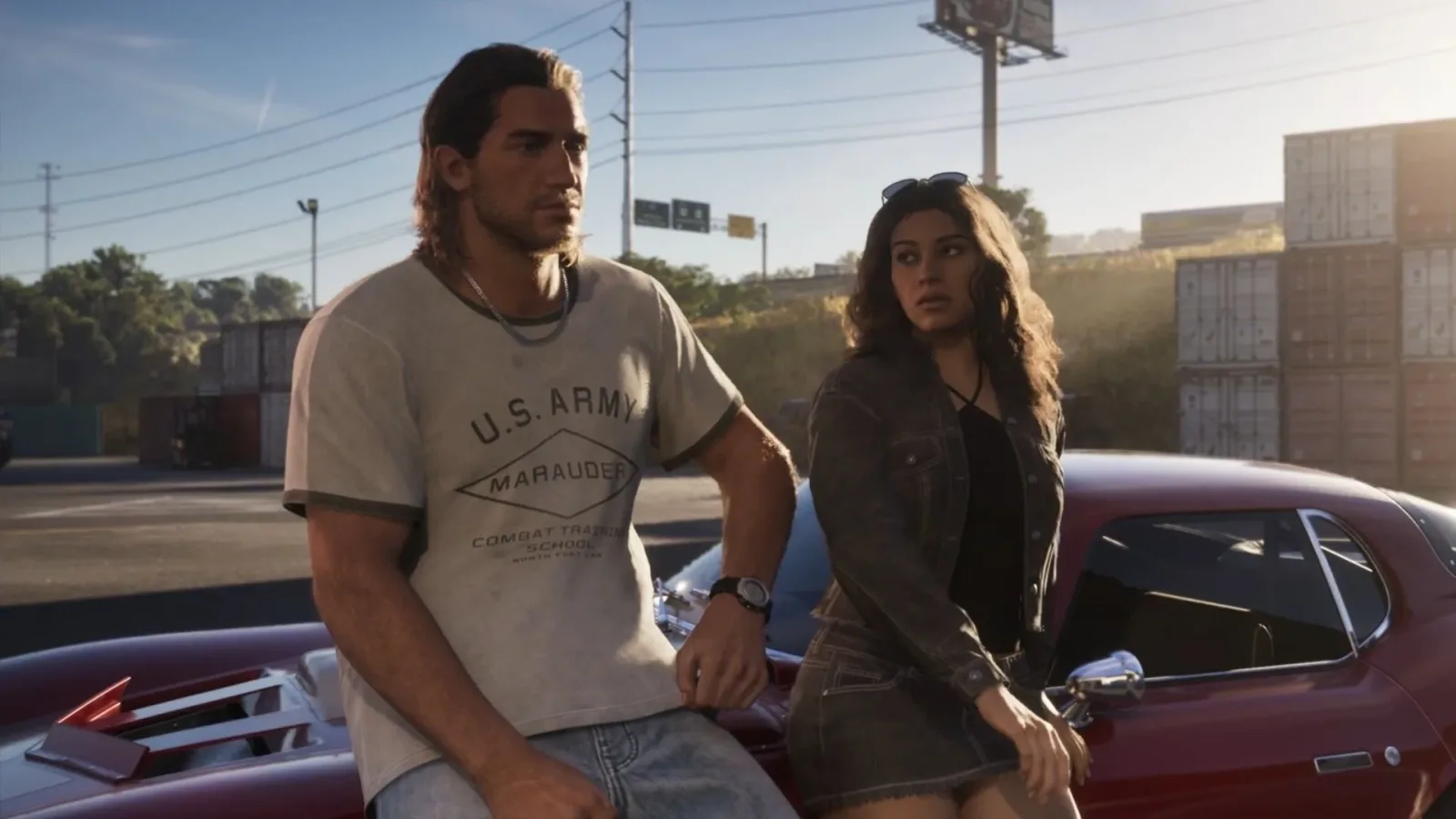
Grand Theft Auto 6 may be the game most closely associated with Take-Two Interactive's immediate future, but CEO Strauss Zelnick has made the case that the company's business is built on a far wider collection of franchises. In a recent interview, Zelnick described Take-Two's owned intellectual property library as the strongest in the games industry, pointing to a lineup that spans blockbuster open-world games, annual sports releases, strategy staples, shooters, wrestling, and mobile titles.
The executive's argument is not that Grand Theft Auto lacks importance. Few series can match its cultural reach, commercial scale, or ability to dominate attention ahead of a new release. With GTA 6 approaching, Rockstar Games and Take-Two are preparing for what is expected to be an enormous launch. Yet Zelnick emphasized that the publisher is not dependent on a single name, even one as significant as Grand Theft Auto.
"We have 15 franchises that have each sold at least 5 million units in an individual release," Zelnick said. He added that he believes Take-Two has "the best collection of owned intellectual property in the video game business," tying that strength to the company's revenue, profitability, and market capitalization.
Grand Theft Auto is the headline, not the whole portfolio
It is easy to see why GTA 6 dominates the discussion around Take-Two. Rockstar's open-world crime series is one of the defining properties in modern entertainment, and its online component has remained a major part of the company's business for years. Grand Theft Auto Online continues to demonstrate how a major release can become a long-running platform rather than simply a one-time retail event.
For useful background on this topic, read Cloverlines codes for Crystal Mana, EXP Boosts and Stat Resets.
That model matters because it changes the value of an individual franchise. A successful game no longer has to rely exclusively on launch-week sales to make an impact. Ongoing content, player engagement, and recurring spending can extend a title's commercial life dramatically. GTA Online is perhaps Take-Two's clearest example of that approach, and its longevity naturally raises expectations for how Rockstar could support GTA 6 after release.
Still, Zelnick's comments were focused on breadth. Take-Two owns or publishes properties that appeal to very different audiences, and those games do not all operate on Rockstar's extended development cycle. Sports games can bring regular annual installments, mobile games reach a distinct market, and brands such as Civilization cater to players looking for deep strategy rather than action-driven spectacle.
Red Dead Redemption remains a huge pillar
The most prominent example beyond Grand Theft Auto is Red Dead Redemption. Zelnick described it as a massive title and said its most recent release has sold more than 65 million units. That places Rockstar's western series among the industry's biggest premium-game successes, while also underlining the point that Rockstar itself is more than a one-franchise studio.
Red Dead Redemption 2 earned acclaim for its scale, detailed world, and character-focused storytelling, while Red Dead Online expanded the franchise into the persistent multiplayer space. The latter does not carry quite the same public profile as GTA Online, but its inclusion in Zelnick's overview shows that Take-Two sees the Red Dead brand as an important part of its broader catalog.
The existence of two Rockstar properties with enormous global recognition gives Take-Two a position few publishers can duplicate. Grand Theft Auto and Red Dead Redemption are markedly different in tone and setting, but both carry the studio's reputation for large, meticulously constructed worlds. That means the company has two premium brands capable of attracting massive audiences when new entries arrive.
Sports, shooters, strategy and wrestling broaden the business
Zelnick also singled out NBA 2K, calling it the second-biggest sports title worldwide and the biggest in North America. The series is central to Take-Two's annual release structure through its 2K label. While Rockstar releases are rare events that can take years to develop, NBA 2K gives the publisher a frequent and recognizable presence in the market.
That contrast is valuable. Annualized sports games face their own pressures, including the need to satisfy existing players while offering meaningful reasons to return each year. But their established audiences and regular cadence can provide a different kind of stability from the high-risk, high-reward cycle associated with giant open-world productions.
Other names mentioned by Zelnick included Borderlands, BioShock, WWE 2K, and Civilization. Each occupies a separate corner of the market. Borderlands is known for its cooperative looter-shooter format and distinctive style. BioShock remains one of the publisher's most recognizable narrative-driven shooter brands. WWE 2K gives Take-Two a licensed wrestling series with a dedicated fanbase, while Civilization is one of the medium's longest-running and most influential strategy properties.
That diversity is at the heart of Zelnick's claim. A portfolio does not need every franchise to perform at the same level as Grand Theft Auto for it to be strategically powerful. Instead, it can reduce reliance on a single genre, audience, business model, or development schedule. A company with prominent games across action, sports, strategy, role-playing-adjacent shooters, licensed entertainment, and mobile has more ways to reach players.
Mobile games are part of Take-Two's IP argument
Take-Two's collection is not limited to traditional console and PC releases. Zelnick also named mobile hits Words With Friends and Empires & Puzzles. Their inclusion is notable because they represent a substantially different segment of the games market from Rockstar and 2K's premium releases.
Words With Friends is a social word-game brand with broad accessibility, while Empires & Puzzles blends puzzle gameplay with role-playing and collection mechanics. Neither is aimed at precisely the same audience as GTA or NBA 2K, and that is exactly why they matter in a discussion about portfolio strength. They allow Take-Two to operate in areas where the expectations around hardware, pricing, session length, and ongoing support are very different.
For a publisher, this mix can be especially important during periods when a major console game is still in development. Mobile titles and annual sports games can help keep a company active across the calendar, while long-gestating premium projects build toward their eventual launch. The franchises may not all attract the same headlines, but they can serve different commercial roles.
The "best" IP library remains a subjective debate
Zelnick's statement is a confident one, and it is ultimately a matter of perspective. Take-Two unquestionably has a formidable stable of brands, particularly given the combined weight of Grand Theft Auto, Red Dead Redemption, NBA 2K, Civilization, and Borderlands. The company's library covers both globally recognized blockbuster series and games with durable communities in more specialized genres.
At the same time, other major game companies have equally persuasive cases. Nintendo, for instance, controls brands including Mario, The Legend of Zelda, and Super Smash Bros., while also holding a partial ownership interest in Pokémon. The value of an IP portfolio cannot be measured by unit sales alone. Cultural impact, consistency, hardware influence, merchandising potential, regional popularity, critical reputation, and the ability to reach new generations of players all shape the discussion.
There is also a difference between owning a famous property and being able to release successful games from it consistently. In that regard, Take-Two's challenge is to keep supporting its existing hits while deciding where and when to revive dormant or less active series. Fans of BioShock, Civilization, Borderlands, and Red Dead Redemption will naturally view the company's strength through the lens of what comes next for the brands they care about most.
GTA 6 will test the scale of Take-Two's strategy
For now, GTA 6 remains the central focus. Its eventual release will be a defining moment for Rockstar and Take-Two, and the scale of anticipation around it illustrates why Grand Theft Auto sits at the top of the company's public identity. But Zelnick's remarks are a reminder that the publisher wants investors, players, and partners to see a more complete picture.
Take-Two's long-term strength, in this view, is not merely the ability to launch one of the biggest games in the world. It is the ability to pair that event with a catalog that includes a record-setting western, a leading basketball series, a major strategy name, established shooter franchises, licensed wrestling, and mobile games with their own large audiences.
Whether players agree that this is the industry's best collection of intellectual property will depend on their tastes and their preferred platforms. What is harder to dispute is that Take-Two has assembled an unusually varied group of recognizable series. GTA 6 may be the next enormous spotlight, but it is only one part of the company's larger franchise strategy.
Community
Discussion
Start the conversation.
No comments have been posted yet.