

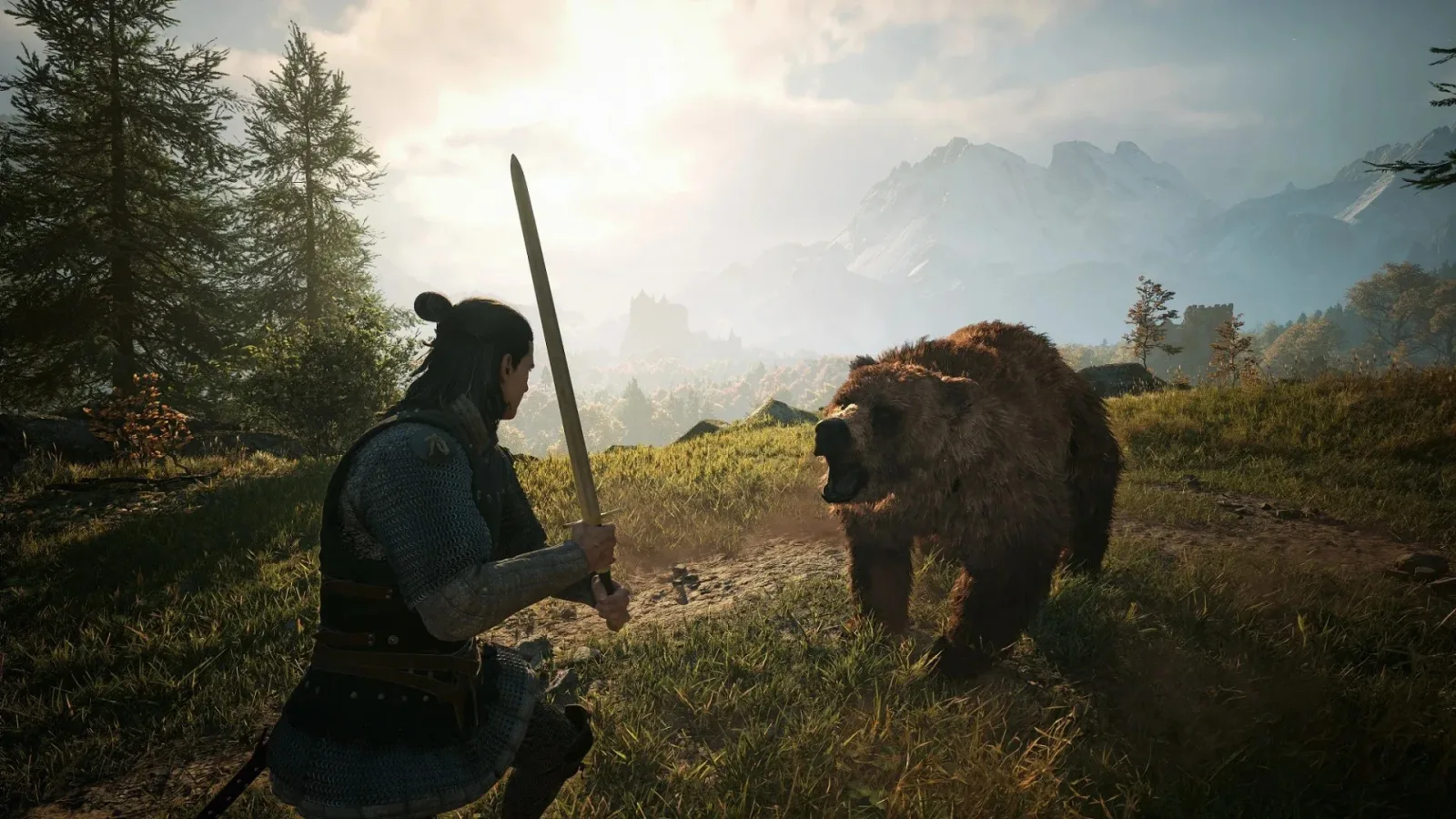
The Blood of Dawnwalker is preparing for its first major post-launch patch, and the update is expected to make a meaningful difference for players who want to prioritize its narrative over its combat. Game director Konrad Tomaszkiewicz has outlined plans for an easier new difficulty option that removes combat from the experience, alongside changes to targeting, stuns, and the process of fleeing hostile encounters.
The patch is currently planned for early October. It will arrive after players have spent time with the vampire-themed, time-management role-playing game in Vale Sangora and offered feedback on how its battles feel in practice. While the broader update does not yet have a specific launch date, the announced features point to a patch focused on flexibility: making the game more approachable for story-focused players while smoothing out several frustrations for those who do want to fight.
A new Story mode designed around the narrative
The most notable addition will be a new Story mode intended for people who do not want to engage with combat. The Blood of Dawnwalker presently includes four named difficulty settings: Story, Fair, Challenging, and Duelist. Players can also further adjust difficulty-related options to tune the experience to their preferences.
However, the existing Story setting still asks players to participate in battles. That naming has evidently created a mismatch between what some players expect from the mode and what the game currently provides. The new setting will instead fill the role many players associate with a narrative-first difficulty: an option to experience the plot without having to deal with combat encounters.
For useful background on this topic, read NBA 2K VC Lawsuit Puts Digital Ownership and Annual Resets Under the Microscope.
"We will add a new Story mode which will be even easier for people who don't want to experience the combat," Tomaszkiewicz said in an interview with Eurogamer.
As part of that change, the game's current Story difficulty will be renamed. A replacement name has not been announced, and the developer has not yet explained every rule governing the new combat-free option. That leaves some practical questions about how The Blood of Dawnwalker will handle its more dramatic confrontations and open-world threats when fighting is removed.
The game's central conflicts include confrontations with vampire lords and other dangerous opponents, while the world can become more hostile when protagonist Coen draws the attention of the HVIC. Increased pressure from that faction can result in more enemies being sent after the player and guard checkpoints appearing across the map. The forthcoming mode could potentially bypass these situations, change how they play out, or resolve them without direct player combat, but those details have not been confirmed.
That uncertainty is part of what makes the patch worth watching. A true no-combat difficulty can be more complicated than simply lowering enemy health or increasing player damage. It needs to account for mandatory set pieces, pursuit sequences, quest progress, and moments where the game's normal systems assume that the player will defeat or evade enemies. The fact that the mode is being positioned specifically for players who do not want to experience combat suggests a more substantial adjustment than an ordinary easy setting.
Targeting and stun behavior are being reconsidered
Players who do intend to keep combat enabled are also set to receive changes. The update will revise target-lock behavior in certain situations, particularly when Coen stuns an enemy.
At present, stunning an opponent causes the game to automatically move the player's target to another enemy. That design can be useful during crowded fights, especially when multiple enemies are attacking at once and rapid target switching helps manage the group. But it can also be frustrating for players who deliberately stunned a specific foe in order to keep attacking that same target and reduce the number of active threats.
The planned patch will keep the player locked onto a stunned enemy rather than automatically shifting focus away. In addition, stuns are expected to be more resilient: damage will no longer immediately end the effect. Tomaszkiewicz said players will need to land three hits to remove a stun.
"There will be three hits you need to take off this stun," Tomaszkiewicz said. "We will see how people will react to that...if they want to just stun, it will be fine, and if they want to stun and hit a few times, it will be also fine. We will see."
The change could make combat feel more deliberate without necessarily making it simpler across the board. Maintaining lock-on after a stun gives players more authority over their immediate plan in battle. Rather than being redirected by the game, they can decide whether to capitalize on the disabled target, leave that enemy temporarily, or use the opening to reposition against the rest of the group.
The three-hit rule may similarly create a clearer tactical window. A stun can be used purely as crowd control, buying space without instantly inviting follow-up damage. Alternatively, players can strike a stunned enemy a few times while still retaining the benefit of the status effect. The director indicated that the team will watch how the community responds, so this part of the patch may not necessarily represent the final word on the game's stun design.
Escaping fights should become less punishing
The early October update is also expected to improve a fundamental option in action RPGs: getting away from a battle that is going badly. Tomaszkiewicz said the team is working on escaping from combat and on running during combat, describing it as a significant change for players.
Retreating is especially important in a game where encounters can become crowded and the player may not always want to commit to a prolonged clash. The ability to disengage gives players another way to manage risk, whether they need to regroup, avoid an overwhelming patrol, pursue a different objective, or simply decide that a particular fight is not worth the resources and time it would consume.
It may also help make the game's hostile-world systems feel less restrictive. If the HVIC response can place guards and enemies in the player's path, the ability to run away more reliably could preserve tension without forcing every escalation into a drawn-out battle. The exact mechanics have not been detailed, so it is not yet clear whether escaping will alter enemy behavior, require a certain distance, depend on line of sight, or work differently in major encounters.
Still, the stated goal is notable. Combat systems often feel most frustrating not when enemies are difficult, but when players lose agency over whether they can leave an encounter. Improvements to fleeing could be particularly welcome when navigation, enemy numbers, and environmental obstacles make it hard to create enough distance from attackers.
More player choice without abandoning challenge
Taken together, the announced changes show a patch aimed at giving players more control over how they engage with The Blood of Dawnwalker. The combat-free Story mode addresses the needs of players who are interested in Coen's journey, the setting, and the game's time-management structure but do not enjoy action combat. Meanwhile, the targeting and escape revisions seek to make the existing combat experience less rigid for players who remain invested in its mechanical challenge.
This is an important distinction. A combat-free mode does not replace the game's other difficulty levels, and the targeting changes are not framed as a move away from demanding encounters. Instead, the update appears to be creating clearer paths for different audiences: one focused on narrative access, and another focused on improved responsiveness and tactical choice within battles.
The renaming of the old Story setting should also help set expectations. Difficulty labels matter because they communicate what a player is choosing before they begin. If a mode called Story still contains mandatory combat, players looking for a purely narrative route can be surprised. Separating the existing easier combat setting from a genuinely combat-free option gives each mode a more understandable purpose.
New Game Plus remains a possibility
Beyond the features planned for the first major patch, Tomaszkiewicz also raised the possibility of a New Game Plus mode arriving later. Nothing has been confirmed, and he was cautious when discussing it.
"There is a chance but I don't want to speak about it yet," Tomaszkiewicz said. "We will have the proper beats with our publishing team and if I tell you more, they will kill me."
For now, that means New Game Plus should be treated as a potential future addition rather than a promised feature. No timing, progression rules, carryover systems, or other specifics have been revealed. Even so, its mention indicates that the team is considering ways to support continued play beyond the immediate patch.
The immediate focus remains the early October update. Its new Story mode could open Vale Sangora to players who would otherwise avoid the game because of combat, while the revised targeting, sturdier stuns, and improved escape options could make the action feel more manageable for everyone else. More details will be needed to see exactly how the no-combat route handles the game's major conflicts, but the patch is already shaping up to be a substantial response to player experience rather than a narrowly technical update.
Community
Discussion
Start the conversation.
No comments have been posted yet.