

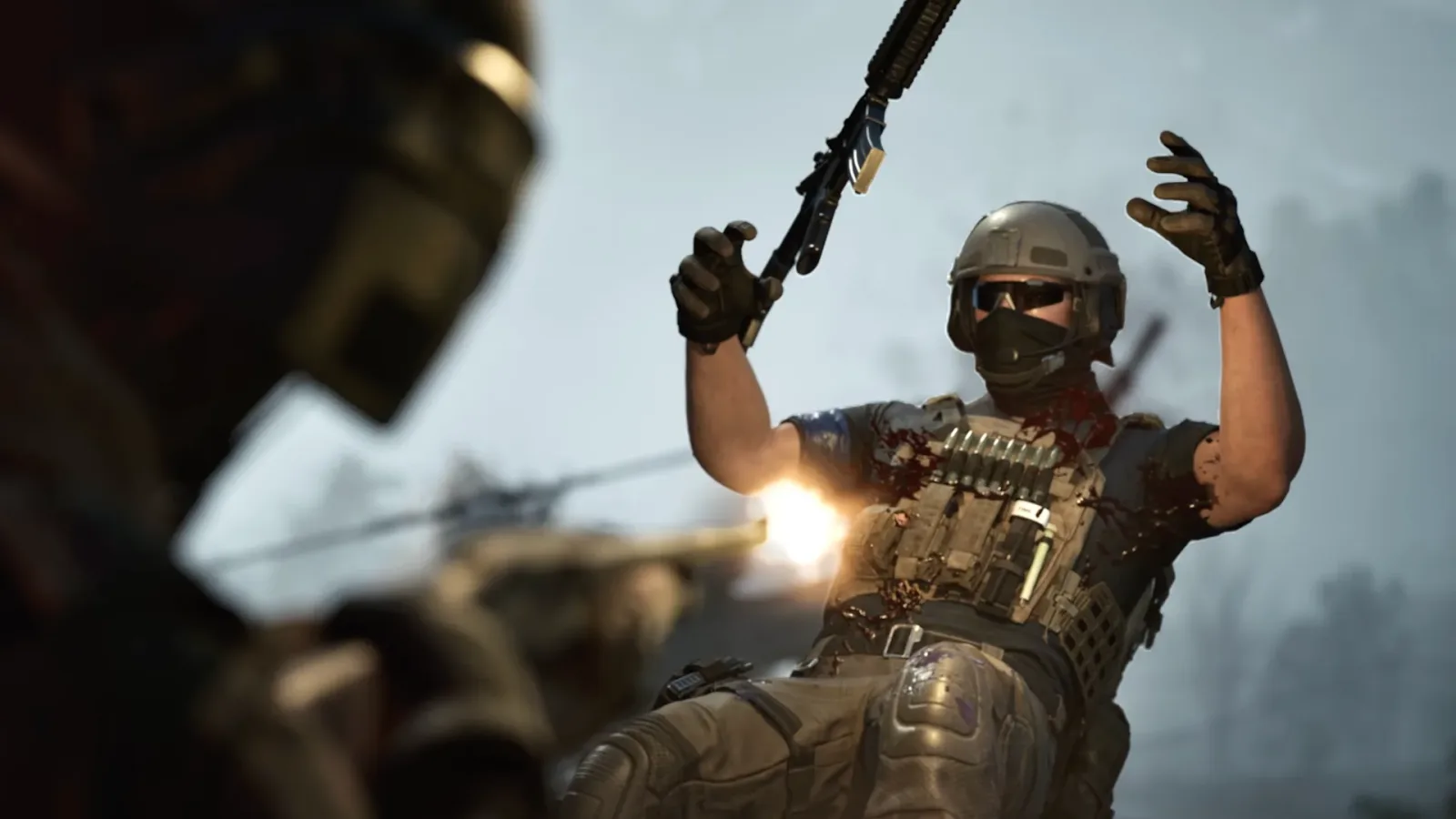
Wardogs has attracted major attention on Steam despite launching into early access with a $40 price tag, and developer Bulkhead is not planning to keep that price fixed. The studio has outlined a scaling-price approach that would raise the cost as the multiplayer FPS grows, with CEO and executive producer Joe Brammer arguing that the planned increases are central to sustaining a large, high-fidelity game over the long haul.
The current early access price is $40. Bulkhead's present plan is for Wardogs to cost $49.99 in roughly 12 months, around the point the team expects to reach what it calls "0.5," and then $59.99 in roughly 24 months. That makes the current version the least expensive planned entry point, while also making clear that players buying later should be receiving a game with more content and development behind it.
The approach is notable because early access often carries a different expectation: players commonly anticipate a lower price in exchange for accepting an unfinished build, with the price either remaining stable or rising only around the final launch. Bulkhead is openly framing Wardogs' price as something that should rise alongside its features, scale, and perceived production value instead.
A Price That Grows With the Game
Brammer's position is that prospective players have two valid choices. They can buy Wardogs at its current, lower planned price while it is still early in development, accepting that it will have less content than it may eventually offer. Or, they can hold off until later, pay more, and enter when there is more to play.
For useful background on this topic, read White Knuckle Turns Every Climb Into a Panic-Fueled Fight for Survival.
In other words, the developer is treating early access as a transparent trade-off rather than a bargain-bin version of a future game. Players who are excited by the game's current foundation can get involved now. Those who want a fuller package can wait. Bulkhead's argument is that neither decision is wrong, but that the price needs to reflect the state and growing ambition of the project at each stage.
"If you don't want to get in now, wait for there to be more content, more stuff, buy it later," Brammer said, explaining that players who want to buy in at the cheaper level can do so now.
That stance also leaves little room for a softer sales pitch. Brammer has said that players who believe the game is too expensive should simply choose another FPS. The studio believes Wardogs is worth its current price, and believes future versions will justify higher prices. It is a blunt message, but one that establishes clear expectations before the game moves further through early access.
Bulkhead Sees Wardogs as More Than a Small Indie FPS
Part of the disagreement around a $40 early access shooter comes down to how players classify Wardogs. The game is made by Bulkhead, a studio Brammer describes as sitting somewhere between indie and AA development, while also acknowledging that the industry's labels are often vague and inconsistently used.
Whatever label is applied, Bulkhead's point is that Wardogs is not being built to the budget, visual target, or technical scope typically associated with a tiny independent project. The studio is pursuing high-fidelity graphics and physics, and Brammer says those elements require significant time and money. Wardogs' price is therefore intended to reflect the resources needed to create and support that kind of shooter.
That does not mean players are guaranteed to agree. In fact, Brammer appears to expect resistance, especially because an early access build can be judged against both its current rough edges and its future promises. A player may see bugs, missing modes, balance concerns, limited maps, or other incomplete elements and question why the price is moving upward before every issue has been resolved.
Bulkhead is not denying that tension. Instead, it is arguing that the business reality of continued development has to be part of the conversation. The game cannot receive long-term support without revenue that matches the scale of the effort, particularly if the team is aiming to avoid unsustainable spending on staffing and salaries.
The Sustainability Argument Behind the Increase
For Brammer, the pricing plan is ultimately about sustainability. Developing a substantial online FPS is not just a matter of building an initial release. It can involve continuous work on content, technical performance, gameplay systems, community feedback, fixes, and the ongoing needs of a live player base. Even without detailing every piece of Wardogs' roadmap, Bulkhead's proposed price path signals that it expects those demands to remain significant throughout the next two years.
The studio's view is that selling the game too cheaply would make it harder to maintain that support. Brammer has emphasized that Bulkhead controls its salaries and does not intend to let costs spiral out of control, but he has also made the basic case that Wardogs is expensive to make. From that perspective, a higher price later is not merely an attempt to capitalize on early momentum; it is part of the plan to fund the game's continued growth.
"We believe that our price needs to go up to make this game sustainable," Brammer said. "Otherwise, how can we support the game long term?"
It is a particularly direct answer to the frequent assumption that early access pricing should only reward patience. Bulkhead is proposing that early buyers receive a financial advantage because they are joining earlier in the process, while later buyers pay more for a more developed Wardogs. Whether players view that as fair will likely depend on how clearly the game's improvements can be seen over time.
A High Bar for Future Updates
By establishing planned price points of $49.99 and $59.99, Bulkhead has also set a high bar for itself. Brammer has acknowledged that the company is setting a precedent and that players should expect quality to match the price. That is an important part of the equation: a price increase may be easier to accept if Wardogs demonstrably becomes broader, more polished, and more compelling between each stage.
The proposed 12-month point is especially important. Bulkhead expects to be around version 0.5 at that time, which suggests the game will still be in active development rather than at a conventional finished release. The $49.99 tier will therefore be a test of whether the community feels the game's additions and refinements are keeping pace with the financial step up.
The 24-month target, at $59.99, will bring another level of scrutiny. At that point, players are likely to compare Wardogs not only with smaller independent shooters, but also with more established premium releases. Bulkhead's own framing invites those comparisons by emphasizing the game's fidelity, physics, and larger production ambitions.
- Current Steam Early Access price: $40
- Planned price in about 12 months: $49.99, around the targeted 0.5 milestone
- Planned price in about 24 months: $59.99
- Bulkhead's position: prices will rise as Wardogs adds more content and becomes a bigger game
Content Expectations Remain a Major Question
Pricing is only one half of the early access discussion. Brammer has also voiced concern about a problem familiar to games that suddenly draw a large audience: the possibility that player appetite could outpace the amount of available content. He has compared the concern to an "Arc Raiders situation," saying Bulkhead may not have enough content for the number of people who want to play.
That concern gives additional context to the studio's pricing strategy. A breakout launch can be hugely valuable, but it also accelerates pressure on a development team. More players means more feedback, more demand for updates, and more attention on what is absent as well as what is already there. For a competitive FPS, the expectation for maps, modes, progression, balance work, and ongoing novelty can arrive quickly.
Bulkhead is therefore navigating two linked challenges. It needs to turn Wardogs' early success into durable support for the project, and it needs to make sure the game earns confidence as the price increases. The studio is being unusually explicit about the first goal. The coming updates will determine how players judge the second.
What It Means for Prospective Wardogs Players
For anyone considering Wardogs on Steam, the clearest takeaway is simple: waiting is not expected to save money. Bulkhead's stated plan is the opposite. Buying during the current early access period means paying $40 for the game as it exists today, while accepting its incomplete nature and the possibility of ongoing changes. Waiting should mean access to a more content-rich version, but at $49.99 or eventually $59.99 if the plan remains in place.
That transparency may be welcome for players who prefer to know the developer's intentions upfront. It also means Wardogs will have to justify every step. A scaling price model can work when the game's evolution is visible and convincing, but it can rapidly become contentious if updates feel slow or if players believe the amount of content does not match the asking price.
Bulkhead has made its position unmistakable: Wardogs is a costly, ambitious FPS, and the team does not intend to price it like a smaller project simply because it is in early access. The studio is asking players to assess the game on those terms. Over the next two years, its ability to deliver more of the Wardogs experience it is promising will matter just as much as the numbers on Steam's store page.
Community
Discussion
Start the conversation.
No comments have been posted yet.