

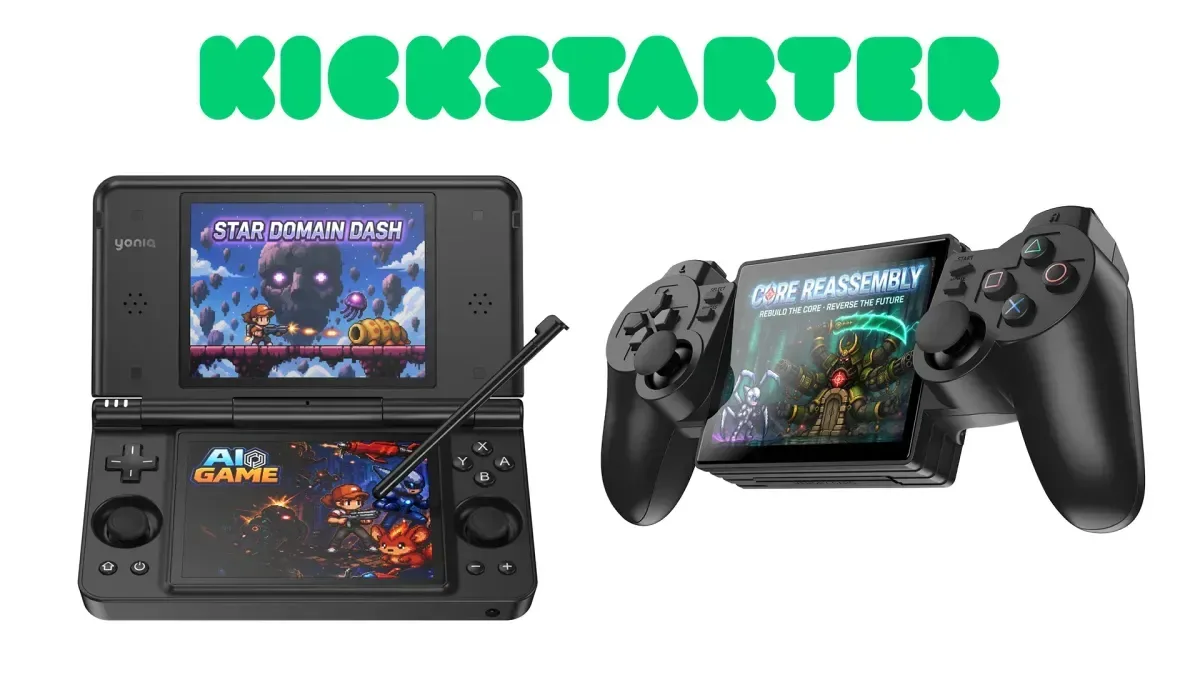
Yoniq is preparing to take its next major step in the handheld gaming market. The company has said it is planning a Kickstarter campaign later this quarter for both the Yoniq Duo and the Yoniq Portal, two devices recently shown to players and creators during Tokyo Game Show.
The campaign could begin as soon as next month, although Yoniq has not announced a firm launch day, final configurations, or a full list of technical specifications. Its comments do make one part of the strategy clear: crowdfunding support will be used to inform the size of the initial manufacturing run rather than proceeding immediately with a conventional retail launch.
That leaves prospective buyers with a clearer idea of when they may be able to back the Duo and Portal, while also underlining how much remains to be confirmed. The company is still refining both products following feedback from its Tokyo event appearances, and details including campaign structure, final hardware features, shipping timing, and potential retail availability are not yet settled publicly.
A crowdfunding route for two handhelds
Yoniq's plan is notable because it appears to be the first confirmation that the Duo and Portal will be introduced through Kickstarter. Crowdfunding has become a familiar route for newer handheld makers, especially those seeking to measure interest before committing to a larger production order.
For useful background on this topic, read 8Bitdo Ultimate 2 Controller Deal Undercuts Switch 2 Pro Controller by $22.
For a company entering a crowded field of portable gaming hardware, the approach provides some obvious benefits. A successful campaign can create early visibility, build a community around the devices, and generate a more concrete picture of demand. It can also help a manufacturer decide how many units and which configurations should be prioritized when factory production begins.
At the same time, backing a hardware Kickstarter is not the same as placing a standard store order. Campaign pages often provide projected production and delivery windows, but those windows can move as components, tooling, certification, logistics, and manufacturing capacity are finalized. Yoniq has not provided delivery estimates for either device, so any timetable beyond the campaign launch itself would be premature.
The company says it has continued to fine-tune the Duo and Portal after speaking with creators and players in Tokyo. That is encouraging in the sense that the hardware is still being adjusted in response to hands-on feedback. It also means the final systems may differ in small but meaningful ways from the versions presented at the show.
For another perspective on this story, read Yoniq Plans Kickstarter Campaign for Duo and Portal Handhelds This Quarter.
What is known about the Duo and Portal
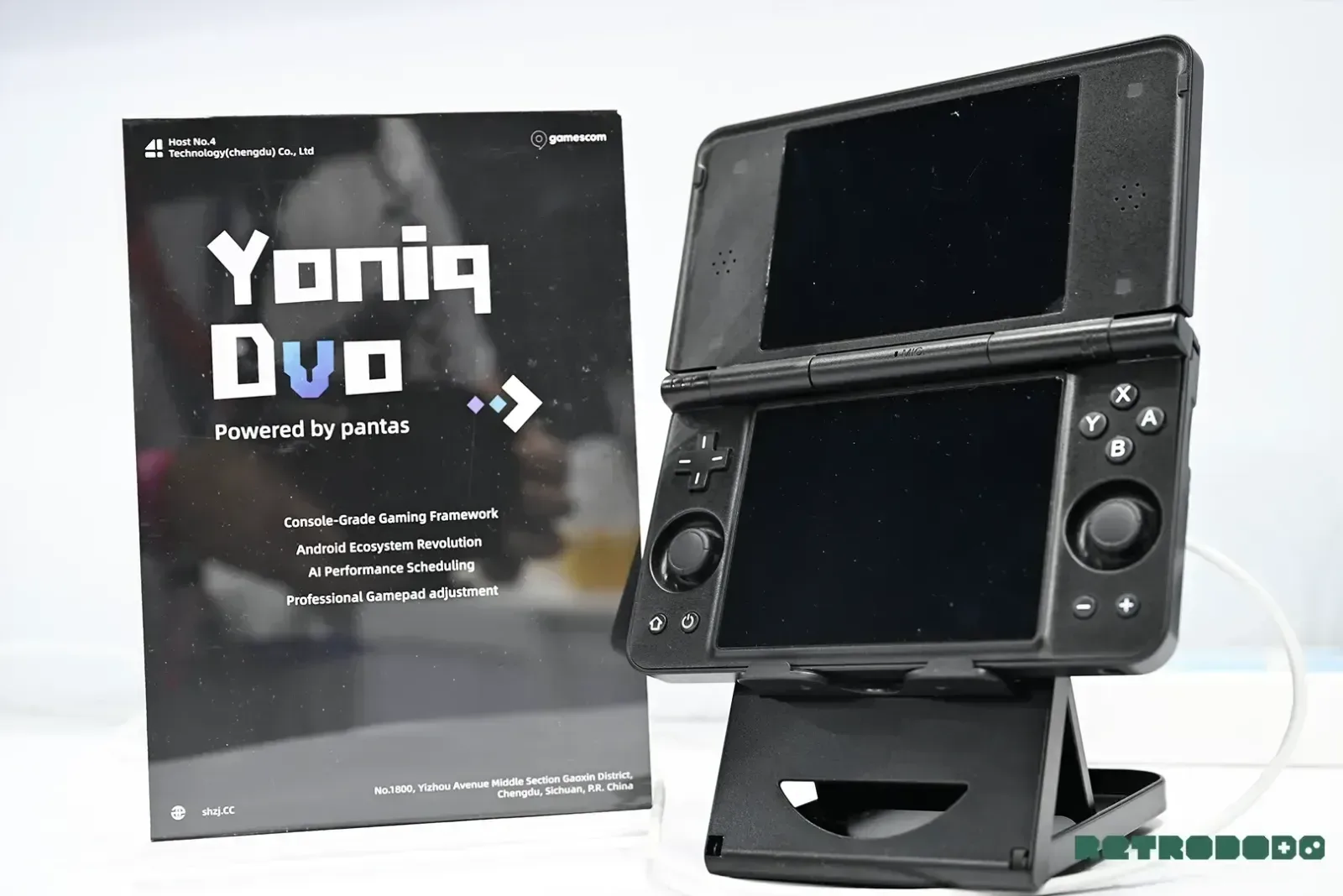
The Yoniq Duo is the more immediately distinctive product by name and concept, positioned as a dual-screen handheld. Dual-display designs naturally invite comparisons with past portable systems that used a second screen for maps, menus, inventories, touchscreen controls, or supplementary game information. However, Yoniq has not yet publicly locked down the specifications or software capabilities that will define how its own hardware uses that arrangement.
That uncertainty matters. A second screen can be useful in several different ways depending on the platform's intended audience. For retro gaming enthusiasts, it could potentially suit titles designed around two-display layouts. For a wider handheld audience, it could serve as a multitasking panel, a settings display, or a companion interface. Until Yoniq details the operating environment, control layout, display specifications, supported software, and performance targets, the practical identity of the Duo remains an open question.
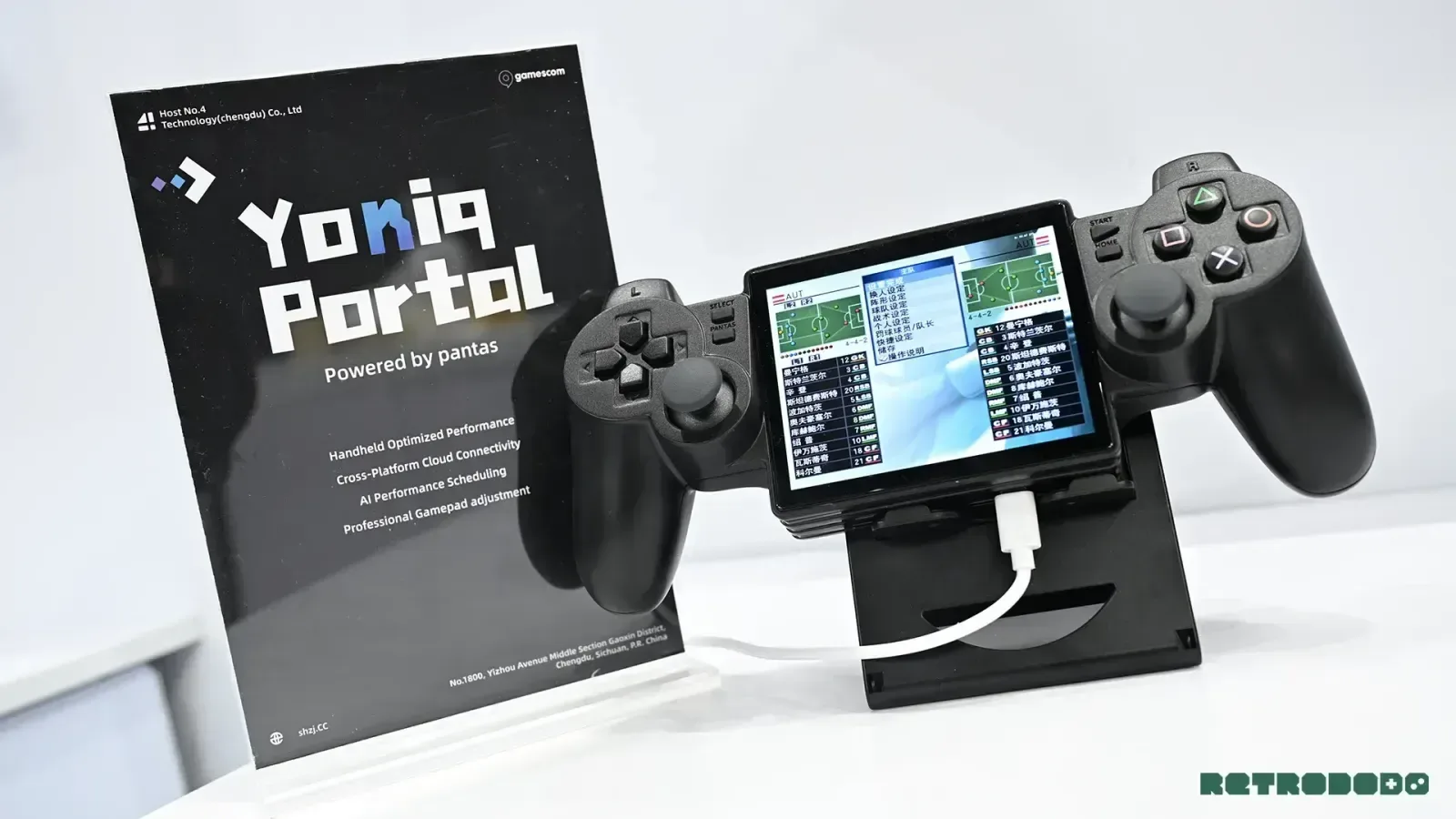
The Yoniq Portal is the other device expected to be included in the campaign. It was also displayed at Tokyo Game Show, but the company has not used its crowdfunding announcement to fill in the missing technical information. Buyers hoping for processor details, screen resolution, battery expectations, storage options, connectivity, operating system information, or a complete control breakdown will need to wait for the Kickstarter page or further announcements.
It is also not confirmed whether the Duo and Portal will be offered through one shared campaign or separate Kickstarter projects. A combined campaign would make sense if Yoniq intends to present the devices as a connected product family and offer bundle options. Separate campaigns could instead allow each system to have a more focused funding goal and a clearer audience. For now, neither possibility has been confirmed.
Price indications are not final campaign pricing
Recent listings have pointed to a possible price range of $159 to $199 for the two handhelds. Those figures provide an early reference point, but Yoniq has not formally announced Kickstarter pledge tiers or stated which price applies to which model or configuration.
As with most crowdfunded hardware, several variables can affect the final amount a backer pays. Early-bird offers, storage variants, accessories, regional taxes, and shipping costs can all change the effective total. A listing price may also be revised before a campaign goes live if the manufacturer changes component choices or production plans.
The suggested range would place Yoniq below many premium portable PCs while still competing in an increasingly active part of the handheld market. That market now includes dedicated retro-oriented devices, Android-based systems, streaming-focused hardware, and more powerful all-in-one portable computers. A lower entry point can attract attention, but the decisive factor will be whether the Duo and Portal offer a polished experience and clearly communicate what each device is designed to do.
Production timing remains the largest unknown
Yoniq's statement ties initial manufacturing volume directly to the level of support received during the Kickstarter campaign. That makes sense for a first public rollout, but it means production will likely not be fully defined until the campaign has ended and pledges have been evaluated.
There are broader pressures to consider as well. The hardware supply chain can be affected by availability of memory, displays, batteries, chips, and other components, while seasonal factory schedules can influence how quickly a project moves from funding to assembly. These are routine concerns for consumer electronics, but they are particularly important for crowdfunded handhelds, where companies are often coordinating suppliers and final specifications at the same time.
Yoniq has referenced 50 years of experience producing handhelds for other clients, which may point to an established manufacturing background behind the new brand. Even so, experience in manufacturing does not eliminate the usual risks attached to launching a new consumer-facing product line. Backers will want to see detailed specifications, working footage, transparent communication, and a credible production schedule once the Kickstarter campaign is published.
Why Tokyo Game Show feedback could be important
Showing hardware at a major event before opening crowdfunding can be valuable beyond simple marketing. It puts devices in front of people who can comment on the feel of buttons, ergonomics, display visibility, weight, control placement, and the general impression of build quality. Those are details that are hard to judge from promotional renders alone.
Yoniq says it has been optimizing various aspects of the handhelds based on conversations with creators and players in Tokyo. It has not specified which elements are changing, so there is no reason to assume dramatic redesigns. Still, modest revisions can make a substantial difference on a portable system. A revised grip shape, improved shoulder-button placement, stronger hinge design, better thermal tuning, or adjusted software interface can all affect daily usability.
The Duo may have the most to gain from that refinement process. Dual-screen devices have additional physical considerations compared with a conventional handheld: screen positioning, hinge durability if applicable, weight distribution, and how easy it is to operate controls while looking between displays. The Portal will face its own expectations, particularly around comfort, performance consistency, and how its intended role is differentiated from competing portable devices.
What to watch for when the campaign arrives
With the Kickstarter potentially arriving later this quarter, interested players should look for several pieces of information before deciding whether to back either device:
- Final specifications: Processor, memory, storage, display size and resolution, battery capacity, ports, wireless features, and supported operating system.
- Software direction: Clear information on the official user experience, supported game storefronts or services where applicable, and how the Duo's second display will be used.
- Hands-on evidence: Demonstrations of final or near-final hardware, including interface navigation and sustained gameplay.
- Reward tiers: Confirmation of individual device prices, any bundles, accessories, early-bird quantities, and regional shipping costs.
- Production roadmap: A realistic outline covering tooling, mass production, quality testing, fulfillment, and estimated delivery.
- Support plans: Warranty terms, repair options, firmware updates, and communication channels for backers after the campaign ends.
The announcement gives Yoniq a defined near-term target: take the Duo and Portal from trade-show showcases to a public funding campaign. It does not yet answer the larger questions that will determine their reception. The company will need to explain exactly what each handheld offers, how the two products differ, and why their designs deserve attention in a market with no shortage of portable gaming options.
For now, the most concrete expectation is that both devices are intended for Kickstarter later this quarter, with a launch possible as early as next month. The campaign itself should provide the crucial next round of details--and reveal whether player interest is strong enough to shape Yoniq's initial production plans.
Community
Discussion
Start the conversation.
No comments have been posted yet.