

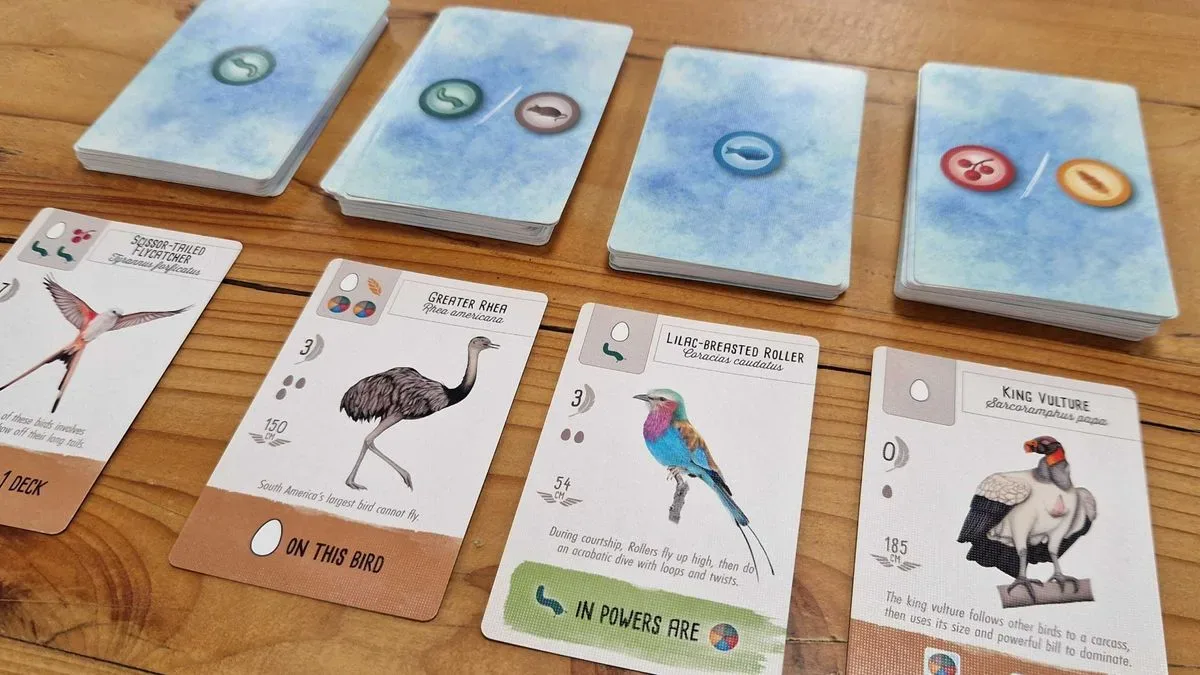
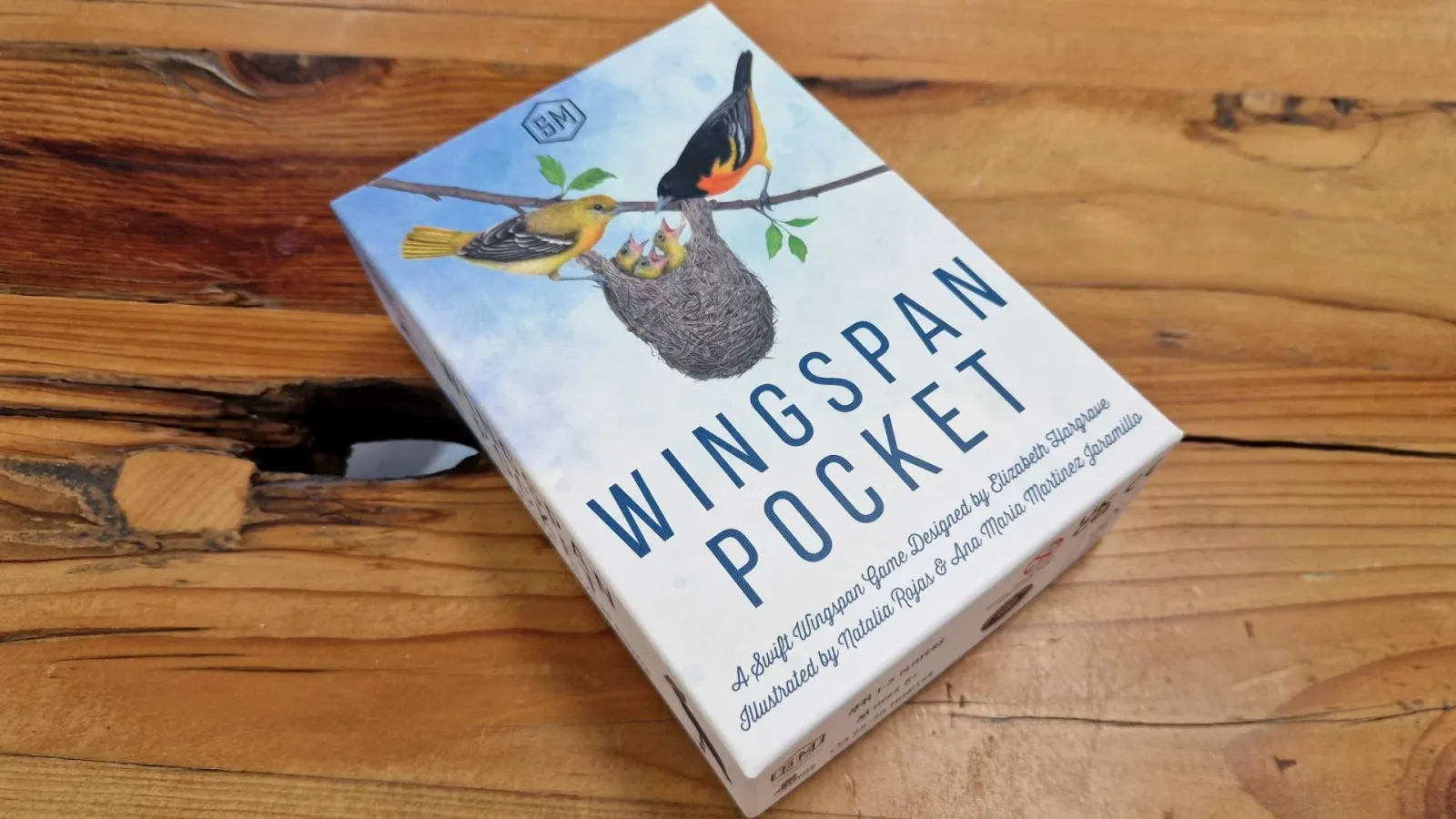
Wingspan Pocket is a compact strategy game that understands exactly what is worth preserving. The larger Wingspan formula has earned its reputation through satisfying engine-building, evocative bird cards, and the pleasure of turning a modest collection of abilities into a finely tuned scoring machine. This smaller edition does not try to replace that experience outright. Instead, it reshapes it into something quicker, more portable, and considerably less intimidating without losing the central spark that makes the series so compelling.
That balance is the game's greatest achievement. Wingspan Pocket keeps players focused on collecting resources, acquiring birds from a shared market, and building an effective lineup of powers and points. Yet it removes several of the barriers that can make the original feel more cumbersome to newcomers. The result is a game that is easier to teach, faster to finish, and still thoughtful enough to reward careful planning. For players curious about Wingspan but wary of a more involved strategy game, this is an excellent place to begin.
A streamlined route into bird-powered strategy
The core objective remains familiar: build the highest-scoring collection of birds by the end of the game. Birds offer end-game points, special abilities, or ideally both, and resources must be managed carefully to bring them into play. Where Wingspan Pocket differs is in how efficiently it presents those systems.
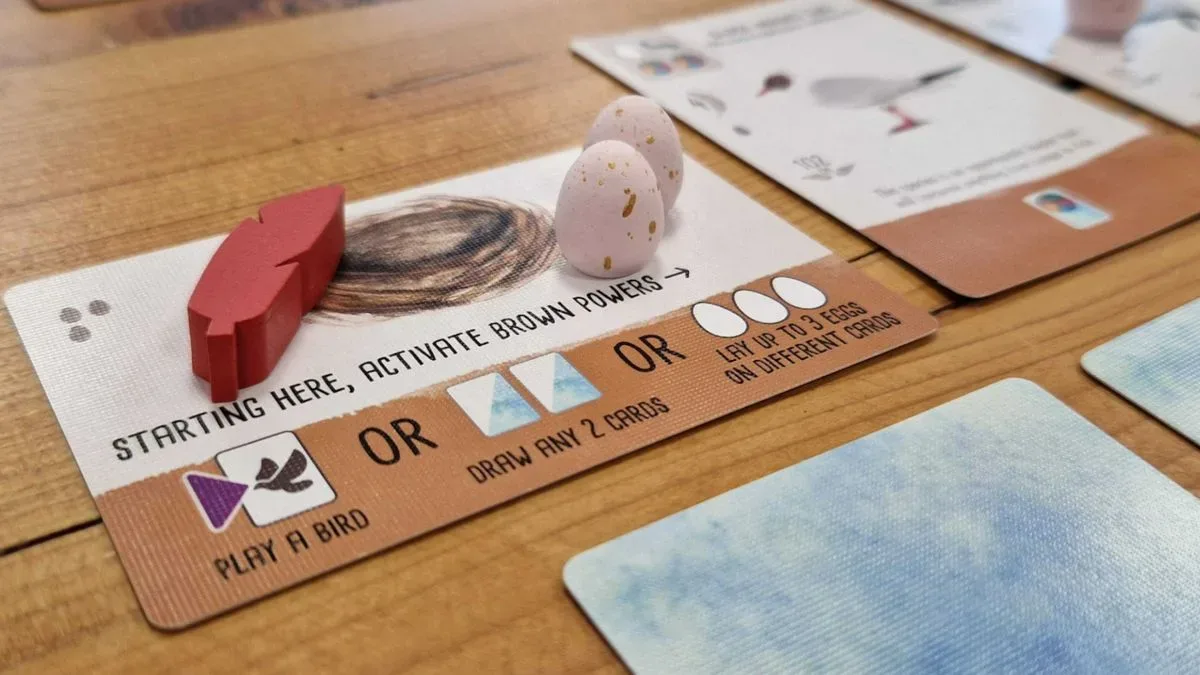
Rather than spreading birds across multiple habitats with placement restrictions, Pocket places every bird in one row beside a player's nest. If the required cost can be paid, the bird can be played. Costs may involve particular resources, eggs, or a combination of the two. This single-row approach is immediately easier to read than a multi-habitat board and removes a layer of restrictions without making placement thoughtless.
For useful background on this topic, read Ultima VII: The Black Gate Still Defines What a Living RPG World Can Be.
That simplification has an important effect: attention shifts away from navigating rules exceptions and toward evaluating cards. The question is not merely whether a bird can fit into a particular biome. It is whether playing that bird now advances a wider plan, provides a useful power, improves future turns, or earns enough points to justify its cost. Pocket retains the satisfying mental arithmetic of the series, but presents it in a cleaner form.
Resource collection is similarly pared back. Each bird card has a random resource symbol on its reverse side, and players can draw these cards from the central market to obtain resources. It is an elegant alternative to relying on dice. The market still creates uncertainty, but it does so in a way that feels closely connected to the cards players are already considering. Resources and prospective birds share the same visual and strategic space, which makes turns easier to process while keeping the market meaningful.
Six birds, limited time, and meaningful choices
A game of Wingspan Pocket ends once a player has played six birds. That small number is crucial. Every addition to a lineup matters, and there is little room for cards that do not pull their weight. A powerful bird played early may generate value repeatedly across the match, while the same card played during the closing turns could be little more than an expensive source of points.
This creates a satisfying tension between immediate utility and long-term scoring. Some birds provide reliable end-game points but do little to accelerate an engine. Others may be worth no points at all when the game ends, yet their abilities can transform an early turn into a major advantage over time. Players must assess not only what a card does, but when it should enter play.
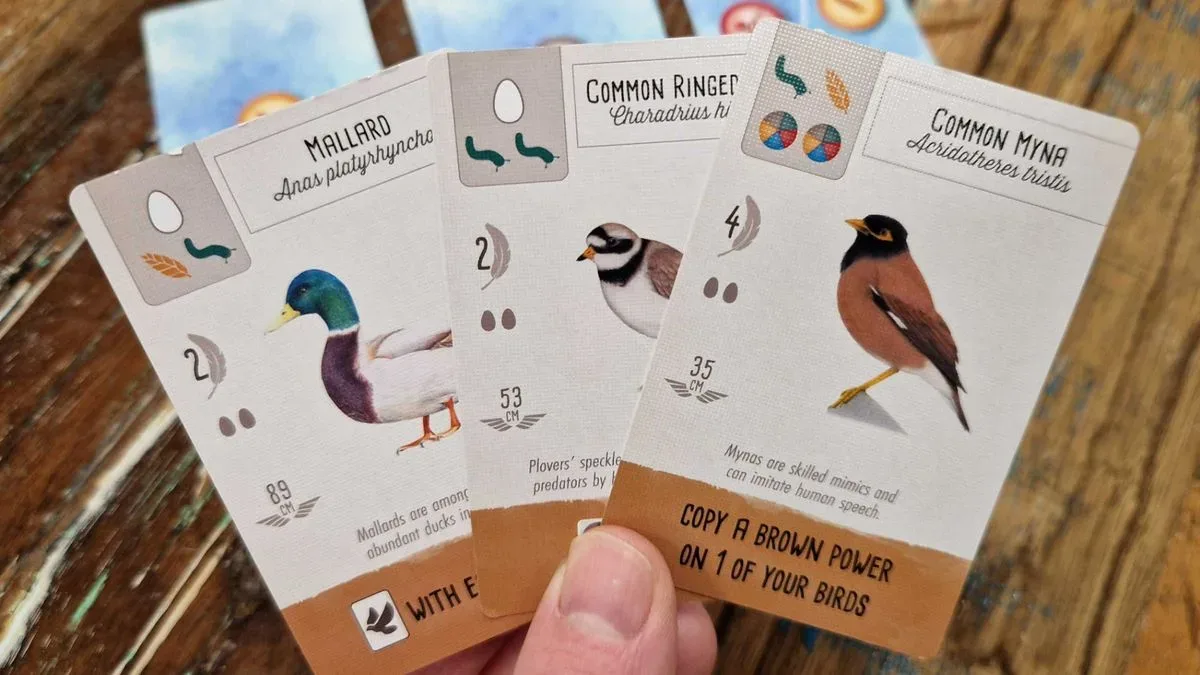
Most bird abilities stack and usually activate at the end of every turn. That is where Wingspan Pocket finds much of its personality. A bird might provide additional resources, improve card access, allow a player to exchange a resource, or enable cards to be tucked beneath it for points. In isolation, these effects are useful. Combined intelligently, they become the basis for a productive engine.
One illustrative kind of combination pairs a bird that allows extra card selection each turn, provided something is discarded, with another that converts resources into tucked cards for points. Together, those powers can create momentum quickly: more access to cards leads to more opportunities, while conversion effects turn surplus materials into scoring potential. The specific cards available will vary, but the broader lesson remains constant. Strong play comes from identifying relationships between abilities and acting early enough to benefit from them.
Flexible planning matters more than perfect draws
The shared market naturally means players will not always see the exact bird or resource they hoped for. There is an element of chance in what becomes available. However, Wingspan Pocket does not reduce victory to fortunate draws. Its strategic test is recognizing the value of the options that are present and adapting a plan before the opportunity disappears.
That requirement makes the game accessible without making it shallow. Players do need to think several steps ahead, especially because the six-bird limit makes timing so consequential. Still, the streamlined rules keep that planning manageable. The game asks participants to remain flexible rather than memorize a large web of systems. A useful ability can be better than a high-point bird if it arrives early enough, while a late scoring card may be exactly what is needed once an engine is already running.
Those choices give the game a strong sense of agency. Success depends on reading the market, balancing costs, anticipating end-of-turn triggers, and knowing whether a current turn should build infrastructure or chase points. It is a concise engine builder, but it is not a disposable one. The best decisions have visible consequences as a lineup becomes more efficient from turn to turn.
Faster than the full game, not empty of its magic
Wingspan Pocket supports one to five players, is recommended for ages eight and up, and generally lasts around 25 to 35 minutes. That length is a major advantage. It makes the game realistic for a weeknight, a travel day, a lunch break, or an evening when a longer strategy session would be difficult to organize.
Its portability also gives it a distinct role alongside the rest of the series. The original Wingspan remains a broader, more layered experience. Its habitats and additional systems create greater tactical nuance for players who enjoy longer-form optimization. Wingspan Pocket cannot offer the same level of depth because its purpose is to remove friction and condense the structure. The loss is real: devoted fans of the full-sized game may miss its wider strategic canvas.
But Pocket gains a great deal in return. It has a clearer teach, a swifter setup-to-finish arc, and a ruleset that gets players to the interesting decisions sooner. Compared with other games in the broader Wingspan line, it occupies a particularly appealing space: accessible, quick, and recognizably rooted in the same engine-building appeal. It feels designed for people who want the essence rather than every layer.
Who should play Wingspan Pocket?
Newcomers to Wingspan should place Wingspan Pocket near the top of their list. Its single-row bird layout and straightforward resource approach reduce the initial learning curve, while the card powers still demonstrate why the series has become so popular. It is easy to understand at a basic level, yet offers room to improve with every game as players become better at spotting combinations and timing their plays.
Existing Wingspan fans also have good reason to consider it. This is not merely a simplified product for beginners. It is a shorter alternative for anyone who enjoys bird-based engine building but does not always have time, space, or company for a more expansive session. The compact format makes it a natural travel option, and its fast pace makes repeat plays practical.
It is less suitable for players who want every strategy game to offer maximal complexity. Anyone who adores the original's more intricate, multi-layered structure may find Pocket comparatively lean. Likewise, players who dislike adapting to changing market options or planning ahead may find its tight six-bird race unexpectedly demanding. The rules are approachable, but effective play still asks for foresight.
Final takeaway
Wingspan Pocket succeeds because it does not confuse simplification with dilution. It removes restrictions, speeds up resource gathering, and shortens the overall match, but it protects the crucial decisions: which birds to play, when to play them, how to combine their abilities, and when to pivot in response to the market.
The result is a polished, portable strategy game with real tactical satisfaction. It may not have the full original's deepest layers, but it captures enough of its engine-building magic that the trade-off feels worthwhile. For a first journey into the Wingspan universe, or for a sharper and faster version to bring anywhere, Wingspan Pocket is a superb choice.

Community
Discussion
Start the conversation.
No comments have been posted yet.