

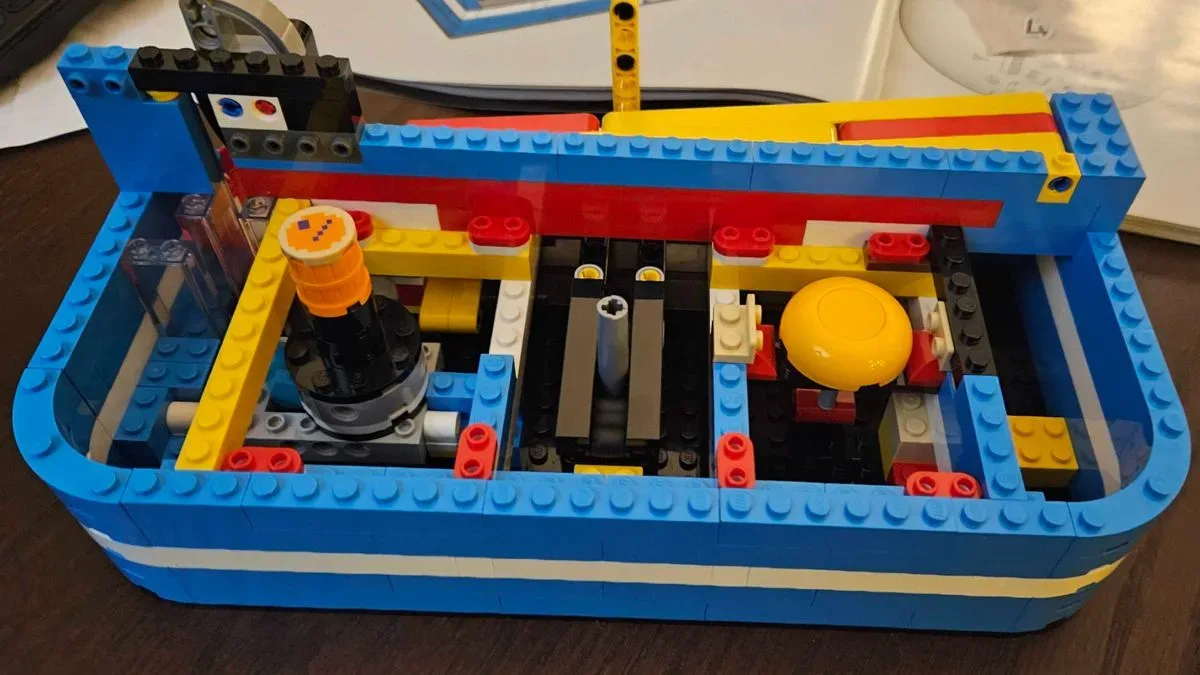
Lego Donkey Kong Arcade #72051 takes one of Nintendo's foundational games and turns it into an interactive shelf model. Rather than simply creating a static miniature of the 1981 cabinet, the 18+ set incorporates a playable mechanism: Donkey Kong can send barrels down the familiar sloped girders while Jumpman, the character who would eventually become Mario, can be moved with controls built into the front of the model.
It is an ambitious approach for a licensed display set, and it fits naturally alongside Lego's previous adult-focused Nintendo releases. The model aims to capture the bright, busy construction-site screen of the original Donkey Kong while retaining the physical playfulness associated with both Lego and Nintendo. A recent hands-on assessment found that combination especially successful, calling it one of the strongest Nintendo-themed Lego sets to date despite a few cost-conscious presentation choices.
For collectors, the question is less whether the concept works and more whether the cabinet's particular brand of arcade nostalgia is worth its premium asking price. At $199.99 / £149.99, Lego Donkey Kong Arcade is positioned as a major display purchase rather than a casual Super Mario expansion.
What is included in Lego Donkey Kong Arcade #72051?
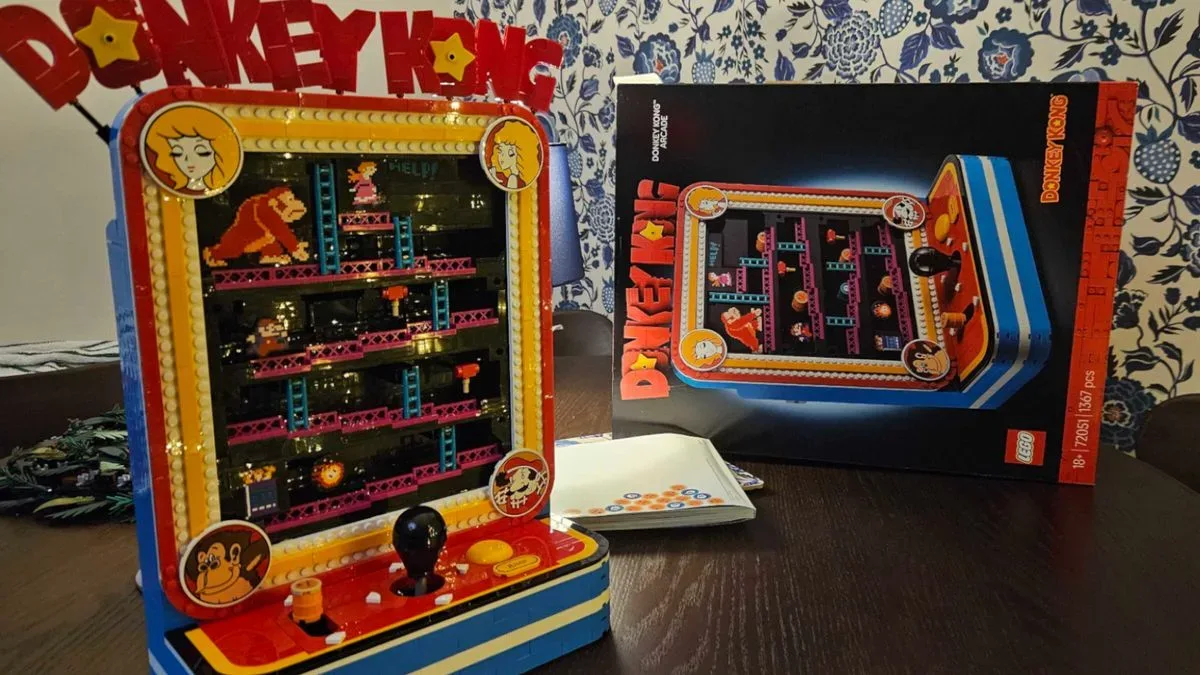
The set contains 1,367 pieces and is designed for builders aged 18 and over. Once complete, the arcade machine stands approximately 15.5 inches (39cm) tall, measures 10.5 inches (27cm) wide, and is around 5.5 inches (15cm) deep. Those dimensions make it a vertically oriented display piece that does not require an enormous amount of shelf depth, but it will need enough overhead clearance to show off the cabinet's large Donkey Kong branding at the top.
For useful background on this topic, read Pearl Abyss Expands AI Use Across Its Development Pipeline After Crimson Desert Controversy.
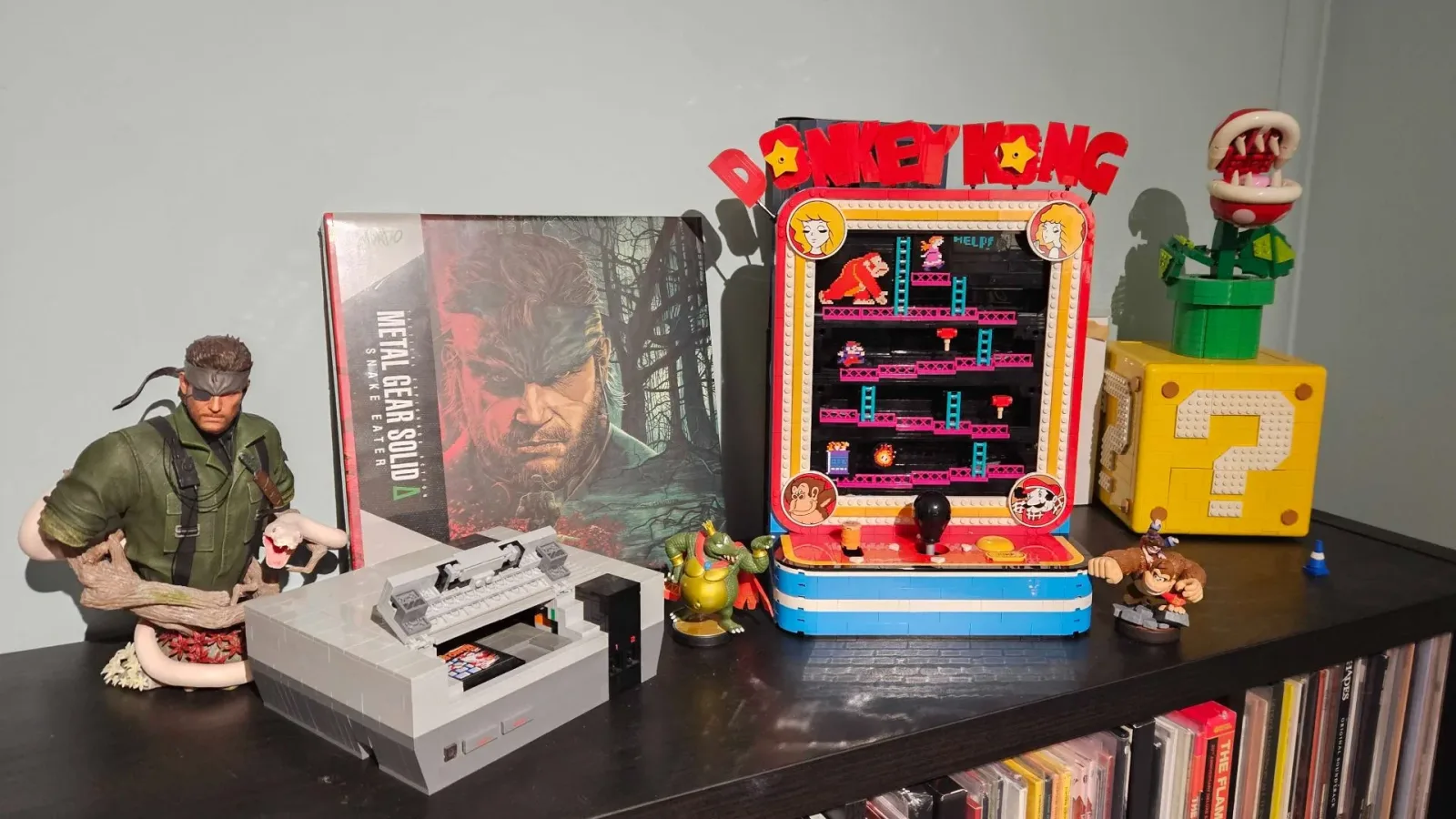
Its central image is a Lego interpretation of the original game's construction-site stage. Donkey Kong occupies the upper section with Lady, the character later widely known as Pauline, while Jumpman navigates ramps and barrels below. The model's bright pink girder elements are a major visual highlight, reflecting the color palette of the arcade original and helping the set read immediately as Donkey Kong from a distance.
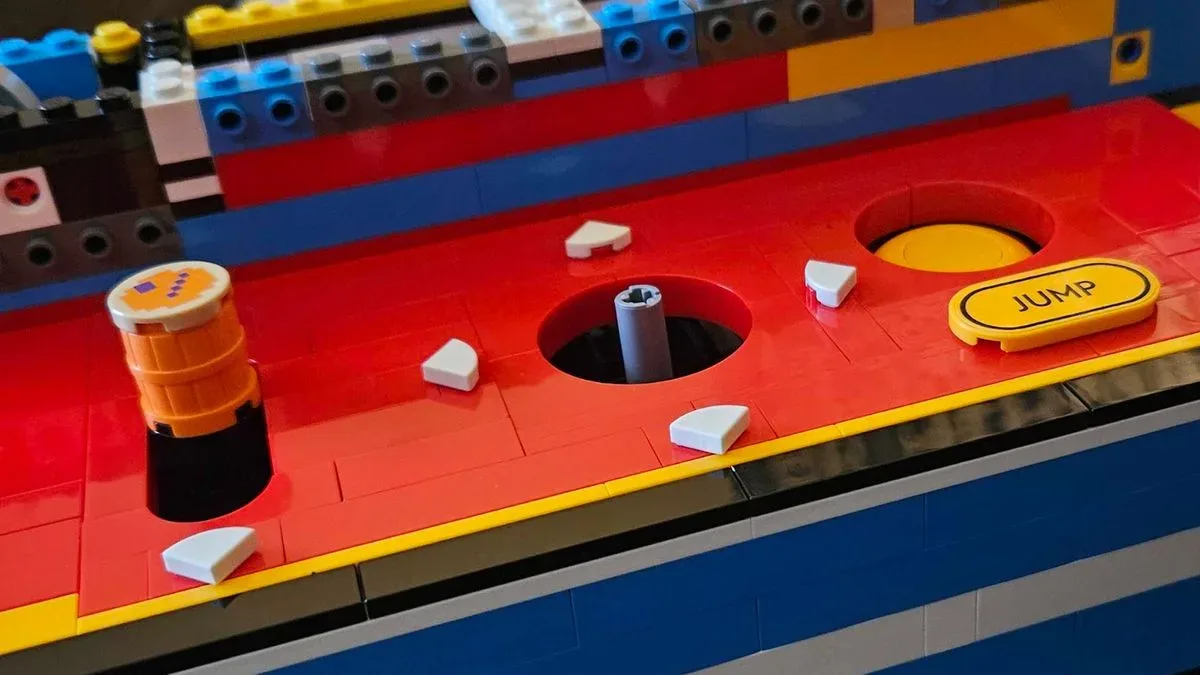
The cabinet does take a small visual detour from the original machine. An additional lever sits at the front because it is needed to operate the barrel mechanism. Purists may notice that alteration right away, but it serves a clear purpose: the model is not merely presenting the idea of an arcade game, it is trying to let owners reenact it.
A mechanical arcade game rather than a static replica
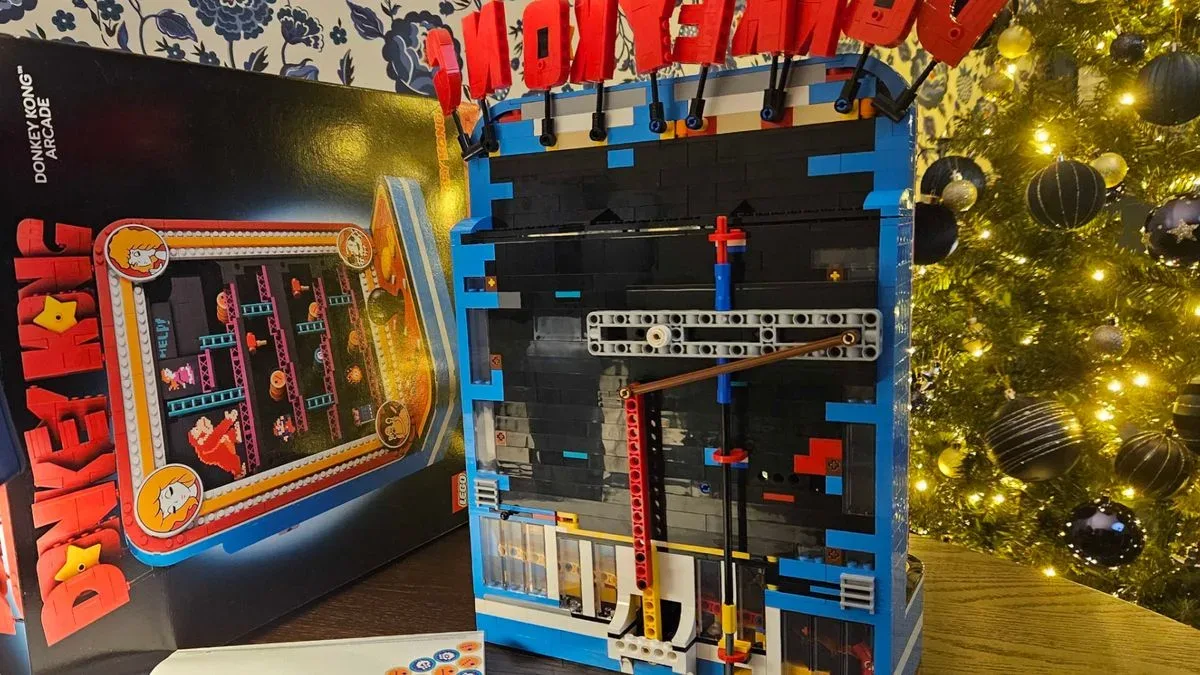
The headline feature is the interactive barrel system. A lever activates Donkey Kong, or a separate plate decorated with his image, to release a barrel down the ramps toward Jumpman. At the same time, a small arcade-stick-style controller and jump button allow the player character to move and evade the obstacle.
That setup is necessarily simplified compared with an actual video game, but it is an effective physical translation of the original premise. The core loop of Donkey Kong has always been easy to understand: climb, dodge, jump, and reach the top. Lego has distilled that familiar conflict into a display model with a mechanism visitors can immediately see and try.
That emphasis on playful interaction separates #72051 from many collector-oriented Lego releases. Plenty of adult sets are built to be admired, but the Donkey Kong cabinet gives owners a reason to return to it after construction. It becomes a conversation piece with an obvious demonstration feature rather than an object that remains untouched behind other models.
The concept also carries some historical weight. The arcade original was a defining early Nintendo release and introduced the character then known as Jumpman. Shigeru Miyamoto's creation ultimately helped establish Mario, while Nintendo's later creative history would extend through series including The Legend of Zelda, Pikmin, and Nintendogs. A Lego set centered on the original cabinet therefore has broader appeal than one tied only to Donkey Kong himself.
The build is approachable, with a less exciting finish
Despite the mechanics inside the machine, the build itself is described as relatively straightforward. The complexity falls in the low-to-moderate range, and the finished model can be assembled over roughly five to six hours. One assessment split the process across three days and five or so building sessions, which makes it a manageable weekend project rather than an especially demanding technical undertaking.
The construction begins at the arcade base and works upward through the game scene. Standard Lego Technic elements handle most of the moving functions. That makes the internal engineering easier to follow than some of Lego's more elaborate Nintendo models, particularly the Lego Nintendo Entertainment System and television set, which uses a rotating background to simulate side-scrolling gameplay.
Building vertically also provides a logical progression. The construction site grows higher as Donkey Kong and Lady come into view, and the final stage adds the large lettering at the cabinet's crown. However, the last portion is reportedly among the fiddlier and less satisfying parts of the assembly. As a finale, attaching the "Donkey Kong" letters does not have quite the same payoff as completing the interactive game area below.
That is not a major structural flaw, but it is worth noting for buyers who value the building experience as much as the result. The appeal here is primarily the finished machine and its working gimmick, not a long sequence of intricate construction techniques.
Stickers are the biggest compromise at this price
The most notable criticism involves the decorative elements. Lego Donkey Kong Arcade uses nine stickers. Four cover arcade-machine graphics, while five more are used for the oil barrel, fire, "Help!" text, Lady, and Donkey Kong.
Stickers are common across Lego's range, but the decision is more noticeable on a $199.99 collectible intended for adult fans. Jumpman is represented by a printed sprite element, making the reliance on stickers for central character art feel inconsistent. Printed tiles for Donkey Kong and Pauline in particular would have elevated the premium presentation and reduced concern about careful application or long-term wear.
Collectors accustomed to large display sets may be especially divided on that point. For some, clean sticker placement will preserve the illusion perfectly well. For others, the use of stickers on essential visual components will feel like an unnecessary compromise when the model already occupies the upper end of Nintendo Lego pricing.
Still, the set's overall design reportedly overcomes that drawback. Its shape, coloring, height, and playable front-facing mechanism create a cabinet that is easy to recognize and visually appealing in a larger collection. It has been favorably compared with discontinued and well-regarded Nintendo releases including the Lego Great Deku Tree 2-in-1 #77092 and Lego Super Mario 64 Question Mark Block #71395.
Who should consider buying it?
Lego Donkey Kong Arcade #72051 is best suited to fans with a meaningful connection to old-school Nintendo, arcade history, or the Donkey Kong series. Its strongest quality is not piece count alone. It is the way the model turns a landmark video game into something that can be displayed and demonstrated.
- Buy it if you love classic Nintendo: The set celebrates a crucial game in Nintendo history and includes an interactive feature that makes the cabinet feel more alive than a standard replica.
- Buy it if you have visible shelf space: Its tall arcade-machine silhouette is designed to stand out, and the relatively shallow depth makes it practical for many display shelves.
- Think twice if Donkey Kong nostalgia does not resonate: The barrel mechanism is the primary attraction. Without affection for the game or its arcade-era style, the price may be harder to justify.
- Look elsewhere if the budget is tight: At $199.99 / £149.99, this is among the more expensive Nintendo-branded Lego options. Other Nintendo models, including Game Boy and Zelda: Ocarina of Time sets, may provide alternatives for collectors prioritizing a different franchise or lower spending.
A standout for the right Nintendo collector
Lego Donkey Kong Arcade #72051 succeeds because it understands that the original game is more than an image from Nintendo's past. It is an instantly readable challenge built around movement, timing, and playful frustration. The model's barrel launcher and Jumpman controls communicate those ideas with a few mechanical parts, giving the finished cabinet a personality that a purely decorative build would lack.
The sticker count and premium price prevent it from being an uncomplicated recommendation for every Lego or Nintendo fan. Yet for those who want a striking representation of the arcade classic--and who have room for a tall centerpiece--it offers a rare combination of collectible presentation and hands-on interaction. In a lineup full of impressive Nintendo displays, this one earns attention by inviting people to play with it.
Community
Discussion
Start the conversation.
No comments have been posted yet.