

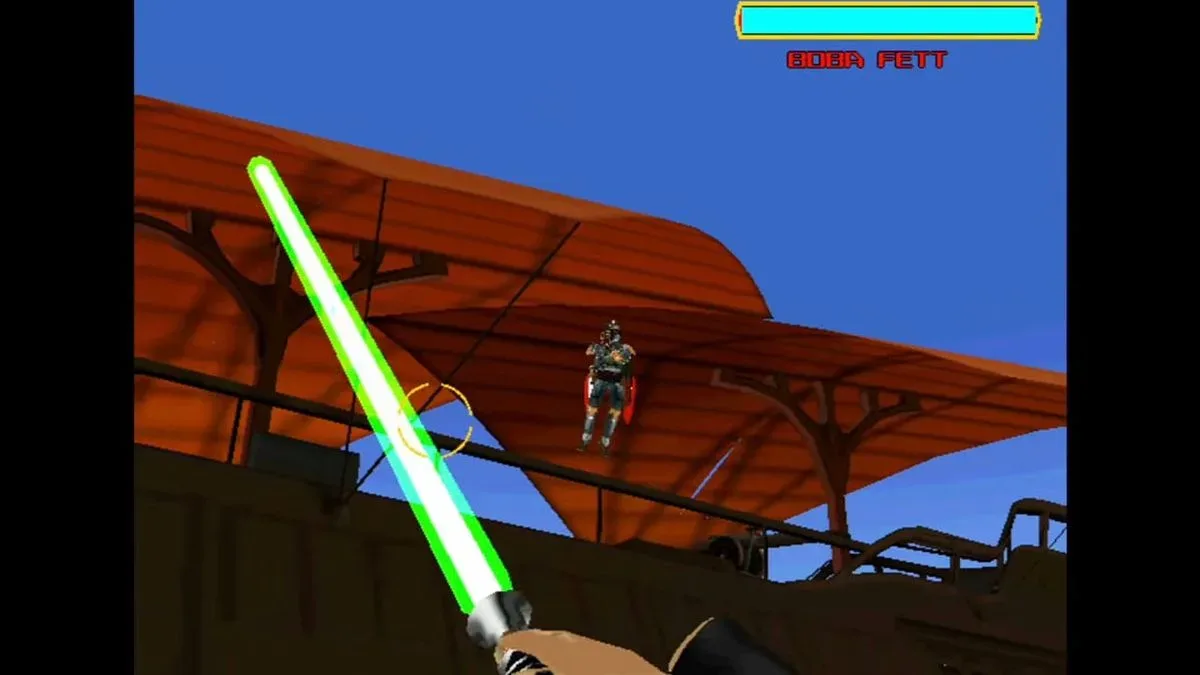
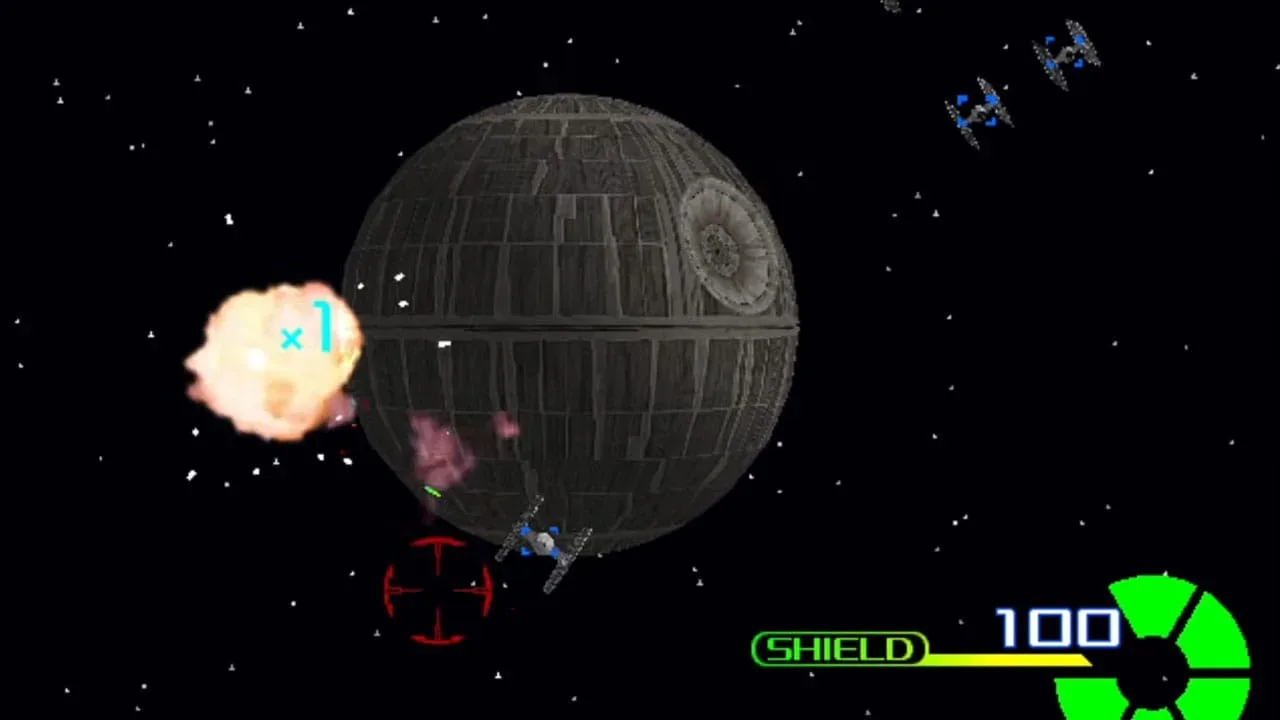
Star Wars Trilogy Arcade, Sega's late-1990s Star Wars rail shooter for the powerful Model 3 arcade platform, is being recreated for the Sega Dreamcast through a fan-led development effort. The project, created by developer ToastedGreedo, has already produced two working stages on original Dreamcast hardware: the Yavin Death Star sequence and the Boba Fett Duel.
Those two sections are planned for a free Dreamcast-compatible demo disc expected soon. While the larger project is still a work in progress, its current state represents an intriguing what-if for Sega's final console: what if one of the company's most visually striking arcade games had received a home conversion during the Dreamcast era?
From Model 3 arcade cabinet to Dreamcast
Originally released in arcades in 1998, Star Wars Trilogy Arcade was built for Sega's Model 3 hardware. The game adapted major set pieces from the original Star Wars trilogy into a first-person, on-rails blaster experience, placing players in scenes inspired by the battles of Yavin, Hoth and Endor. It also included lightsaber-focused sequences, allowing players to take on enemies such as Boba Fett and Darth Vader.
The Model 3 was a formidable arcade platform for its time, known for games including Daytona USA 2, Scud Race, Virtua Fighter 3, and Star Wars Trilogy Arcade. Its technology helped Sega deliver an unusually polished and fast-moving 3D presentation in arcades, but that also made faithful console conversions difficult in the late 1990s.
For useful background on this topic, read Evercade Dual Thumbstick Wireless Controller Brings Analogue Play to a Growing Retro Ecosystem.
Dreamcast hardware arrived later, in 1998 in Japan and 1999 in other territories, and it earned a reputation for arcade-adjacent home experiences. Sega brought numerous coin-op games to the system, and its library remains closely linked with arcade design. Yet Star Wars Trilogy Arcade never officially appeared on the console, despite longstanding discussion among fans that a Dreamcast version may once have been considered.
ToastedGreedo's work does not change that historical absence, but it gives the idea a new life. Rather than merely presenting footage of an arcade machine or relying on modern emulation, the project is specifically designed to run on Sega's original Dreamcast console.
Two stages are currently running
The demonstrated build contains two recognizable parts of the arcade game. The first is the Yavin Death Star Stage, one of the best-known Star Wars action scenarios and a natural fit for an arcade shooter. The second is the Boba Fett Duel, a close-quarters lightsaber encounter that differs from the blaster-driven vehicle and space-combat portions of the experience.
The Boba Fett Duel holds particular importance in the project's development. ToastedGreedo has described it as the first stage recreated for the Dreamcast version, explaining that it became the foundation for the technical work required to pursue the original Model 3 arcade feel on Dreamcast hardware.
"The Boba Fett Duel was the first stage I recreated for the project and has served as the foundation for bringing the original Model 3 arcade experience to Dreamcast hardware," ToastedGreedo said in a description accompanying a project video. "It's been especially exciting to see the project progress from an early technical experiment into something that increasingly feels like a complete Dreamcast game."
That progression is a major part of the appeal. Projects of this kind often begin with a single technical question: can a particular system produce an approximation of an arcade game that was never released for it? Turning that experiment into multiple functioning stages, with a demo disc planned for public distribution, is a much more substantial undertaking.
A free release for the Dreamcast community
The upcoming demo is intended to be free, and ToastedGreedo is not making money from the project. That approach places the effort squarely within the long-running tradition of Dreamcast homebrew and preservation-minded fan development.
Even decades after Sega ended official support for the Dreamcast, the console continues to receive independently produced software, physical releases, ports, technical demonstrations and community tools. The machine remains especially attractive to developers because it occupies a rare position: it is old enough to be a retro platform, but capable enough to support ambitious 3D projects that would have been impossible on many earlier consoles.
A Dreamcast-compatible disc also gives the project a different character from a video-only demonstration. For players with the console and the appropriate means to use homebrew software, the aim is to put the recreated stages into hands-on form. That tactile connection matters for an arcade game built around immediate reactions, crosshair aiming and spectacle.
There are still important limits to keep in mind. Only two stages have been confirmed as running on Dreamcast at this point, and no completion date for a full recreation has been announced. It is also not an official Sega or Lucasfilm release. The project should therefore be viewed as an evolving fan work rather than a newly released commercial port or a guaranteed complete version of the arcade original.
Why this missing conversion still fascinates fans
Dreamcast enthusiasts have always been drawn to unrealized possibilities. Sega's last console had a relatively short commercial lifespan, and that history left behind a long list of ports, sequels and concepts that fans still imagine as potential additions to its library. In that context, Star Wars Trilogy Arcade is an especially appealing candidate.
Its arcade pedigree is obvious, its Star Wars license is instantly recognizable, and its use of the Model 3 makes it part of a family of Sega arcade games that players associate with the company's technological peak. A convincing Dreamcast version would feel less like an arbitrary port and more like a game that belongs alongside the system's existing arcade-heavy catalog.
The project also highlights the difference between preservation and recreation. Preserving an existing game is about ensuring that original software, artwork, hardware and historical materials remain accessible. Recreating a game for hardware that never received it involves another type of labor: studying how an experience works, rebuilding its pieces, and making engineering decisions for a specific target platform.
That does not replace the original Model 3 release. Instead, it creates another route through which people can engage with the game and with a long-lost possibility from the Dreamcast era. For collectors and hardware fans, seeing a Model 3-style Star Wars shooter running on a Dreamcast is compelling precisely because it is a scenario that never arrived through official channels.
What the demo can show
The planned demo disc will be the clearest opportunity yet to assess how far the recreation has come. Footage can demonstrate visuals and broad performance, but playing the stages will reveal the more important questions for a rail shooter: how aiming feels, how responsive the controls are, how enemy encounters are paced, and whether the recreated scenes capture the rhythm of the arcade game.
The Yavin stage and Boba Fett duel should also provide a useful contrast. One represents the cinematic, large-scale action associated with the Death Star assault; the other is built around a more direct duel format. Together, they show the range ToastedGreedo is attempting to bring over rather than focusing solely on one type of sequence.
For now, the free demo is the immediate milestone, while a full game remains the longer-term hope. ToastedGreedo's ongoing updates will determine whether more stages join the Dreamcast build in the months ahead.
Regardless of where the project ultimately ends, its two existing stages are already a reminder of why the Dreamcast remains such an active platform in retro circles. More than 25 years after its launch, developers are still finding new reasons to test its limits--and in this case, to revisit an arcade Star Wars adventure that many players never expected to see on Sega's final console.
Community
Discussion
Start the conversation.
No comments have been posted yet.