

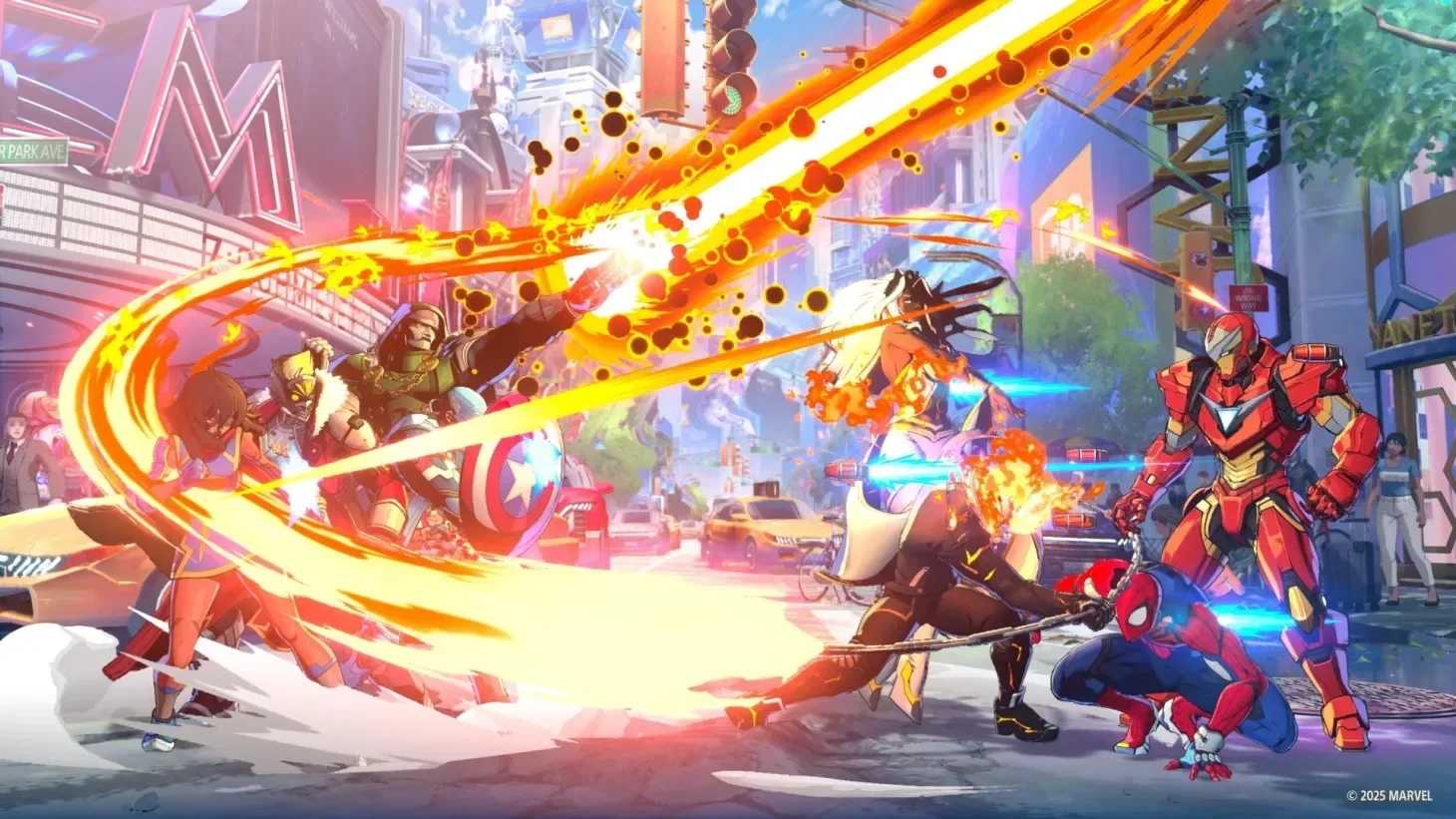
Marvel Tokon: Fighting Souls arrives on PlayStation 5 with the considerable weight of Marvel's fighting-game history behind it. The publisher's heroes and villains have long been associated with wild crossover battles, screen-filling supers, improbable comebacks, and the kind of fast, expressive combat that rewards both lab work and split-second improvisation. That legacy has not always had a smooth recent path, however. For fans who missed the high-energy spectacle of earlier Marvel tag fighters, Arc System Works' new project represents a serious and exciting return.
Released into a genre that has become increasingly welcoming to new players without abandoning its expert audience, Marvel Tokon: Fighting Souls earns its 8.5/10 by understanding what made Marvel fighting games so magnetic while refusing to merely repeat them. Its 4v4 structure, shared team health bar, gradually expanding roster of available assists, and accessible control philosophy create a distinctive rhythm. The result is a fighter capable of delivering frantic, dramatic matches without demanding that every player master four completely separate characters before they can enjoy its core ideas.
A team fighter built around momentum
At first glance, a 4v4 Marvel fighter sounds like an invitation to maximum complexity. Marvel Tokon instead finds an elegant solution: each side shares a single health bar. Rather than asking players to preserve four individual life meters, manage constant full-character switches, and memorize an enormous number of moves, the game allows a central combatant to remain in the spotlight while teammates function as meaningful assists and extensions of a larger game plan.
That structure means Marvel Tokon can often feel like a focused 1v1 fighter, even when both teams contain four characters. A chosen lead fighter handles the immediate contest, while allies create openings, reinforce pressure, interrupt an opponent's plan, or add routes to a combo. It retains the tag-fighter energy of coordinated teams but lowers one of the format's traditional barriers to entry. Learning a preferred character matters most at the outset, rather than requiring instant proficiency with an entire squad.
The game's match flow further separates it from a standard tag brawler. Battles begin with a main character and a single assist option. Additional teammates become available over time, giving each match a sense of escalation. Early exchanges are tense because players are fighting for control with limited resources. As the remaining members of a team enter the equation, pressure rises, options expand, and the possibility of a rapid reversal becomes much more real.
This progression makes offense especially important. A passive player risks allowing the opponent to establish momentum and unlock their full arsenal first, while an aggressive player can push toward the most dangerous version of their team. The system encourages action without making every moment feel mindless. Matches can turn sharply once additional assists arrive, producing the kind of high-stakes swings that Marvel fans expect while giving those swings a clear mechanical foundation.
Accessible inputs, meaningful depth
Arc System Works has designed Marvel Tokon to be more approachable than its spectacle might suggest. Special moves and supers can be assigned to simple button presses alongside more conventional fighting-game inputs. That choice reduces the friction of trying a new member of the cast and allows players to access exciting tools without first overcoming an intimidating execution wall.
Crucially, simpler access does not appear to flatten the combat. The combo system still supports depth, and competitive-minded players have ample reason to investigate routes, assists, pressure sequences, and situational conversions. The control scheme's uniformity across the cast helps make the game easier to understand at a foundational level. Once a player has grasped the broad language of movement, attacks, specials, supers, and assists, moving to another character is less daunting than it is in many team fighters.
Character identity comes through in distinct traits and dedicated special actions rather than a radically different basic control scheme for every combatant. Doctor Doom can create barriers, for example, while Green Goblin can call upon his glider. These details matter because they make roster selection about tactics and personality instead of simply choosing the most familiar execution pattern. The approach is particularly well suited to a large-team game: players can explore different favorites and team combinations while retaining confidence in the basic controls.
There is still an important caveat for players hoping to learn the cast at an advanced level. Marvel Tokon includes substantial training and tutorial options, and character-specific material includes combo trials. Those tools are useful, especially for practicing timing and discovering potential sequences. They do not, however, fully communicate each character's broader mentality, preferred ranges, pressure goals, defensive strengths, or ideal game plan. Players willing to experiment will find a great deal to work with, but the game could do more to bridge the gap between performing a trial combo and understanding how to build a match strategy.
Marvel interpreted through Arc System Works' visual language
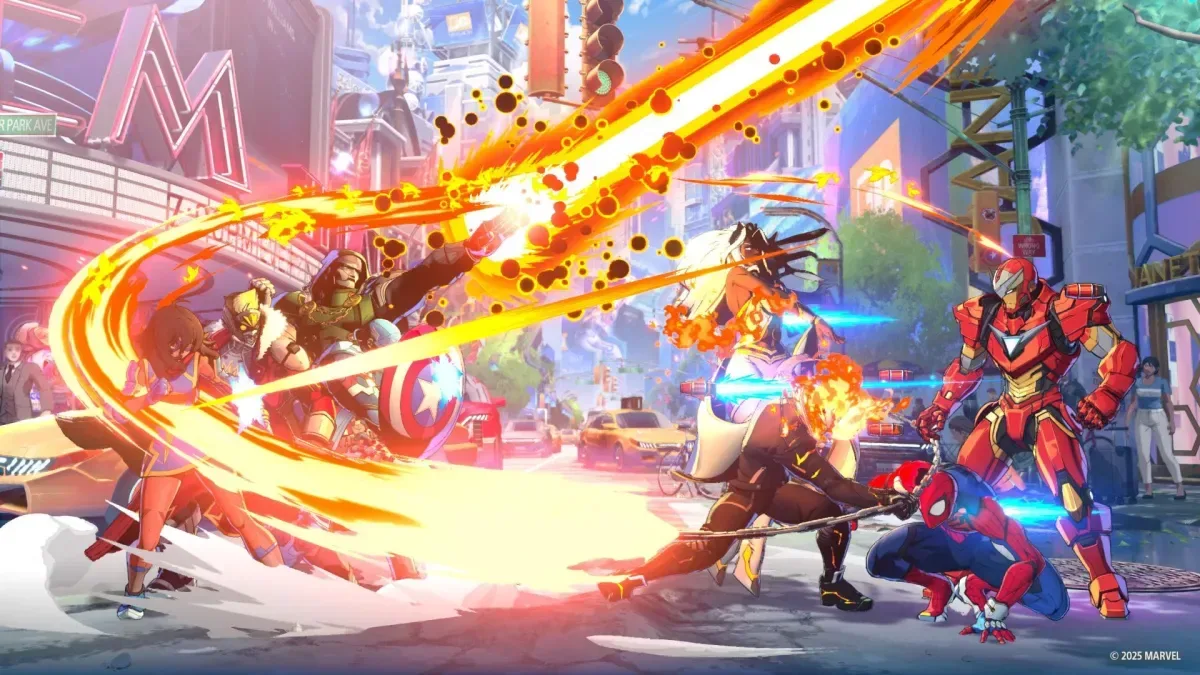
Visually, Marvel Tokon: Fighting Souls is among the strongest arguments for Arc System Works handling this property. The studio's signature approach uses 3D models that convincingly evoke hand-drawn 2D animation, creating an image that is clean, expressive, and constantly striking in motion. The effect has been impressive in earlier Arc releases, but Marvel Tokon feels like another leap in that established style.
The anime-inspired interpretation of Marvel's heroes and villains is not a superficial coat of paint. It gives the lineup a coherent visual identity while preserving what makes these characters recognizable. Iron Man's armor takes on the imposing, elaborate quality of a mecha anime design. Hulk is given exaggerated proportions and armor that emphasize his scale and intimidation. The character designs are distinctive, stylish, and generally tasteful, making the cast feel adapted rather than merely transferred from another medium.
That aesthetic clarity is valuable in a game where assists, specials, and multiple combatants can make the screen extremely busy. Marvel Tokon aims for excess, as a Marvel team fighter should, but its visual direction supports the action rather than obscuring it. The presentation gives battles the grandeur of a major comic-book event while still benefiting from Arc System Works' mastery of animated impact and pose-driven action.
Story Episodes provide context, not a standout campaign
The single-player story is delivered through Episodes centered on preset teams entering a worldwide tournament. Their larger threat is The Champion, a cosmic entity traveling across the universe and destroying planets judged unworthy. The premise has the appropriate scale for a Marvel crossover, and the presentation uses visual-novel scenes between fights to move each storyline along.
Each Episode takes roughly an hour to complete, making the mode a manageable way to sample different teams and see the roster in a more structured setting. The problem is that the narratives are mostly basic and predictable. Many follow a similar format, with only a few notable variations, including material involving the Knights of Doom. The mode provides flavor and a reason to stage these encounters, but it rarely develops into a memorable dramatic centerpiece.
Players looking for a story campaign that doubles as an extensive teaching tool may also come away disappointed. Episodes provide only very basic introductions to characters and do not build lessons into the narrative in the way some fighting games use story content to teach mechanics. Marvel Tokon's real learning resources are found elsewhere, in training mode and tutorials, so the campaign works best when treated as supplemental content rather than a complete onboarding path.
Online play and the question of longevity
Online modes include lobbies, ranked matches, casual play, and Arcadia Rumble, an intentionally silly eight-player side mode. That collection covers the essentials expected from a modern fighting game while offering a less serious alternative for players who want a break from traditional one-on-one competition.
The online experience is a considerable strength. Netcode performance has shown barely noticeable issues even in Wi-Fi matches, an encouraging sign for a game that will depend heavily on a healthy online population. Responsive connections are essential for a combat system based on pressure, assists, combo confirms, and sudden momentum shifts; Marvel Tokon appears well equipped to support that environment.
Its lasting competitive impact cannot be fully determined at launch. Balance updates, emerging community strategies, and the eventual discovery of team compositions will shape how the game evolves. Still, the foundations are unusually strong. Marvel Tokon combines a readable entry point with the kind of expressive systems that can keep dedicated players experimenting for a long time.
Who should play Marvel Tokon: Fighting Souls?
This is an easy recommendation for players who have missed the relentless pace and theatrical chaos of classic Marvel tag fighters. It is also well suited to newcomers interested in the genre but wary of games that require immediate command of several wildly different characters. The shared-health structure, simple special inputs, and consistent controls make it easier to begin, while assists and expanded team access ensure there is plenty of room to improve.
Story-focused players should temper expectations, and dedicated training-mode learners may need to supplement the game's character trials with their own experimentation. But for players seeking excellent visuals, energetic online competition, and a Marvel fighter that feels built for both immediate fun and long-term discovery, the strengths far outweigh those limitations.
Final takeaway
Marvel Tokon: Fighting Souls is not simply a nostalgic attempt to revive a beloved style of superhero fighting game. It advances that tradition with a clever 4v4 format that avoids overwhelming its audience, a spectacular visual identity, and online performance suited to serious competition. Its story Episodes are serviceable rather than exceptional, and its tutorials leave room for deeper strategic instruction. Even so, Arc System Works has crafted a Marvel fighter with real momentum, impressive accessibility, and every reason to be considered a potential genre mainstay.
Community
Discussion
Start the conversation.
No comments have been posted yet.