

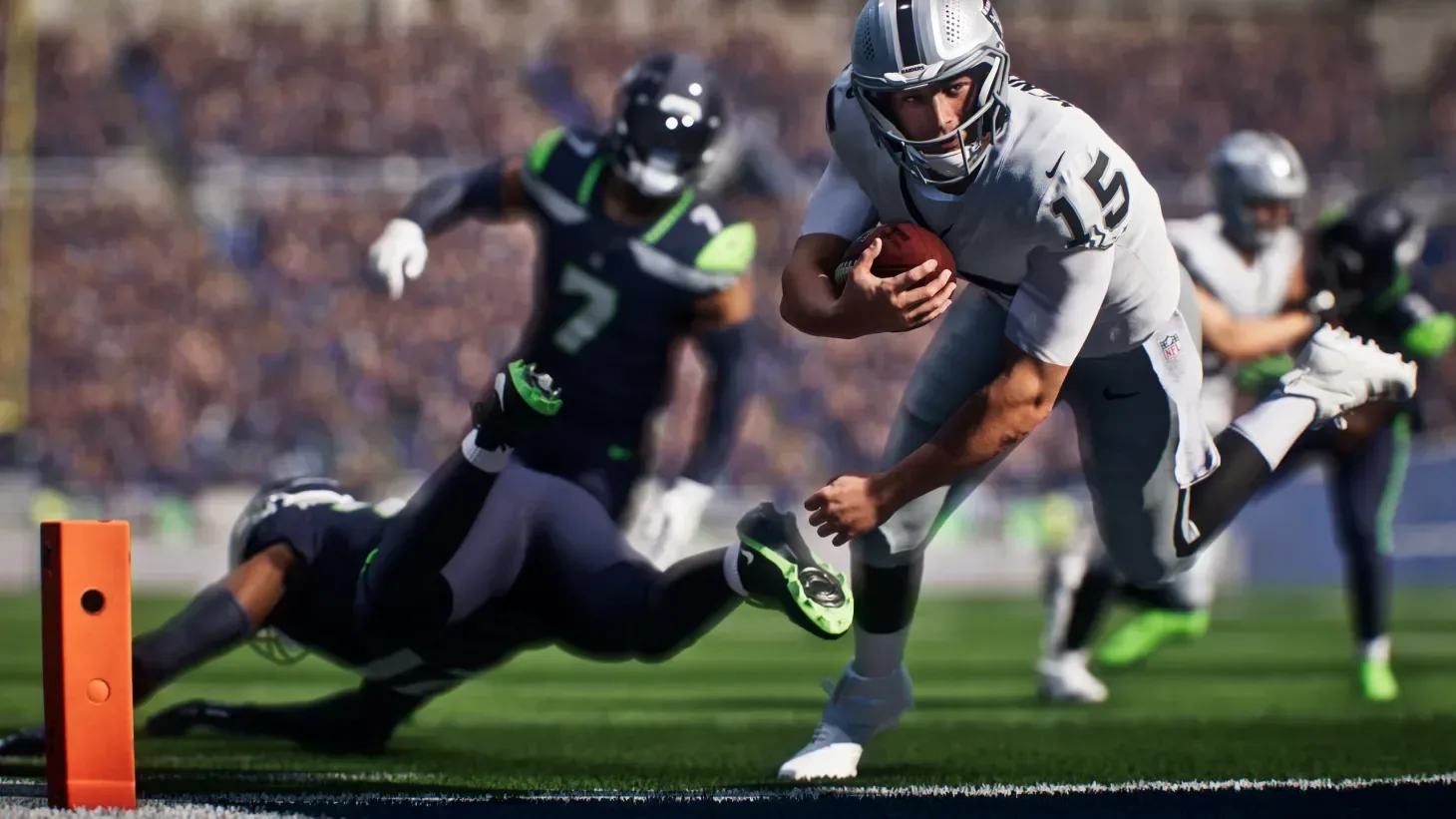
Madden NFL 27 has no trouble demonstrating why the series remains compelling when the ball is snapped. A well-timed run through a narrowing lane, a contested reception secured at the last possible second, or a defensive back batting away a pass can create the kind of spontaneous drama that football games live for. The core action has a satisfying weight, and several refinements make individual downs feel more alive. Yet the game's larger ambitions do not land as consistently. Madden NFL 27 takes sizable swings at Franchise and Ultimate Team while making smaller changes to Superstar, but its most promising ideas are often constrained by opaque logic, repetitive structures, or needless monetization.
The result is a solid but frustratingly uneven entry. It can absolutely deliver a memorable Sunday-afternoon highlight, particularly for players who mainly want to play games on the field. Those hoping to build a believable NFL organization over many seasons, inhabit the career of a rising star, or avoid a long progression grind will find more reasons to question the package. Madden NFL 27 moves forward in places, but it still falls short of becoming an essential, all-encompassing football simulation.
The on-field game remains Madden's strongest asset
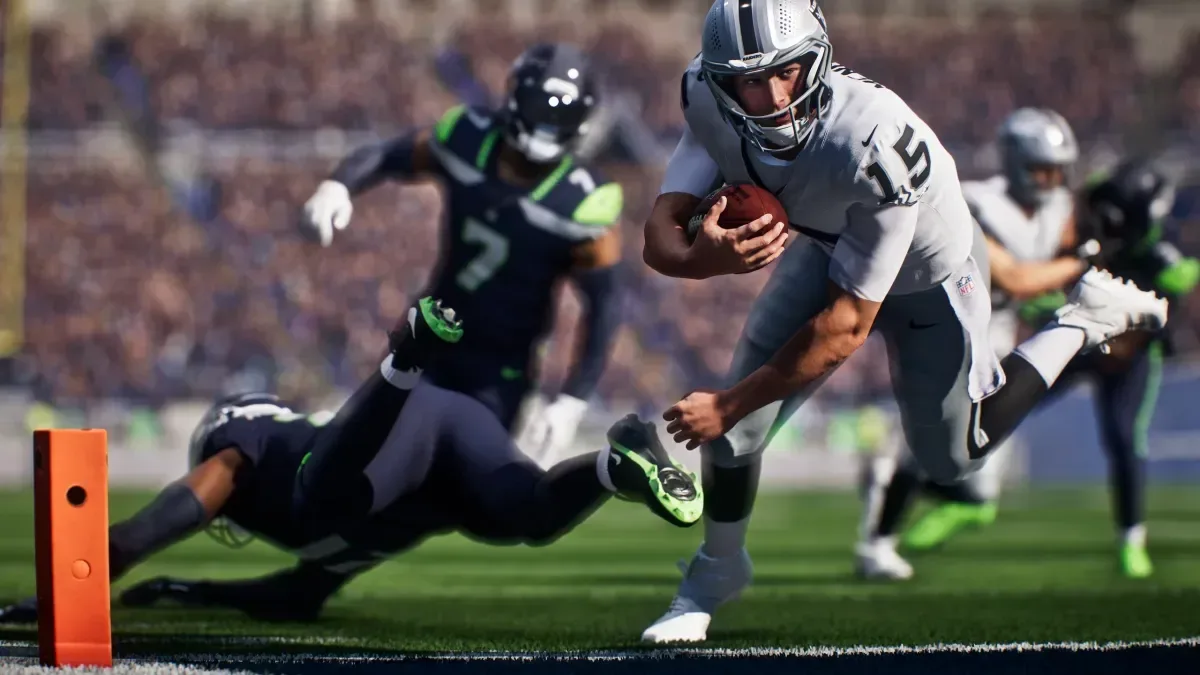
At its best, the gameplay supplies the immediacy and tension that the surrounding modes sometimes lack. The running game feels satisfying on the sticks, giving ball carriers a sense of control as they seek daylight, cut into space, and fight for additional yardage. This responsiveness matters because football's best virtual moments depend on split-second choices. When a hole opens briefly and a runner reaches the second level, Madden NFL 27 can make the player feel responsible for turning an ordinary call into a drive-changing gain.
Animations also frequently sell the sport's physicality. Players move and collide in ways that can look convincingly natural, helping individual snaps feel less mechanical. Football games need more than attractive presentation, of course, but believable animations support the moment-to-moment illusion that every route, tackle, and scramble is part of a living contest rather than a string of disconnected inputs.
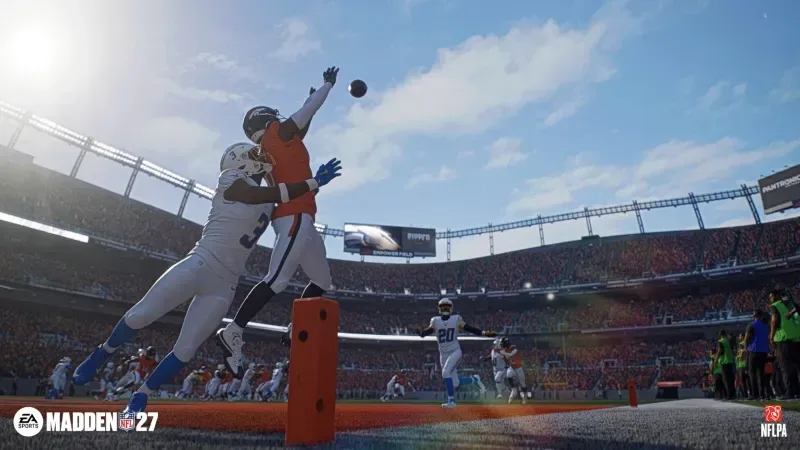
The most notable gameplay addition is an optional catch meter adapted from College Football. Used alongside improved interplay between receivers and defensive backs, it adds another layer of tension to passing plays. Getting the timing right on a difficult throw can make a reception feel earned, while a properly played breakup becomes just as satisfying on defense. The system is optional, which is important for players who prefer the more familiar approach, but it gives those seeking additional involvement a meaningful tool rather than a superficial new button prompt.
These passing-game changes are especially effective in contested situations. Receivers and defenders more often appear to be competing for the football instead of simply triggering a predetermined outcome. That does not make every play perfect, but it does create more instances where a throw into tight coverage feels risky for the right reasons. Aggressive CPU defenses further contribute to that pressure, forcing offenses to respect the secondary and make sharper decisions.
There is one major caveat: play-action passes currently expose quarterbacks too often. The protection can break down so quickly that the quarterback is blasted before the play has a fair chance to develop. Play action should carry risk, but it also needs enough time for its deception and route concepts to function. In its present state, this issue can discourage calls that ought to be part of a varied offensive playbook. It is an area that would benefit from tuning.
Franchise has more moving parts, but not enough clarity
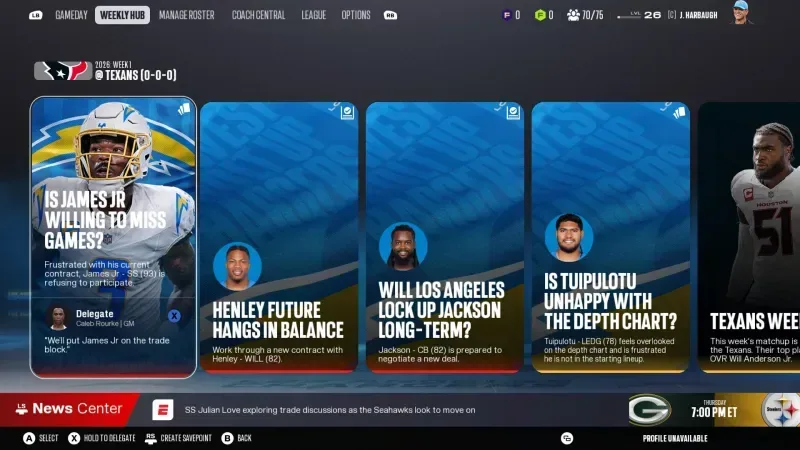
Franchise mode receives the year's biggest push through the new Persona Engine. The idea is appealing: CPU players should display more individual personality, leading to teams that behave less generically and negotiations that feel more like a genuine back-and-forth. Madden NFL 27 also adds more options during contract talks, player-centric events to address, and news flashes intended to keep the broader league active in the player's mind. On paper, these systems aim directly at a long-standing desire for a livelier league-management experience.
Unfortunately, the execution often feels unreliable. Player DNA tags can shift from one negotiation round to the next in baffling ways. A player may treat total salary as a critical concern at one point, only for that priority to change later. Instead of presenting a believable negotiation, these reversals can make it feel as though the rules are moving without explanation. The result is less like managing personalities and more like trying to decode a system that will not clearly state its conditions.
Each round offers five pitches to use in the discussion, but those pitches appear in a similar pattern. That structure can be needlessly restrictive. A general manager might want to increase a bonus or address one specific concern, only to find that choice arbitrarily unavailable in the current round. Limited options can create tension when they reflect a player's stated demands or a strategic compromise. They are more irritating when they simply prevent a logical offer from being made.
The foundational issues are even more damaging. CPU teams still struggle to manage the salary cap and draft effectively, while simulated statistics can become strange enough to weaken the credibility of a multi-season league. The new Free Agent Frenzy is intended to make the signing process more exciting, but it quickly loses momentum because it behaves like a black box. Players can inexplicably sign elsewhere regardless of the contract offered, leaving too little visible cause and effect for a mode built around decisions.
There are glimpses of a better Franchise here. Reacting to player-driven developments and tracking league news gives the mode more texture than a bare sequence of menus. Even talking a player out of retirement can be a satisfying surprise. But such moments are too rare to establish sustained NFL drama. The mode is clearly taking steps in a better direction, yet its logic is still too confusing and its league behavior too inconsistent to fulfill the fantasy of serving as a coach and general manager.
Superstar needs a more convincing career arc
The career-focused Superstar mode makes fewer substantial changes. Players can now take the field as a tight end, safety, or edge rusher, broadening the position selection. Even so, quarterback and running back remain the strongest choices for the overall experience. Those positions are better suited to Madden's structure and offer more opportunities to influence each game directly.
As a Superstar's standing with the team grows, the ability to influence free-agent signings is a genuinely enjoyable reward. It creates a sense that success can translate into organizational influence, not merely ratings gains. That kind of feature points toward the deeper sports-career fantasy the mode should embrace.
However, Superstar still does not consistently make a player feel as though they are living an NFL career. Its objectives fail to evolve enough as seasons pass, which means the emotional rhythm of advancement, setbacks, role changes, and growing expectations never takes shape. Once the goals for a game are complete, much of the storytelling energy stops. A career mode needs changing stakes and a sense that the player's place in the league is developing; Madden NFL 27 offers only fragments of that journey.
The inclusion of an optional battle pass and multiple in-game currencies is also difficult to accept in a fully priced, offline-focused mode. Even when participation is not mandatory, that framework adds monetization friction where a career experience should prioritize immersion and progression.
Ultimate Team expands customization, and the grind
Ultimate Team contains arguably the most consequential systemic changes. Evolutions allow players to improve cards through purchases, while customizable captains and objective-based upgrades give roster construction more flexibility. These additions should help chosen cards remain useful for longer rather than becoming obsolete immediately as the progression curve advances. For players invested in tailoring a squad around favorite athletes, there is real value in having more control over who develops.
The compromise is that attribute boosts from skill points are randomized within defined buckets. Re-rolling those upgrades costs UT Coins, the free in-game currency, but the arrangement still creates a resource sink as players hunt for desirable attributes such as speed. This can make progression feel less like deliberate team building and more like chasing the best possible roll. The new systems deepen customization, but they also risk deepening the grind and reinforcing the familiar race toward the dominant meta.
Who should play Madden NFL 27?
Players who prioritize head-to-head games, quick exhibition matchups, and the immediate feel of football will find the clearest reasons to play Madden NFL 27. The running game, catch meter, physical receiver-defender battles, and generally strong presentation of individual plays can create excellent action. Dedicated Ultimate Team players may also appreciate the broader tools for keeping preferred cards relevant, provided they are comfortable with the associated progression chase.
Players whose main priority is a robust long-term Franchise should approach with more caution. The Persona Engine and added events offer potential, but broken-feeling negotiation behavior, questionable CPU roster management, inconsistent simulations, and unclear free agency limit the mode's appeal. Superstar is likewise best treated as a secondary diversion rather than a fully realized career experience.
Final takeaway
Madden NFL 27 understands how to make a single football play matter. Its strongest sequences are tense, responsive, and visually convincing, and the optional catch meter is a worthwhile addition to the passing game. But a modern sports game needs its major modes to carry that energy beyond the whistle. Franchise has more ideas than coherence, Superstar has more positions than personality, and Ultimate Team's expanded customization comes with further incentives to grind. Madden NFL 27 is a step forward on the field, but its broader season remains stuck in third and long.
Community
Discussion
Start the conversation.
No comments have been posted yet.