

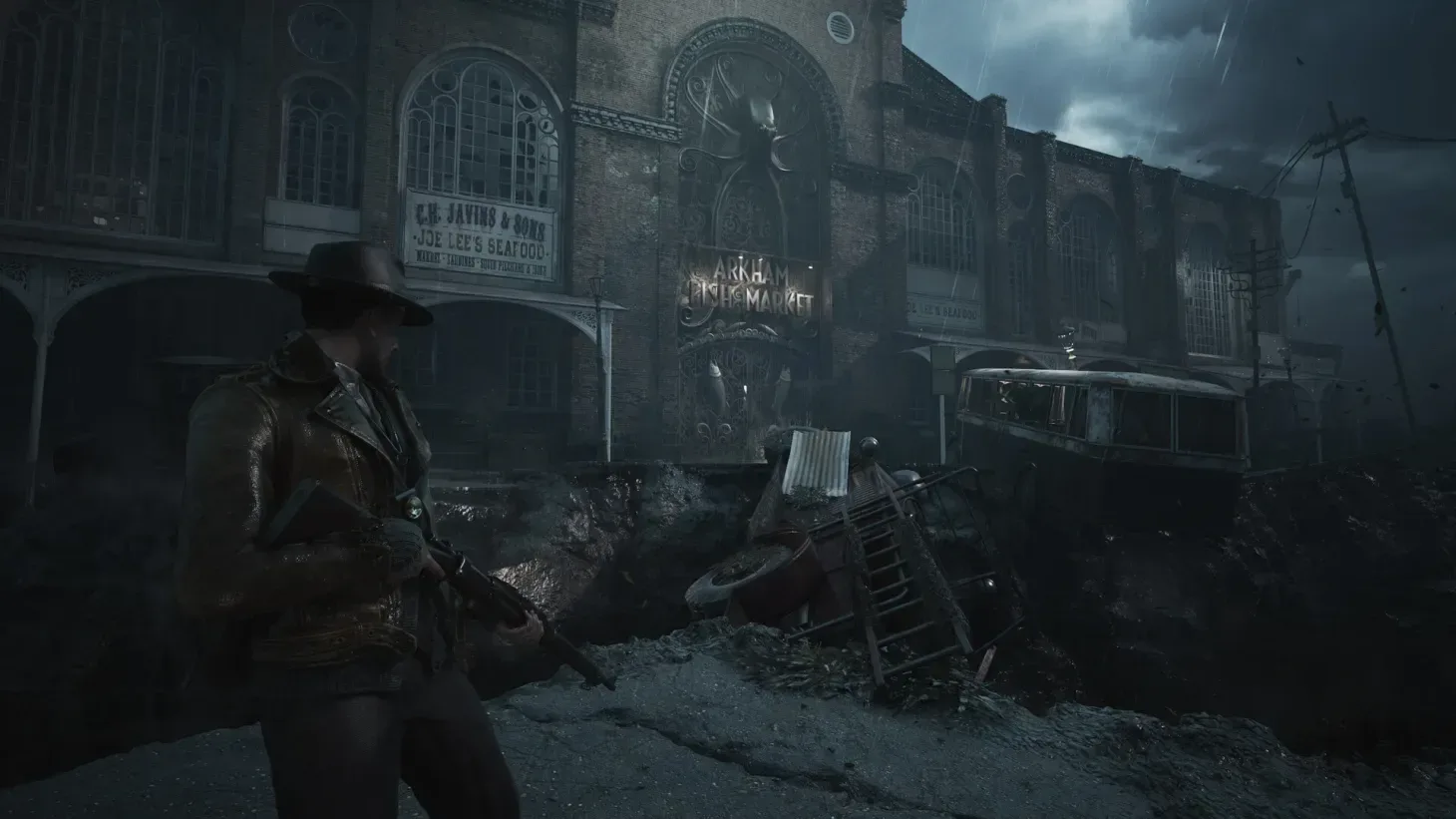
The Sinking City 2 understands the value of a dreadful first impression. Its flooded vision of Arkham is thick with rotting architecture, supernatural decay, and the unsettling sense that the city has been abandoned by ordinary reality. It is an immediately arresting place to explore, whether Calvin Rafferty is steering a motorboat down drowned streets or entering a building where the walls, inhabitants, and logic of the world seem equally diseased. That atmosphere gives this PlayStation 5 survival-horror adventure a real pull. Unfortunately, the game surrounding it is less assured. While its puzzles and individual locations often make a persuasive case for the sequel, familiar but unsatisfying combat, restricted character growth, and a story that never develops its best ideas leave it stranded below the genre's leading examples.
Verdict: An effective scare fest with uneven foundations
The Sinking City 2 is a standalone follow-up to 2019's The Sinking City, despite the numerical title. Newcomers can step into its story without needing prior knowledge, as the focus is now on Calvin Rafferty rather than the earlier game's protagonist. That makes the sequel accessible, and its central premise has the right kind of melodramatic Lovecraftian energy: Calvin is attempting to save Faye, his lover and a university professor, from a supernatural sleep. Early events separate Faye's soul from her body, leaving her to accompany Calvin as a spirit while the pair search Arkham for her stolen physical form.
It is a premise that could have supported a more emotionally involving journey. Both leads receive solid performances, and the literal partnership between Calvin and Faye occasionally gives the adventure a distinctive supernatural flavor. Yet the writing does little to deepen either character beyond their devotion to one another. Calvin repeatedly defines himself through his love for Faye, but he rarely becomes more interesting because of it. The game wants the relationship to be the emotional anchor for its cosmic-horror mystery, but it does not provide enough texture, conflict, or revelation to make that anchor feel secure.
The surrounding cast has similar unrealized potential. Arkham contains people and creatures with concepts vivid enough to demand attention, including an unnerving doctor with worms for eyes and a sharp-tongued fish-woman bound to her own office for ominous reasons. These are exactly the kinds of strange figures that should make a Lovecraft-inspired setting memorable. However, they are not given enough time or development to become more than intriguing stops along Calvin's route. The broader mystery remains serviceable, but it is difficult to become fully invested when so much of the cast feels introduced rather than explored. The story's final act also arrives abruptly, cutting short a tale whose earlier pacing suggests a more deliberate destination.
Arkham is the game's greatest creature
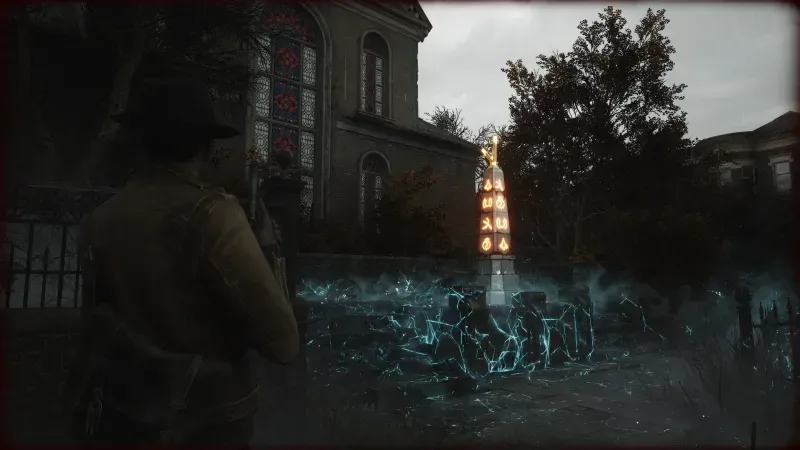
If the narrative struggles to make its people compelling, the city itself more than carries its share of the mood. Flooded Arkham is The Sinking City 2's greatest accomplishment. Its art direction is alluring even when it is deliberately grotesque, turning ruined streets and corrupted interiors into places that are unpleasant to inhabit but difficult to stop looking at. The contrast between navigating the open, submerged city by motorboat and pushing through claustrophobic buildings gives the game a useful rhythm.
The sound design is equally important to that unease. It creates the kind of tension that can turn a quiet hallway into a threat and supports the game's well-timed shocks. This is a world where the unknown is frequently more unnerving than the monsters themselves, and the audio work helps sell every distant disturbance, lurking presence, and sudden scare.
The most satisfying areas are the major interior locations, particularly the hospital and fish market. These labyrinthine spaces provide the clearest survival-horror pleasures: locked doors that demand a key, blocked routes that require a found object, and puzzles that gradually reveal the logic behind an area's twisted layout. The design may be built from well-established genre components, but those components still work when arranged with care. These locations reward attention and give exploration a purposeful momentum that the broader story sometimes lacks.
Puzzles offer the most reliable rewards
Puzzle-solving is consistently the sequel's strongest mechanical asset. Challenges offer a satisfying middle ground between straightforward busywork and frustrating obscurity. There is enough variety to make each new riddle feel welcome, whether it involves locating objects, interpreting environmental clues, or connecting evidence through an investigation board. The process of gathering information and stitching together an answer gives the game a pleasant detective-game texture without overwhelming its survival-horror identity.
The investigation elements are especially suited to Arkham's strange setting. Reading lore notes and listening to a radio DJ deliver bizarre, anthology-like stories that make the city feel broader than Calvin's immediate mission. These details provide some of the world-building that the main cast and plot do not always supply. They also reward players who want to linger in the setting rather than sprint from one objective marker to the next.
Exploration can grant useful items, additional inventory capacity, weapon attachments, and Dream Essence, the resource connected to the game's perk system. On paper, this creates a strong incentive to investigate optional mysteries and seek out special chests. In practice, the rewards are uneven because the progression system makes surprisingly little of that effort.
Combat follows familiar footsteps without the same impact
When the horrors of Arkham attack, The Sinking City 2 moves into over-the-shoulder gunplay that closely follows modern survival-horror conventions. It includes Tetris-like inventory management, crafting, a map that updates regularly, collectible weapon enhancements, and a steady economy of ammunition and supplies. Those ideas are competently reproduced, but combat rarely feels as polished or forceful as the games it resembles.
Gunfire lacks satisfying weight, even with weapons such as the shotgun and rifle. Explosive gas canisters should offer a useful burst of crowd control and spectacle, but their explosion effects and blast radius are underwhelming. Weapon attachments can improve effectiveness, yet the upgrades often feel negligible against creatures that absorb an irritating number of shots. Even aiming for their bulbous, glowing weak points does not always make encounters feel efficient or rewarding.
Enemy behavior further exposes the rough edges. Calvin moves slowly and deliberately, while some opponents are fast, nimble, and eager to attack from behind. The absence of a quick 180-degree turn becomes especially frustrating in close quarters, where the game regularly places multiple threats around the player. Dodging projectiles from foes that spit deadly goo with uncanny precision, while also keeping leaping spider-like enemies in view, turns many fights into a stressful scramble for room to breathe. Pressure is valuable in survival horror, but these situations can feel cheap when the controls do not provide a swift answer to frequent flanking.
The enemy roster also runs out of surprises too soon. Arkham may be flooded with eldritch corruption, but its hostile population is relatively shallow. With only a small collection of creature types, combat becomes overly familiar around the halfway point of the roughly 13-hour campaign. Stronger encounter design and more varied threats could have made the existing mechanics feel fresher for longer.
A progression system that limits experimentation
The Dream Essence system is perhaps the game's most confusing design decision. Completing puzzles and other activities grants the resource, which can be spent either on individual perks or on unlocking one of three slots used to equip them. Individual benefits, such as damage reduction or faster reloads, may cost only a couple of points. Unlocking a perk slot, however, costs 10 points.
That structure initially implies a meaningful build system: collect enough Dream Essence, unlock more slots, and tailor Calvin's abilities to a preferred approach. Instead, Dream Essence is scarce enough that even thorough exploration does not result in much flexibility. Solving most optional mysteries and finding many special chests still leaves too little room to unlock a satisfying range of perks and equip them. The result is an awkward choice between owning many perks but using only one, or opening three slots for a very limited selection of abilities.
More importantly, the perks do not substantially transform combat or survival. Calvin can finish the standard difficulty without feeling underpowered, but that also makes the restricted system seem less meaningful. A progression structure that appears to encourage experimentation ultimately delivers little reason to pursue varied builds.
Who should visit flooded Arkham?
The Sinking City 2 is best suited to players who value atmosphere, environmental storytelling, and classic survival-horror puzzle-solving over exceptionally responsive action. Fans of Lovecraftian imagery will find plenty to admire in its waterlogged cityscape, grotesque designs, unsettling audio, and uncanny bits of lore. Those who enjoy carefully searching elaborate buildings for keys, clues, and puzzle components should find the hospital, fish market, and similar spaces especially worthwhile.
Players seeking exceptional combat, a deeply layered upgrade system, or a character-driven horror story may want to temper expectations. The game has all the recognizable parts of a contemporary third-person survival-horror experience, but it does not always match the confidence or refinement of stronger entries in that crowded field.
Final takeaway
The Sinking City 2 earns its scares through setting more often than systems. Flooded Arkham is a beautifully grim place, its major levels are enjoyable to unravel, and its puzzles provide a steady stream of satisfying discoveries. Those strengths make the adventure worthwhile for the right horror audience. But the thin characterization, sudden ending, bullet-spongy enemies, limited creature variety, and restrictive perk economy keep the sequel from fulfilling the promise of its compelling world. It is a decent and occasionally memorable descent into cosmic horror, yet one whose best ideas never fully break the surface.
Community
Discussion
Start the conversation.
No comments have been posted yet.