

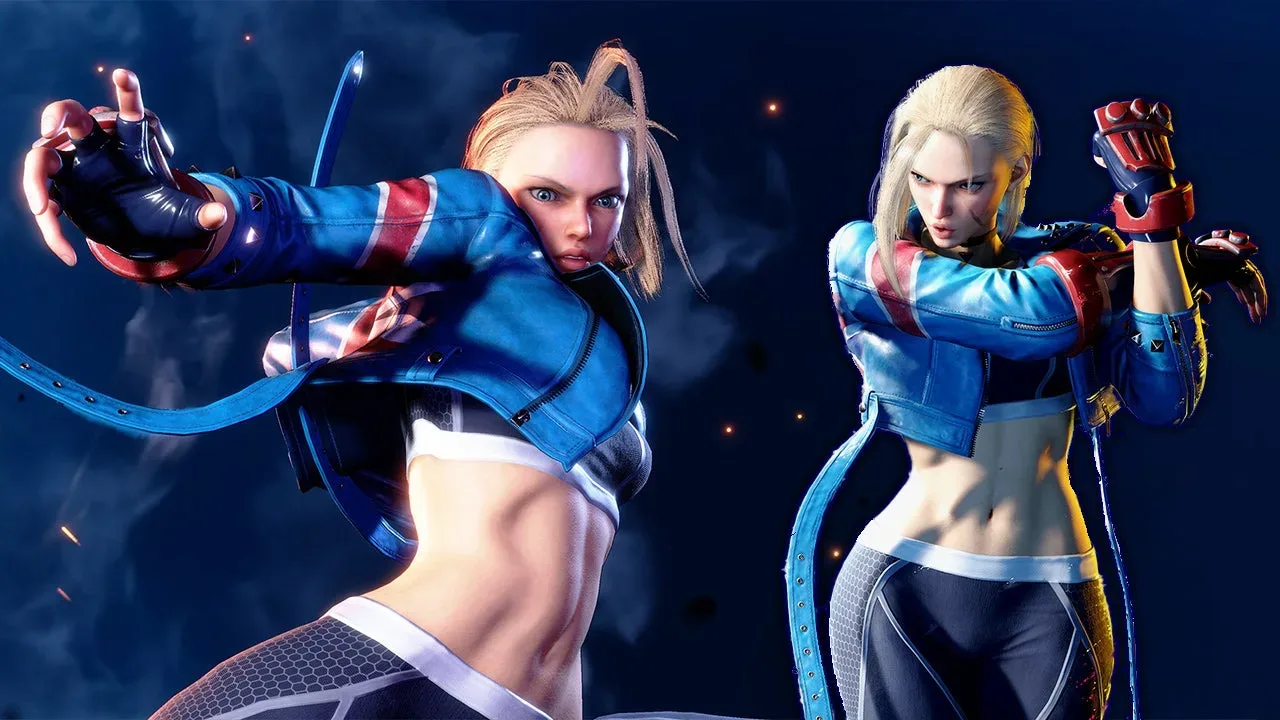
The latest Street Fighter film is clearly willing to take broad liberties with Capcom's fighting-game universe. Its tone is intentionally exaggerated, its characters are pushed into heightened comic-book territory, and familiar names do not always arrive with the exact personalities players may expect. Even with that flexibility in mind, one adaptation choice has become an especially contentious subject among fans: the movie's version of Cammy.
Mel Jarnson plays the character, who remains connected to M. Bison and operates as one of his most capable enforcers. That baseline is not inherently at odds with Cammy's history. In the games, Cammy's story is deeply tied to Bison, Shadaloo, and the organization's program of creating and controlling fighters known as the Dolls. The concern from viewers is not simply that the film places Cammy at Bison's side. It is the way she behaves while she is there.
Rather than the controlled, guarded, mission-focused soldier many players know from the games, the film gives Cammy a more provocative, erratic, and openly theatrical presence. She can be commanding and intimidating, but also flirtatious, prone to bursts of emotion, and presented with a chaotic energy that some fans feel belongs to an entirely different character. The result has prompted a vocal debate over whether the movie has made a purposeful reinterpretation or reduced one of the series' most distinctive fighters to a mismatched collection of traits.
Embedded X/Twitter post
Cammy's game history makes the change feel particularly sharp
Cammy has been a major part of Street Fighter since Super Street Fighter II. Across the series, she has developed from an initially mysterious combatant into a central figure in its wider story. Her past is rooted in Shadaloo's control: she was one of Bison's Dolls, young women manipulated and brainwashed into serving the criminal organization. Much of Cammy's character arc revolves around escaping that programming, rebuilding an identity of her own, and fighting against the man and institution that treated her as a tool.
For useful background on this topic, read Castlevania: Belmont's Curse Team Embraces the Rise of Its 'Hot Dads'.
That history gives an adaptation ample dramatic material. A Cammy still under Bison's influence could be a tragic antagonist, an elite operative whose behavior is shaped by conditioning rather than genuine loyalty. It could also establish a path toward a later break from Shadaloo, bringing her closer to the hardened, self-directed hero familiar to players.
The new movie appears to be working from that earlier stage of her life. Cammy is positioned as Bison's right hand and, unlike many figures around him, does not merely cower under his authority. She carries out orders, controls scenes when she enters them, and has enough confidence to stand apart from the more openly frightened members of Bison's orbit.
For some viewers, those qualities at least preserve an important part of the character: Cammy is dangerous, highly trained, and not easily dismissed. However, the performance and writing take that core in a direction many fans find difficult to reconcile with the game version. The film's Cammy is not simply colder or more villainous. She is unusually seductive, has moments of wild emotional expression, and even flirts with Chun-Li. That combination has become the focal point of the criticism.
Viewers see echoes of Juri rather than Cammy
One recurring reaction is that the film seems to have transferred qualities associated with Juri Han onto Cammy. Juri, introduced years after Cammy, is one of the franchise's most gleefully cruel and unpredictable combatants. Her taunting, sadistic edge and playful menace make her a natural fit for the kind of unruly villain energy that the film's Cammy displays.
But Juri's own relationship to Bison makes such a casting of roles complicated. She is not a natural Shadaloo subordinate and is fundamentally opposed to Bison. If the movie is focused on an earlier Street Fighter II-leaning setup, Juri also sits outside the era from which it is drawing much of its material. Fans have therefore speculated that the production may have wanted an antagonistic wild card in the mix but instead placed a version of that archetype onto Cammy.
The comparison is not just about attitude. Cammy's conventional game portrayal is often restrained. She is serious, direct, and emotionally contained, especially in comparison with the franchise's more flamboyant personalities. Her confidence comes from discipline and combat ability, not from unpredictability or overtly chaotic behavior. Even when her stories explore memory loss, manipulation, and trauma, they generally treat those elements as part of a journey toward agency.
By contrast, the movie's take has been described by dissatisfied fans as a kind of hybrid: Cammy's appearance and affiliation mixed with a personality closer to Juri's, plus an exaggerated comic-book villain quality that has drawn comparisons to Harley Quinn. Some viewers have also questioned individual choices in the performance, including sudden angry outbursts that feel disconnected from the controlled operative they expected.
The core criticism is not that Cammy was allowed to be an antagonist. It is that her mannerisms, motivations, and emotional texture seem to have been replaced rather than reinterpreted.
Mel Jarnson's comments leave room for a different future
There may be an in-universe explanation for why this Cammy is so unlike the character many players recognize. Jarnson has indicated in a recent interview that the movie's Cammy is mind-controlled, like the other Dolls. That detail is crucial because it suggests the more erratic personality may not be intended as her authentic self.
If a sequel follows through on that setup, Bison's control being broken could create a major turning point. Cammy could emerge from Shadaloo's influence and shed some of the mannerisms that currently frustrate fans, allowing the series to move toward a more recognizable interpretation. The contrast between an artificial persona created through manipulation and the disciplined soldier who reclaims her autonomy could even become a useful dramatic foundation.
At present, though, that possibility remains speculative. The film itself does not spend much time unpacking Cammy's condition or giving viewers a detailed exploration of her internal conflict. For audiences encountering this version without additional context, the character is defined primarily by what she does on screen: serving Bison with self-assurance while displaying a personality far removed from her usual game depiction.
That leaves fans judging the version that exists now rather than the one a future installment might reveal. Potential sequel development can explain a reinterpretation later, but it does not automatically make an abrupt first impression satisfying. Cammy has a long history and a particularly meaningful arc within the franchise, so changing her before establishing the elements that make her compelling carries more risk than it might for a minor supporting fighter.
A broader question about adaptation versus recognition
The Cammy debate also speaks to a larger challenge facing video game adaptations. Faithfulness does not require recreating every line of dialogue, costume detail, move set, or storyline from the games. Film and television versions need room to adjust pacing, merge plot threads, and build new character dynamics. A direct transcription can be as limiting as an adaptation that ignores its source altogether.
However, audiences still tend to expect a recognizable emotional center. Chun-Li should retain something essential about Chun-Li, just as Bison, Ryu, Guile, and Cammy need more than their names or silhouettes to register as themselves. Cammy's sense of reserve, her military focus, and her struggle to take back control of her life are not superficial details. They are among the traits that have made her endure across multiple eras of Street Fighter.
The new movie is not alone in bending those expectations. It treats several members of its ensemble with a deliberately loose hand, matching a story that is not aiming for strict simulation of game continuity. Yet Cammy's changes stand out precisely because the adaptation alters both her role in the story and the behavior that defines her. The film retains the Shadaloo connection while changing the personality that makes that connection emotionally significant.
Why the reaction matters for Street Fighter's future on screen
Whether viewers enjoy the movie's campier approach or find it frustrating, the response to Cammy offers a useful measure of where adaptation boundaries lie for the series' audience. Fans can accept alternate timelines, expanded action, and unexpected pairings. They may even welcome characters being introduced from a new angle. But a reinvention needs to preserve enough of a fighter's identity that the name still carries its established meaning.
For now, Jarnson's Cammy is one of the film's boldest departures: formidable and memorable, but deeply divisive. The mind-control angle means there is still a plausible route toward the Cammy players know--a survivor of Bison's system rather than a willing extension of it. Until that transformation happens on screen, though, the character will likely remain a flashpoint for fans who see less of Capcom's stoic special operative and more of a role designed for somebody else.

Community
Discussion
Start the conversation.
No comments have been posted yet.