

Warhammer Age of Sigmar has built much of its identity on taking familiar fantasy ideas and pushing them somewhere unexpected. Its duardin have been a particularly clear example of that approach. The Kharadron Overlords turned dwarves into airborne privateers supported by balloon technology, rifles, and floating warships. Fyreslayers became near-bare-chested mercenaries whose devotion to their god is expressed through molten runes hammered into their flesh. Even alongside the game's sea-riding Idoneth Deepkin and other stranger forces, these factions have made Age of Sigmar's dwarves feel distinctly unlike the default fantasy template.
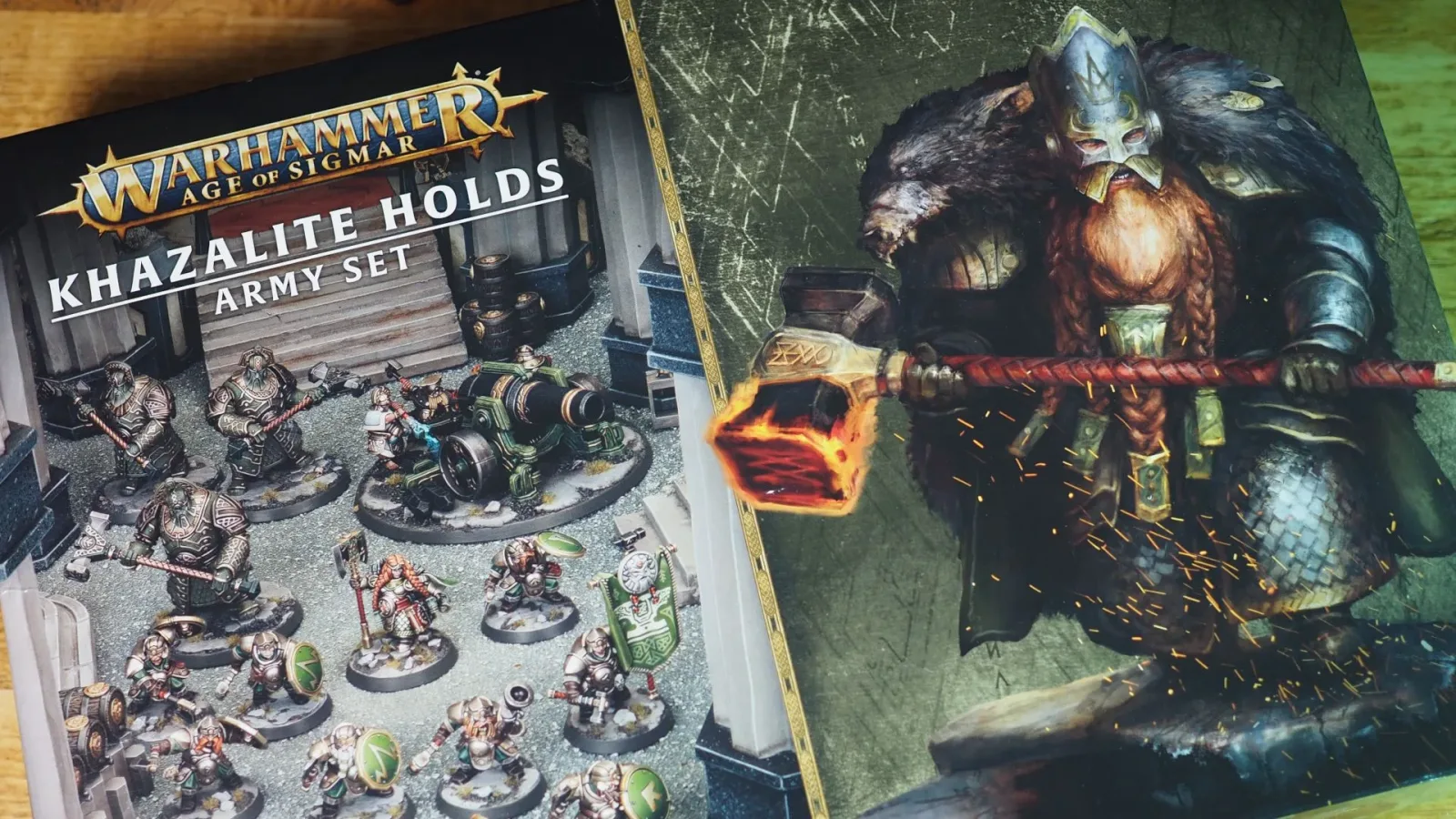
The newly revealed Khazalite Holds move in a different direction. They are heavily armored, stubborn, clan-focused duardin with formidable artillery, ancient grudges, and a visual connection to fantasy dwarves of old. For many hobbyists, that will be exactly the point. The miniatures look excellent, their army rules are built around a strong thematic concept, and the initial box contains a compact force that should make an imposing sight on a gaming table.
Yet the arrival of the Khazalite Holds also invites a larger question about the direction of duardin in Age of Sigmar. A return to a more recognizable form of dwarf fantasy is welcome, especially when the execution is this polished. But it also risks making the game's dwarf range feel more conventional at a time when the setting has been at its most memorable by embracing the unusual.
A polished return to classic dwarf fantasy
There is little doubt that the Khazalite Holds capture the core appeal of traditional dwarves. These are stocky warriors in layered armor, built to stand their ground and keep standing after almost anything has hit them. Their equipment and visual language emphasize craftsmanship, resilience, oaths, and the communal identity of a hold. Rather than simply repeating older dwarf designs, though, the new range appears to update them with sharper silhouettes, more movement, and more elaborate surfaces.
For useful background on this topic, read GTA 6 trailer blur Sparks Fresh Debate Over Visual 'Downgrades'.
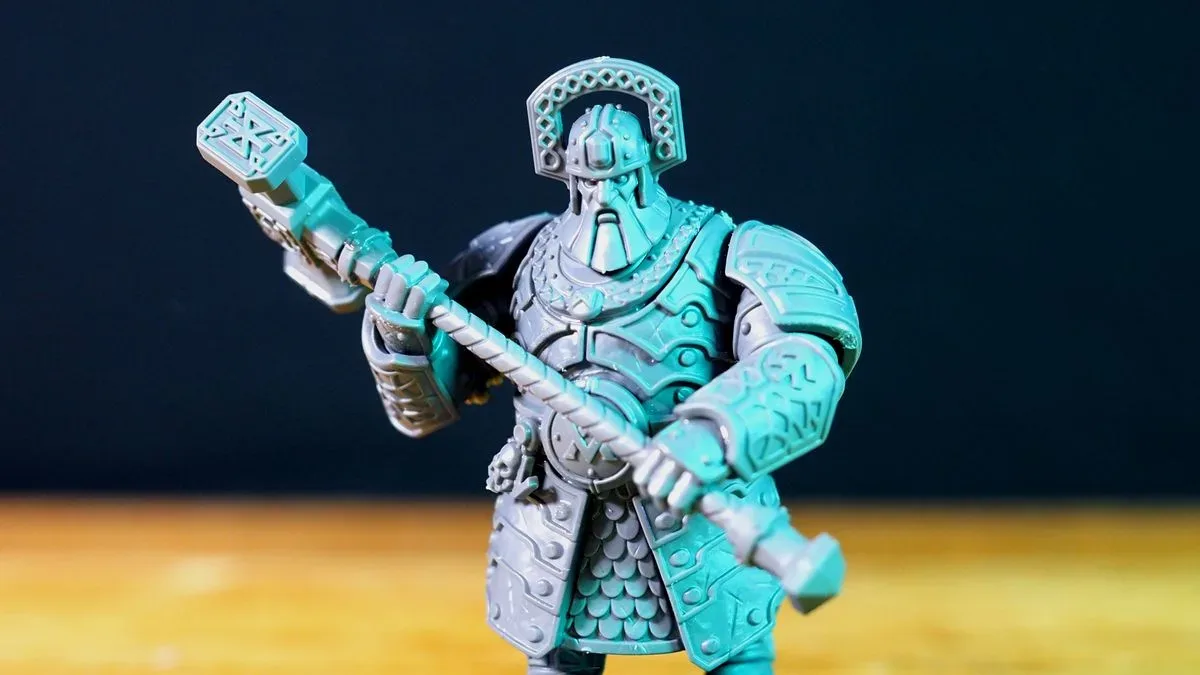
The armor is one of the faction's standout elements. It has enough of a distinct identity to avoid looking like a direct reissue of older Warhammer dwarf kits, but it still carries the visual weight players expect from duardin. The result feels like a bridge between the classic Warhammer dwarves and the Dwarf Warriors of the Middle-earth Strategy Battle Game. It is familiar, but not static.
That balance is especially important for an army that leans so openly on one of fantasy's oldest archetypes. Dwarves are easy to reduce to axes, beards, tunnels, and bad tempers. The Khazalite Holds seem to understand those expectations without being trapped by them. The poses are more dynamic than the rigid rank-and-file dwarves many longtime players may remember, while the armor and war machines establish an identity rooted in expert smithing rather than generic medieval fantasy.
The army's mechanical creations are particularly striking. The Gholems of Gazul and Valaya take the old idea of dwarf engineering and give it a grand, supernatural presence. They are not merely armored constructs; they look like the kind of creations that would emerge from a culture that treats craft as both practical work and sacred inheritance. On the tabletop, they should offer visual variety amid the infantry-heavy core of the force.
Then there is the artillery. The Oathkeeper Cannon, which can also be built as a Stonebreaker Mortar, appears designed as more than a simple gun platform. It functions as a small scene in miniature form, with enough detail and character to serve as a centerpiece for a larger army. For painters, that kind of model matters. A cannon can become the place to show off weathering, metallic effects, glowing runes, clan markings, and the accumulated grime of a battlefield campaign.
What comes in the Khazalite Holds Army Set
The Khazalite Holds Army Set is available to pre-order ahead of its October 31, 2026 release. It includes a full Spearhead force, making it a substantial launch point for players who want to take the faction straight into Age of Sigmar's smaller-format mode as well as expand toward the full game.
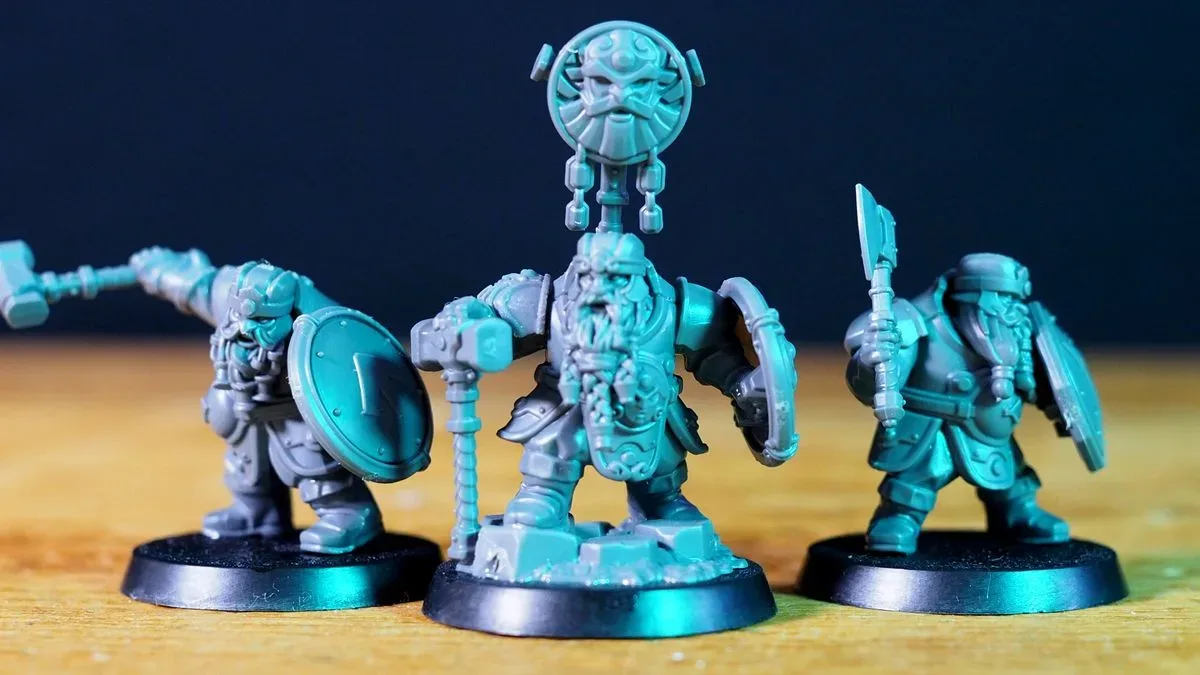
- 10 Clanshields warriors
- Three Gholems of Gazul or Valaya
- An Oathkeeper Cannon or Stonebreaker Mortar
- The hero Hjulda Drakkblud
It is a strong selection because it communicates the army's intended identity immediately. The Clanshields form the disciplined foundation, the Gholems provide a more elite and imposing presence, the artillery supplies long-range support, and Hjulda Drakkblud gives the force an individual focal point. It is not a subtle army concept: these duardin are here to absorb punishment, occupy ground, and respond with brutal force.
The set should also appeal to hobbyists who value cohesion. Every component reinforces the same idea of an entrenched hold marching to war with its ancestral craft and collective pride intact. There is room for personal color choices and hold iconography, but the models appear to look convincing as a unified formation even before painters add elaborate freehand work or scenic basing.
Grudges are more than flavor text
The Khazalite Holds' rules seem to be one of the most convincing parts of the release. Age of Sigmar is often at its best when an army's battlefield mechanics express its lore rather than merely providing a detached list of bonuses. The new duardin do this through grudges.
In practical terms, the army grows more dangerous as it suffers losses. That is a fitting translation of the classic dwarf trait: harm one member of the hold, and the rest remember. The idea that a force becomes increasingly determined after losing warriors gives the Khazalite Holds an appealing sense of momentum. Opponents cannot simply assume that weakening the army will make its remaining units easy to clear away.
This is particularly suitable for a faction centered on endurance. The Khazalite Holds are expected to excel at holding objectives, and their stubbornness is not just a narrative label. Their battlefield plan appears to revolve around claiming an important position, refusing to abandon it, and punishing the enemy for every casualty they manage to inflict.
That does not necessarily mean the army will be fast or flashy. Quite the opposite: its identity is based on steady, reliable pressure. The Khazalite Holds look like a force that advances with the inevitability of a landslide. It may not reach every part of the battlefield quickly, but once it is planted on a key objective, shifting it could require a major commitment.
The war machines add another layer. The Oathkeeper Cannon can use different rune effects that debuff enemies on a 3+ in both full Age of Sigmar games and Spearhead battles. Meanwhile, the Gholems look positioned to threaten infantry in either format. Together, they ensure that the army is not solely defensive. A durable objective holder is one thing; a durable objective holder with magical artillery effects and powerful constructs is another matter entirely.
The uneasy question of duardin consolidation
For all the excitement surrounding the new miniatures, the Khazalite Holds arrive with a potentially complicated piece of faction history. They have absorbed the previously separate Fyreslayers army. The pairing makes sense at a glance. Both are duardin, both have close connections to fire, metal, oaths, and martial endurance, and the existing Fyreslayer range still appears to remain available.
However, the move naturally creates concern about what may happen next. Age of Sigmar's lore has established the unification of dwarf forces beneath one banner as a long-term aspiration. If the Khazalite Holds are the first major step in that direction, players may wonder whether the Kharadron Overlords could someday be brought into the same book as well.
A combined duardin faction could be exciting in theory. It could allow players to field armored hold warriors beside Fyreslayer berserkers and skyfaring Kharadron units, creating a broad roster that reflects a united people. It might also offer narrative opportunities for alliances that have been difficult to represent in a single army.
But consolidation always comes with a practical risk: range cuts. A massive book containing three formerly distinct armies would have a great deal of ground to cover. If a future edition seeks a cleaner or smaller roster, some units could be removed, revised beyond recognition, or folded into broader roles. The more specialized and unusual parts of the current duardin lineup may be the hardest to preserve.
That would be a shame because the strangeness is exactly what has made Age of Sigmar's duardin so effective. The Kharadron's skyports and industrial-aether aesthetic are one of the setting's boldest concepts. The Fyreslayers' design is equally specific, rooted in a kind of mythic, volcanic intensity that distinguishes them from ordinary axe-wielding dwarves. The Khazalite Holds are beautiful, but they are intentionally closer to a classic fantasy ideal.
Traditional does not have to mean dull
It is worth stressing that a more familiar direction is not automatically a lesser one. The Khazalite Holds may be the strongest classic dwarf miniatures many Warhammer players have seen. They have presence, texture, and a clear battlefield role. They should reward patient painters, suit players who love durable armies, and offer an accessible entry point for anyone who has always wanted a straightforward duardin force in Age of Sigmar.
The concern is instead about balance. Age of Sigmar needs room for a conventional, heavily armored dwarf host with cannons and ancient vendettas. It also needs the skyships, magma-fuelled zealots, bizarre sea monsters, and other ideas that keep its Mortal Realms from feeling interchangeable with every other fantasy setting.
The ideal future is not one in which the Khazalite Holds replace the game's stranger duardin concepts. It is one in which they stand beside them. If the new faction can serve as the sturdy heart of a larger duardin identity without flattening the Kharadron Overlords or Fyreslayers into something generic, Age of Sigmar could gain both accessibility and depth.
For now, the immediate outlook is promising. The Khazalite Holds have outstanding miniatures, a compelling Spearhead starting force, and rules that turn dwarf grudges into a meaningful battlefield engine. They look slow, hard to dislodge, and increasingly dangerous when provoked. That is precisely what a dwarf army should be. The hope is simply that Age of Sigmar continues to leave plenty of room for its dwarves to remain wonderfully weird as well.
Community
Discussion
Start the conversation.
No comments have been posted yet.